
|
Getting your Trinity Audio player ready...
|
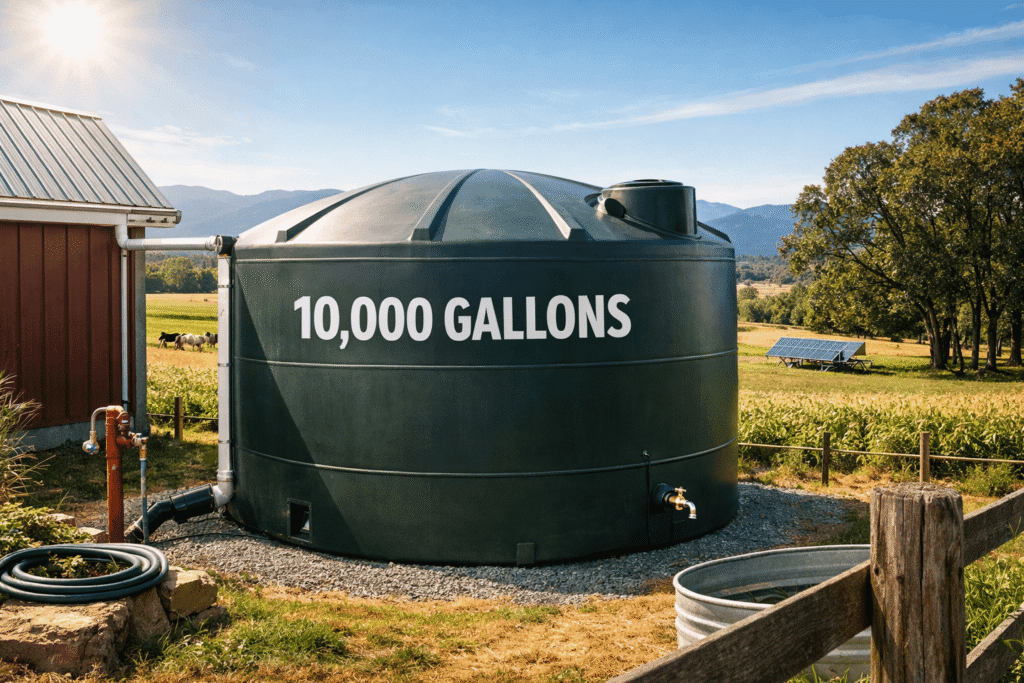
10000 gallon water tank sounds huge and honestly, it is. But for farms, commercial properties, emergency storage, and large homes, this size often makes perfect sense.
If you want reliable water storage, better drought protection, or a smart rainwater harvesting setup, this guide will help you make the right decision. I’ll keep it practical, fact-based, and easy to follow no exaggerated claims, no random numbers.
Let’s break it down properly.
What Is a 10000 Gallon Water Tank?
A 10,000 gallon tank stores approximately:
- 37,854 liters
- Enough water for significant residential, agricultural, or commercial use
- Large-scale rainwater harvesting
- Emergency water storage
According to the U.S. Environmental Protection Agency (EPA), the average American uses about 82 gallons of water per day at home.
At that rate:
- One person could use 10,000 gallons for about 120 days
- A family of four could use it for around 30 days
(Source: EPA – Indoor Water Use Statistics)
That’s why this tank size works well for:
- Rural homes
- Agricultural irrigation
- Livestock operations
- Fire suppression reserves
- Commercial buildings
Why Choose a 10000 Gallon Water Tank?
Let’s be logical. Bigger tanks cost more. So why go this large?
1. Reliable Emergency Backup
The Federal Emergency Management Agency (FEMA) recommends storing at least one gallon per person per day for emergencies.
A 10,000 gallon tank far exceeds minimum survival storage. It offers real security during:
- Drought
- Municipal water interruptions
- Natural disasters
- Pump failures
This isn’t overkill it’s long-term resilience.
2. Rainwater Harvesting Efficiency
The EPA encourages rainwater harvesting as a water conservation strategy.
With proper roof collection systems, a large tank:
- Captures seasonal rainfall
- Reduces stormwater runoff
- Lowers dependency on municipal water
If you live in an area with strong monsoon seasons or seasonal rainfall, a 10,000 gallon capacity prevents overflow waste.
3. Agricultural & Irrigation Use
The U.S. Geological Survey (USGS) reports that irrigation accounts for a major share of freshwater use in the United States.
Farmers and landowners often install large storage tanks to:
- Stabilize supply
- Reduce pump cycling
- Manage well output
- Store seasonal water
In agriculture, water storage equals operational stability.
Types of 10000 Gallon Water Tanks
Not all tanks look the same. Your choice affects durability, cost, and installation.
1. Polyethylene (Plastic) Tanks
These are common for residential and agricultural use.
Pros:
- Corrosion-resistant
- UV-stabilized
- Lower cost
- Lightweight compared to steel
Best for: Rainwater harvesting and non-pressurized storage.
2. Steel Water Tanks
Steel tanks often use galvanized or coated finishes.
Pros:
- Strong structure
- Long lifespan
- Large diameter options
Cons:
- Higher cost
- Requires proper coating to prevent corrosion
3. Concrete Tanks
Concrete works well for underground storage.
Pros:
- Extremely durable
- Stable temperature
- Long lifespan
Cons:
- Heavy
- Higher installation complexity
How Big Is a 10000 Gallon Water Tank?
Dimensions vary by manufacturer and material. However, many vertical polyethylene tanks fall within:
- Height: 12–16 feet
- Diameter: 10–15 feet
Always confirm manufacturer specifications before purchase.
And yes measure your site access carefully. A delivery truck cannot squeeze through wishful thinking.
Installation Requirements
A 10000 gallon water tank demands planning.
1. Solid Foundation
The National Fire Protection Association (NFPA) stresses proper support for fire protection water storage systems.
Even for non-fire use, your tank needs:
- Compacted soil base
- Reinforced concrete pad (recommended)
- Level surface
10,000 gallons of water weighs over 83,000 pounds (water weighs 8.34 pounds per gallon). Poor foundation equals structural failure risk.
2. Local Codes and Permits
Local authorities often regulate:
- Rainwater systems
- Underground tanks
- Backflow prevention
- Fire reserve storage
Check local building codes before installation.
3. Plumbing and Overflow
A proper system includes:
- Inlet with debris screen
- Overflow pipe
- Drain valve
- Access hatch
- Ventilation
For potable use, follow drinking water standards from recognized organizations like NSF International.
Cost of a 10000 Gallon Water Tank
Prices vary based on material, region, and freight.
General range (U.S. market estimates):
- Polyethylene: $5,000–$9,000
- Steel: $8,000–$15,000+
- Concrete: Highly variable
Additional costs:
- Delivery
- Crane service (if required)
- Site preparation
- Plumbing
- Pump system
Always request detailed quotes.
Maintenance Requirements
Large tanks require routine inspection. You don’t install one and forget it forever.
Recommended maintenance:
- Annual inspection
- Clean sediment buildup
- Inspect fittings and seals
- Check overflow screen
- Test water quality (if potable)
The Centers for Disease Control and Prevention (CDC) provides guidance on safe water storage and maintenance.
Clean water storage prevents microbial growth and contamination.
Is 10000 Gallons Too Much for a Home?
It depends on:
- Household size
- Climate
- Irrigation needs
- Local water reliability
- Roof collection area
If your roof cannot collect enough rainfall to fill it seasonally, you may not need this size.
However, for rural homes with wells or unstable supply, this capacity offers peace of mind.
Above Ground vs Underground
Above Ground Tanks
- Easier installation
- Lower excavation cost
- Easier maintenance access
Underground Tanks
- Hidden appearance
- Stable water temperature
- Requires excavation and engineering
Choose based on budget, aesthetics, and property layout.
Common Mistakes to Avoid
Let’s save you future regret.
- Ignoring foundation preparation
- Skipping overflow design
- Forgetting mosquito-proof screening
- Underestimating delivery access
- Not calculating actual water demand
Big tank. Big responsibility.
Environmental Benefits
Water storage supports:
- Reduced municipal demand
- Rainwater reuse
- Sustainable irrigation
- Stormwater management
The EPA promotes water efficiency through programs such as WaterSense, which highlights conservation strategies.
Responsible storage improves long-term sustainability.
Who Should Buy a 10000 Gallon Water Tank?
This tank size works best for:
- Farms
- Ranches
- Large estates
- Commercial facilities
- Fire protection reserves
- Drought-prone regions
- Large rainwater harvesting systems
For small urban homes, it may be excessive.
Final Thoughts
A 10000 gallon water tank represents serious water storage capacity. It supports emergency planning, agricultural operations, rainwater harvesting, and commercial applications.
Before buying:
- Calculate real water demand
- Measure installation space
- Confirm local regulations
- Choose material wisely
- Plan foundation correctly
Water weighs a lot. Mistakes cost more than good planning.
If you install it properly, maintain it regularly, and design it intelligently, this tank can serve you for decades.
Alright, let’s build a clean, SEO-friendly FAQ section for your 10000 gallon water tank article.
These are written for:
- Featured snippets
- Rich results
- Clear, short answers
- High readability
- Natural keyword placement
- Real, fact-based guidance
No fluff. No guessing. Just practical answers.
FAQ – 10000 Gallon Water Tank
1. How big is a 10000 gallon water tank?
A 10000 gallon water tank typically measures between 10–16 feet in height and 10–15 feet in diameter, depending on the manufacturer and material.
The exact dimensions vary by design (vertical, horizontal, steel, or concrete). Always check product specifications before purchase to ensure proper site fit and access clearance.
2. How much does a 10000 gallon water tank weigh when full?
Water weighs approximately 8.34 pounds per gallon.
A full 10000 gallon water tank holds about 83,400 pounds of water, not including the tank’s own weight.
Because of this massive load, a properly compacted base or reinforced concrete foundation is essential.
Yes, but it depends on water demand and available space.
According to the U.S. Environmental Protection Agency (EPA), the average person uses around 82 gallons of water per day indoors.
At that rate:
- One person could use 10,000 gallons for about 120 days
- A family of four could use it for roughly 30 days
This tank size works best for rural homes, large properties, or homes using rainwater harvesting systems.
4. Can I use a 10000 gallon water tank for drinking water?
Yes, but only if:
- The tank material is certified for potable water
- The system includes proper filtration
- You follow safe storage guidelines
The Centers for Disease Control and Prevention (CDC) recommends using food-grade containers and protecting stored water from contamination.
Regular inspection and cleaning help maintain water quality.
5. How much rainfall is needed to fill a 10000 gallon tank?
The amount depends on roof size and rainfall.
For example, 1 inch of rain on 1,000 square feet of roof can collect about 600 gallons of water (approximate industry calculation used in rainwater harvesting design).
A larger roof area fills the tank faster.
Always calculate roof catchment capacity before choosing tank size.
6. Do I need a permit to install a 10000 gallon water tank?
In many areas, yes.
Local regulations may require permits for:
- Large water storage systems
- Underground tanks
- Rainwater harvesting connections
- Fire protection storage
Check with your local building authority before installation.
7. What foundation is required for a 10000 gallon water tank?
A 10000 gallon water tank requires:
- Level ground
- Compacted gravel base or reinforced concrete slab
- Full support across the entire tank bottom
Because the tank can weigh over 80,000 pounds when full, uneven support may cause structural stress or failure.
8. How long does a 10000 gallon water tank last?
Lifespan depends on material:
- Polyethylene tanks: 15–25+ years (UV-stabilized models)
- Steel tanks: 20–30+ years with proper coating
- Concrete tanks: 30+ years with proper maintenance
Routine inspection and cleaning significantly extend service life.
9. Can a 10000 gallon water tank be used for fire protection?
Yes.
Many commercial and agricultural properties use large tanks for fire reserves.
The National Fire Protection Association (NFPA) provides standards for private fire protection water tanks under NFPA 22.
If using the tank for fire protection, follow local fire codes and design requirements.
10. Is underground installation better than above ground?
It depends on your goals.
Above ground tanks:
- Lower installation cost
- Easier maintenance
- Faster installation
Underground tanks:
- Hidden appearance
- More stable water temperature
- Higher excavation cost
Choose based on budget, climate, and property layout.
11. How much does a 10000 gallon water tank cost?
Costs vary by material and region.
Typical U.S. market ranges:
- Polyethylene: $5,000–$9,000
- Steel: $8,000–$15,000+
- Concrete: varies significantly
Installation, delivery, and plumbing add to total cost.
12. How often should a 10000 gallon water tank be cleaned?
Inspect the tank annually.
Clean the tank when you notice:
- Sediment buildup
- Algae growth
- Debris accumulation
- Water discoloration
Regular maintenance protects water quality and system performance.
Trusted Sources
- U.S. Environmental Protection Agency – Indoor Water Use Statistics & Water Conservation
- U.S. Geological Survey – Water Use Data
- Federal Emergency Management Agency – Emergency Water Supply Guidance
- Centers for Disease Control and Prevention – Safe Water Storage Recommendations
- National Fire Protection Association – Water Storage Standards