
|
Getting your Trinity Audio player ready...
|
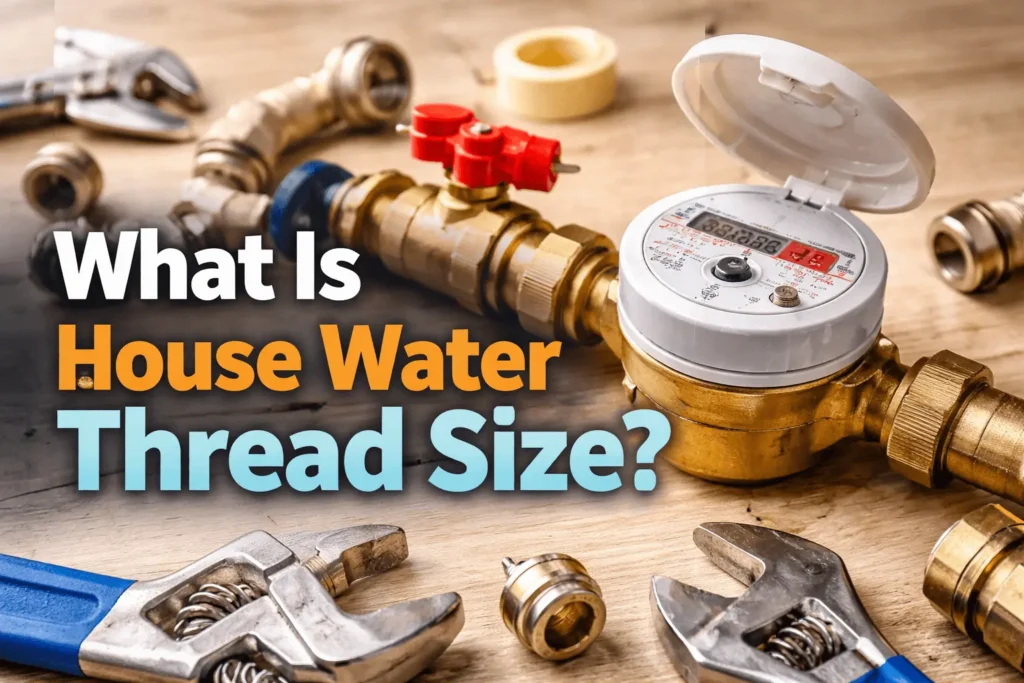
If you have ever tried to replace a water meter, install a new line, or connect plumbing fittings, you probably asked the same question: what is house water meter thread size?
It sounds simple. But when you stand in a hardware store staring at fittings that almost fit, you quickly realize thread sizes matter more than you thought.
In this guide, we will explain water meter thread sizes in a clear and practical way. We will rely on trusted plumbing standards and manufacturer specifications, not guesswork. By the end, you will know how to identify the correct thread size and avoid costly mistakes.
Why Water Meter Thread Size Matters
A water meter connects your home to the municipal water supply. If the thread size does not match:
- You risk leaks.
- You may damage fittings.
- You can reduce water pressure.
- You might violate local plumbing codes.
Thread compatibility ensures a secure, watertight seal. According to the American Water Works Association (AWWA), proper meter installation and connection standards protect system integrity and prevent water loss (AWWA Manual M6 – Water Meters).
In short, thread size is not a small detail. It is the foundation of a proper installation.
Standard House Water Meter Sizes in the United States
Most residential homes in the United States use:
- 5/8-inch water meters
- 5/8″ x 3/4″ water meters
- 3/4-inch water meters
- 1-inch water meters (for larger homes or higher demand)
However, here is where many people get confused: the meter size does not always equal the thread size.
5/8-Inch Water Meter Thread Size
The most common residential meter is the 5/8″ x 3/4″ meter.
Despite the name, it usually connects to 3/4-inch NPT (National Pipe Thread) plumbing.
Many municipalities install 5/8″ meters with 3/4″ connections because 3/4″ service lines remain standard for residential supply lines.
Manufacturers like Neptune Technology Group and Badger Meter list 3/4″ threaded connections for standard residential meters in their technical specifications.
What Does “5/8″ x 3/4″ Mean?
This label confuses many homeowners.
- The 5/8-inch refers to the meter’s internal flow capacity.
- The 3/4-inch refers to the pipe connection size.
So when someone asks, “What is house water meter thread size?” the answer often turns out to be:
3/4-inch NPT threads for most residential properties.
But always verify before buying fittings.
Understanding NPT Threads
In the United States, most water meters use NPT (National Pipe Thread).
The American National Standards Institute (ANSI) and ASME B1.20.1 define NPT thread standards. These threads are tapered. As you tighten them, they form a seal.
Key points about NPT:
- They taper slightly.
- They require thread sealant or PTFE tape.
- They create a pressure-tight joint.
If you attempt to connect straight threads to NPT fittings, you will get leaks. Plumbing does not forgive guessing.
Straight Threads vs Tapered Threads
Some water meters use straight threads (NPSM) instead of tapered NPT threads.
Straight threads:
- Do not taper.
- Require a gasket or O-ring.
- Often appear on meter couplings.
Many water meters connect using meter couplings with gaskets, not direct NPT threading.
According to AWWA C700 (Standard for Cold-Water Meters), meter threads often follow AWWA thread standards, which differ slightly from standard NPT plumbing threads.
This difference explains why some fittings feel almost right but do not seal properly.
Common Residential Water Meter Thread Sizes
Here are the typical thread sizes you will see in U.S. homes:
5/8″ x 3/4″ Meter
- 3/4″ NPT or AWWA straight thread
- Most common residential setup
3/4″ Meter
- Usually 3/4″ or 1″ connections
- Used in homes with higher demand
1″ Meter
- 1″ NPT or AWWA meter thread
- Larger homes, irrigation-heavy properties
Always check your local utility specification sheet. Many cities publish approved meter installation details on their official websites.
How to Measure Your Water Meter Thread Size
Do not rely on visual guesses. Pipe threads can look nearly identical.
Follow these steps:
- Use a caliper to measure the outer diameter.
- Count threads per inch (TPI).
- Compare measurements to NPT thread charts (ANSI B1.20.1 standard).
- Check manufacturer markings on the meter body.
For example:
- A 3/4″ NPT thread has an outside diameter of about 1.050 inches.
- A 1″ NPT thread measures about 1.315 inches outside diameter.
The numbers do not match the nominal size exactly. That surprises many people.
Municipal Variations
Not all regions use identical standards.
In Canada and the U.S., NPT remains common.
In Europe, installers often use BSP (British Standard Pipe) threads.
BSP threads differ from NPT in angle and pitch. You cannot safely interchange them.
If you live outside the United States, confirm whether your system uses:
- BSPT (tapered)
- BSPP (parallel)
Mixing NPT and BSP fittings will create leaks. They look similar but they do not seal correctly.
Do All Homes Use the Same Water Meter Thread Size?
No.
Several factors affect your house water meter thread size:
- Age of the property
- Local utility standards
- Pipe material (copper, PEX, galvanized steel)
- Water demand requirements
- Renovation history
Homes built decades ago may have different configurations than newer constructions.
Always inspect before purchasing parts.
Water Meter Couplings and Adapters
Most residential meters do not connect directly to plumbing with exposed pipe threads. Installers typically use:
- Meter couplings
- Meter yokes
- Gaskets
- Union connections
These components allow easier maintenance and meter replacement.
AWWA recommends using proper meter couplings to maintain sealing integrity and prevent stress on the meter body (AWWA M6 Manual).
Using the correct coupling size often matters more than the raw thread size itself.
Common Mistakes Homeowners Make
Let’s be honest. Plumbing mistakes happen because people assume instead of verify.
Here are common errors:
- Confusing meter size with thread size
- Mixing NPT and straight threads
- Forgetting gasket requirements
- Over-tightening tapered threads
- Using the wrong sealant
Over-tightening NPT threads can crack brass fittings. That repair costs far more than buying the correct fitting the first time.
How to Find the Exact Thread Size for Your House
If you want absolute certainty, follow this checklist:
- Check your water utility’s website.
- Look up the meter manufacturer model number.
- Download the technical specification sheet.
- Confirm thread type (NPT, AWWA, NPSM).
- Verify diameter and thread pitch.
Major manufacturers such as Badger Meter, Neptune Technology Group, and Sensus publish detailed product data sheets with exact connection specifications.
Trust documentation, not assumptions.
Plumbing Code and Compliance
Local plumbing codes often require approved meter connections.
In the United States, codes reference standards from:
- AWWA (American Water Works Association)
- ASME
- ANSI
- International Plumbing Code (IPC)
Improper thread matching can lead to inspection failure. Always check local regulations before modifying your meter connection.
Final Answer: What Is House Water Meter Thread Size?
For most U.S. residential homes, the house water meter thread size is:
3/4-inch connection, typically using NPT or AWWA straight meter threads.
However, this answer applies to the majority, not all homes.
You must verify:
- Meter size (5/8″, 3/4″, 1″)
- Thread type (NPT or straight/AWWA)
- Manufacturer specification
- Local plumbing code
Think of it like buying shoes. Most adults wear common sizes, but you still try them on before paying.
Trusted Sources
- American Water Works Association (AWWA) Manual M6 – Water Meters
- AWWA C700 – Standard for Cold-Water Meters
- ANSI/ASME B1.20.1 – Pipe Threads, General Purpose (Inch)
- Badger Meter Technical Specifications
- Neptune Technology Group Product Data Sheets
These sources define meter sizing, thread standards, and installation requirements used across North America.
Video on 5 best water meter
Conclusion
Understanding house water meter thread size saves time, money, and frustration. Most homes use 3/4-inch connections, especially with 5/8″ x 3/4″ meters. But never assume.
Measure carefully. Confirm manufacturer data. Follow recognized standards.
Water may look simple when it flows from your tap. Behind the scenes, though, precision keeps everything working.
And when it comes to plumbing threads, precision wins every time.