
|
Getting your Trinity Audio player ready...
|
Water softeners are long-term home investments. But let’s be honest nobody buys one and asks, “Will this still work in 20 years?” until something starts acting weird.
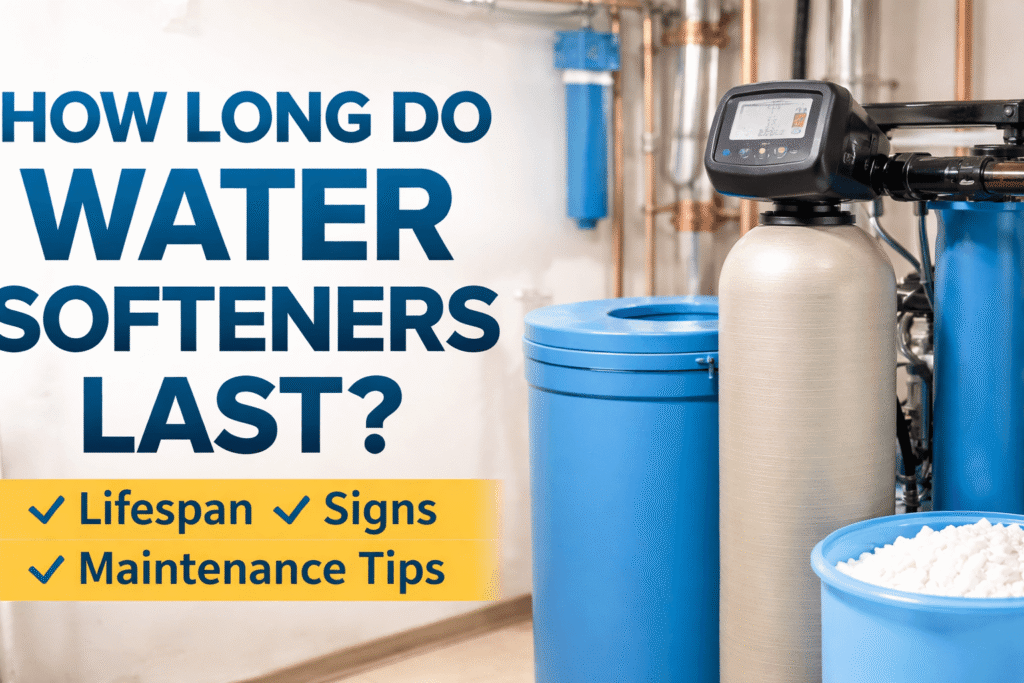
So, how long do water softeners last?
Most water softeners last 10 to 15 years. Some systems work longer with proper maintenance. Others fail early due to neglect, hard water levels, or poor installation.
In this guide, you’ll learn:
- The average lifespan of water softeners
- What affects their durability
- When to replace one
- How to extend its life
- Real data from trusted sources
No guesses. No marketing hype. Just facts.
What Is the Average Lifespan of a Water Softener?
According to the Water Quality Association (WQA) and manufacturers like Culligan and GE Appliances, the typical lifespan of a residential water softener ranges between 10 and 15 years.
However, lifespan depends heavily on:
- Water hardness level
- Daily water usage
- Maintenance habits
- Quality of system components
- Installation standards
A well-maintained system in moderate hardness conditions can reach 15+ years. A neglected system in extremely hard water areas may fail in 7–8 years.
So yes maintenance matters more than brand name.
How Long Do Water Softener Components Last?
Not all parts wear out at the same speed.
1. Resin Tank (10–15 Years)
The resin tank usually lasts the entire system life. It holds resin beads that remove calcium and magnesium from water.
The resin beads inside typically last 10–15 years, according to WQA technical guidance. Heavy iron contamination can shorten that lifespan.
2. Control Valve (7–12 Years)
The control valve handles regeneration cycles. It contains moving parts, which means wear and tear happens.
Hard water scale buildup often reduces its life.
3. Brine Tank (Indefinite if Maintained)
The brine tank rarely “wears out.” But salt bridges, sludge buildup, or cracks can cause operational problems.
Clean it once per year and it may last decades.
What Factors Affect How Long Water Softeners Last?
Let’s break it down logically.
1. Water Hardness Level
The U.S. Geological Survey (USGS) defines hard water as containing more than 120 mg/L of dissolved calcium carbonate.
If your water hardness exceeds 180 mg/L, your system works harder and regenerates more frequently.
More cycles = faster wear.
2. Iron Content in Water
The EPA Secondary Drinking Water Standards note that iron above 0.3 mg/L can cause staining and buildup.
Iron fouls resin beads. It reduces efficiency. It shortens system life.
If your water contains iron, install a pre-treatment filter.
3. Maintenance Frequency
Simple actions extend life:
- Check salt levels monthly
- Clean brine tank yearly
- Use high-quality salt
- Service system every 1–2 years
Neglect cuts lifespan dramatically.
4. Water Usage in Household
A family of six uses more water than a couple. According to the EPA WaterSense Program, the average American family uses around 300 gallons per day.
Higher usage increases regeneration frequency.
Signs Your Water Softener Is Failing
Most systems don’t die suddenly. They warn you.
Here are clear signs:
• Soap Doesn’t Lather Well
Hard water reduces soap efficiency.
• Scale Buildup Returns
White crust on faucets signals hardness minerals.
• Dry Skin or Dull Hair
Soft water feels smoother. Changes often signal failure.
• Rising Salt Usage
If salt consumption spikes, internal components may struggle.
• System Runs Constantly
Continuous regeneration often indicates valve malfunction.
If your unit is over 10 years old and shows these signs, replacement may make more sense than repair.
How to Extend the Life of a Water Softener
If you want 15 years instead of 8, follow these steps:
1. Use High-Purity Salt
Low-quality salt leaves sediment behind. Sediment clogs systems.
Choose evaporated or solar salt with minimal impurities.
2. Clean the Brine Tank Annually
Salt bridges form when salt hardens into a crust.
Break bridges gently and remove sludge buildup yearly.
3. Install a Pre-Filter
Sediment filters protect control valves and resin.
This simple addition reduces wear.
4. Test Your Water Annually
The CDC recommends periodic water testing for private wells.
Hardness levels change over time. Adjust settings accordingly.
5. Schedule Professional Servicing
Certified technicians detect issues early. Small fixes prevent major failures.
When Should You Replace a Water Softener?
Repair makes sense if:
- The unit is under 8 years old
- Replacement parts cost less than half of a new unit
- Resin still functions properly
Replacement makes sense if:
- The system is 10–15 years old
- Repairs cost 50%+ of new system price
- Efficiency has dropped significantly
- Technology is outdated
Modern systems use less salt and water during regeneration. That improves efficiency and reduces operating costs.
Do Different Types of Water Softeners Last Longer?
Yes. Type matters.
Salt-Based Ion Exchange Softeners
These last the longest. Most homes use this type. Proper maintenance gives them 10–15 years.
Salt-Free Water Conditioners
These don’t remove hardness. They alter mineral structure.
They often last 5–10 years depending on media replacement needs.
Dual-Tank Systems
These may last slightly longer due to balanced workload between tanks.
However, maintenance remains the key factor.
How Much Does Replacement Cost?
According to HomeAdvisor industry reports, homeowners typically spend between $1,000 and $3,000 for a new installed water softener system.
Cost varies by:
- System type
- Grain capacity
- Installation complexity
- Plumbing modifications
Always compare repair cost vs long-term savings.
Environmental and Efficiency Considerations
The EPA notes that traditional softeners discharge brine during regeneration.
Many states regulate softener discharge due to environmental concerns.
Modern high-efficiency models reduce salt and water waste. When replacing an old unit, look for:
- Demand-initiated regeneration (DIR) systems
- High-efficiency certification from WQA
Efficiency saves money and reduces environmental impact.
Frequently Asked Questions
How long do water softeners last with hard water?
Extremely hard water shortens lifespan. Expect 7–12 years without proper pretreatment.
Can a water softener last 20 years?
Yes, but only with consistent maintenance and moderate hardness conditions.
How often should I service my water softener?
Most manufacturers recommend inspection every 1–2 years.
Is it worth repairing a 15-year-old water softener?
Usually no. New systems offer better efficiency and reliability.
Final Thoughts: Is Your Water Softener Near the End?
So, how long do water softeners last?
In most homes, 10 to 15 years.
But lifespan isn’t just about time. It’s about water quality, maintenance habits, and system design.
Think of it like a car. Regular oil changes keep it running longer. Ignore it, and problems multiply.
If your system approaches 10 years and shows performance decline, start comparing replacement options.
A properly maintained water softener protects:
- Plumbing
- Appliances
- Skin and hair
- Energy efficiency
And honestly? That makes it one of the most underrated home investments.
Sources
- Water Quality Association (WQA) – Technical Resources on Ion Exchange Systems
- U.S. Geological Survey (USGS) – Hardness of Water Definitions
- U.S. Environmental Protection Agency (EPA) – Secondary Drinking Water Standards
- EPA WaterSense Program – Household Water Usage Statistics
- Centers for Disease Control and Prevention (CDC) – Well Water Testing Recommendations
- HomeAdvisor – Water Softener Installation Cost Reports