
|
Getting your Trinity Audio player ready...
|
If you wear Invisalign retainers, you already know one thing: they get dirty fast.
Food particles, bacteria, plaque, and saliva build up on them daily. That leaves many people asking a simple question:
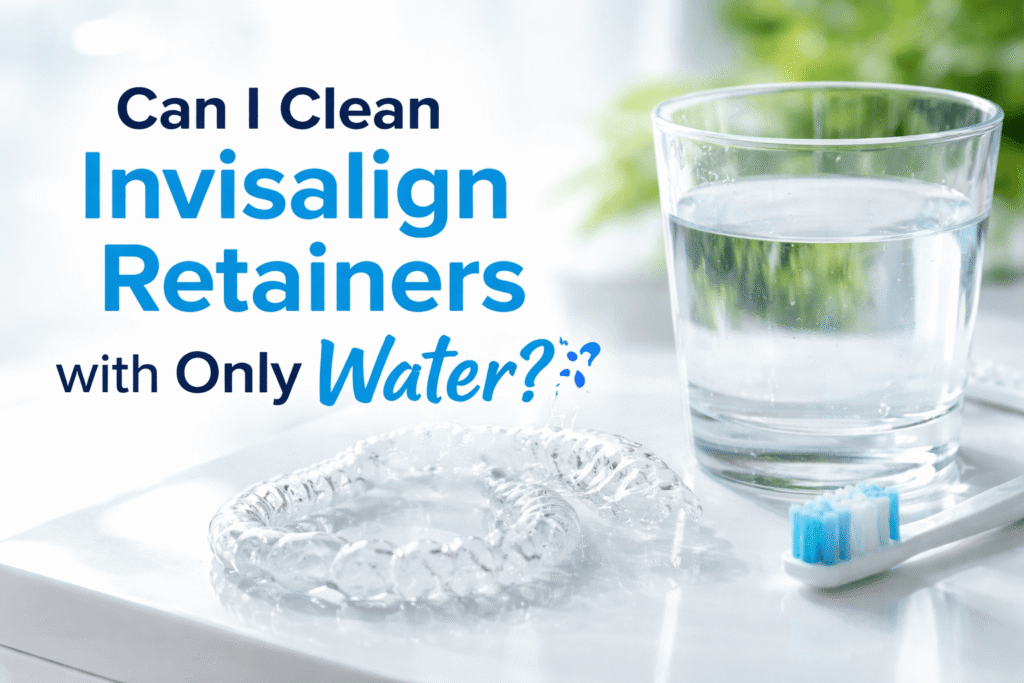
Can I clean Invisalign retainers with only water?
The short answer is no. Water alone does not properly clean Invisalign retainers.
But let’s break this down clearly, logically, and with trusted dental guidance so you understand why.
Why Cleaning Invisalign Retainers Properly Matters
Invisalign retainers sit tightly against your teeth for long hours.
According to the American Dental Association (ADA), bacteria in the mouth constantly form plaque biofilm on oral surfaces, including removable appliances like retainers. If you don’t remove that buildup daily, it hardens and becomes harder to clean.
When you skip proper cleaning, you may notice:
- Cloudy appearance
- Bad odor
- Bad taste
- Increased bacteria buildup
- Risk of tooth decay or gum irritation
The Centers for Disease Control and Prevention (CDC) also confirms that oral bacteria multiply rapidly in moist environments. Retainers create exactly that environment.
So cleaning them properly isn’t optional. It protects both your appliance and your oral health.
Can I Clean Invisalign Retainers with Only Water?
Let’s answer the core question directly.
You can rinse Invisalign retainers with water, but you cannot fully clean them with only water.
Water removes loose debris. It does not:
- Kill bacteria
- Remove plaque biofilm
- Eliminate odor-causing microbes
- Break down hardened buildup
The Invisalign official cleaning instructions clearly state that users should rinse aligners and brush them gently with a soft toothbrush and clear antibacterial soap. They do not recommend water alone.
Water helps as a first step. It is not a complete cleaning method.
Think of it like rinsing a plate without soap. It looks clean, but it isn’t truly clean.
What Happens If You Only Use Water?
If you rely only on water to clean Invisalign retainers, buildup accumulates over time.
Here’s what may happen:
1. Bacterial Growth Increases
According to research published in the Journal of Clinical Orthodontics, removable orthodontic appliances can accumulate significant microbial colonies when not cleaned properly.
Water does not remove biofilm. Bacteria stick to the plastic surface.
2. Your Retainers Become Cloudy
Invisalign retainers use clear medical-grade thermoplastic. Plaque buildup sticks to this surface and makes it appear foggy.
Patients often think the plastic “wore out,” but in many cases, residue caused the discoloration.
3. Bad Smell Develops
Odor comes from bacterial waste products. If you only rinse with water, bacteria stay alive and multiply.
You might brush your teeth perfectly, but your retainers can reintroduce odor.
That defeats the purpose of good oral hygiene.
Why Water Alone Does Not Work
Let’s use simple science.
Plaque forms a sticky structure called biofilm. Biofilm attaches tightly to surfaces, including plastic retainers.
Water lacks:
- Surfactants (which break down oils and debris)
- Antimicrobial properties
- Chemical agents that dissolve plaque
Without these properties, water cannot disrupt biofilm structure.
The ADA explains that mechanical and chemical cleaning methods are both necessary to reduce oral bacteria effectively.
That means brushing plus a cleansing agent works best.
The Right Way to Clean Invisalign Retainers
If water alone is not enough, what should you do?
Here’s what dental professionals recommend.
1. Rinse Immediately After Removal
Always rinse your Invisalign retainers with lukewarm water after taking them out.
This prevents saliva from drying and hardening on the surface.
Avoid hot water. Heat can warp the plastic.
2. Brush Gently with Clear Soap
Invisalign recommends brushing your retainers with a soft toothbrush and clear, fragrance-free antibacterial soap.
Do not use colored soap. It may stain the aligners.
Do not use toothpaste. Many toothpastes contain abrasive particles that scratch the plastic.
Scratches create tiny grooves where bacteria hide.
3. Use Invisalign Cleaning Crystals or Retainer Tablets
Invisalign offers cleaning crystals designed specifically for aligners.
You can also use denture or retainer cleaning tablets. The ADA notes that chemical soaking solutions help reduce bacterial load on removable appliances.
Follow instructions carefully. Do not soak longer than recommended.
4. Clean Your Teeth Before Reinserting
Always brush and floss before putting your retainers back in.
If you trap food particles inside, bacteria multiply quickly.
What Not to Use on Invisalign Retainers
Some cleaning methods sound smart but cause damage.
Avoid:
- Toothpaste (abrasive)
- Colored or scented soaps
- Mouthwash (can stain and damage plastic)
- Bleach
- Vinegar (can degrade material over time)
- Boiling or hot water
The Invisalign manufacturer specifically warns against using harsh chemicals or heat.
If you damage the plastic, you may need a replacement. That costs money.
How Often Should You Clean Invisalign Retainers?
You should clean your Invisalign retainers daily.
If you wear them full-time, clean them morning and night.
If you wear them only at night, clean them every morning after removal.
The American Association of Orthodontists (AAO) advises consistent daily cleaning of removable retainers to prevent bacterial buildup and maintain clarity.
Skipping even a few days allows plaque to harden.
Consistency matters more than intensity.
Signs Your Invisalign Retainers Need Better Cleaning
Sometimes users believe water works because the retainers look fine at first.
Watch for these signs:
- Cloudiness
- Yellow tint
- Strong smell
- Slimy texture
- White buildup
If you notice any of these, upgrade your cleaning routine immediately.
A professional dental cleaning may help if buildup becomes stubborn.
Can You Ever Use Only Water?
There is one situation where using only water makes sense.
If you are traveling and have no cleaning supplies available, rinse thoroughly with water temporarily.
But treat that as an emergency backup, not a routine.
Once you return home, clean them properly.
Water works as a temporary rinse. It does not replace proper hygiene.
How Long Do Invisalign Retainers Last?
Proper cleaning directly affects lifespan.
Most retainers last several months to a few years depending on:
- Wear time
- Cleaning habits
- Grinding habits
- Storage method
Poor cleaning shortens their lifespan because bacteria weaken the surface and create buildup.
Replacing retainers frequently increases long-term costs.
Taking five extra minutes daily saves money and protects your oral health.
Trusted Sources
To ensure accuracy and trustworthiness, here are the authoritative sources behind this guidance:
- American Dental Association (ADA) – Oral hygiene recommendations and plaque biofilm guidance
- Centers for Disease Control and Prevention (CDC) – Information on oral bacteria and hygiene
- American Association of Orthodontists (AAO) – Retainer care guidelines
- Invisalign Official Care Instructions – Manufacturer cleaning recommendations
These organizations emphasize mechanical cleaning plus appropriate cleaning agents for removable appliances.
None recommend water alone as a complete cleaning solution.
That tells us everything we need to know.
Final Verdict: Can I Clean Invisalign Retainers with Only Water?
No. Water alone does not properly clean Invisalign retainers.
It removes loose debris but fails to eliminate bacteria, plaque, and odor.
For safe and effective cleaning:
- Rinse with lukewarm water
- Brush gently with clear antibacterial soap
- Use approved cleaning crystals or tablets
- Avoid abrasive or harsh chemicals
- Clean daily
Your retainers protect your smile. Treat them like you treat your teeth.
And let’s be honest if you wouldn’t clean your teeth with only water, your retainers deserve better too.
Video on: Can I Clean Invisalign Retainers with Only Water?
Quick Summary
- Water alone is not enough to clean Invisalign retainers.
- Bacteria and plaque remain on the surface.
- Proper cleaning requires brushing and safe cleansing agents.
- Daily maintenance prevents odor, discoloration, and damage.
- Follow ADA, AAO, and Invisalign manufacturer guidance for best results.
Clean retainers equal healthy teeth.
Simple logic. Clean plastic. Clear smile.
And no weird smell when you talk. That’s a win.