
|
Getting your Trinity Audio player ready...
|
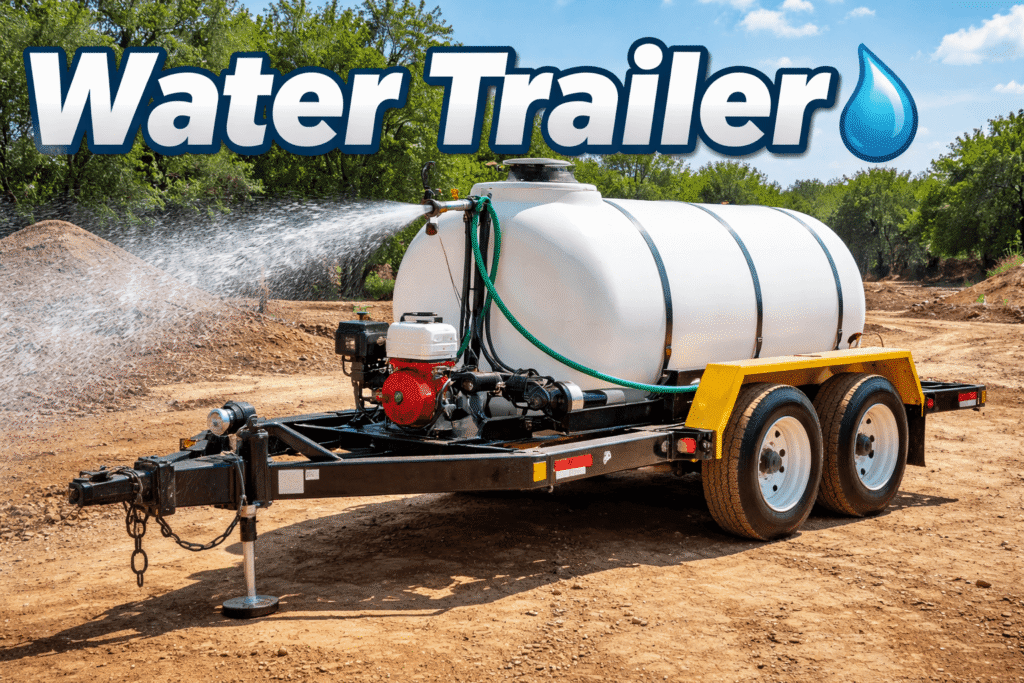
A water trailer might sound like something invented during a desert safari movie marathon but trust me, it’s way more useful than that. In simple terms, a water trailer is a portable water tank mounted on a trailer, designed to be towed by a truck, tractor, or even an ATV. You fill it with water, hitch it up, and take it wherever liquid life is needed. Whether you’re a farmer watering crops, a contractor controlling dust, or a municipality handling emergencies, a water trailer can be a game‑changer.
This guide covers everything you should know: what a water trailer is, how it works, common uses, different sizes and types, pros and cons, and how to choose the right one all with real‑world data and no fake fluff.
What Is a Water Trailer?
At its core, a water trailer is a mobile reservoir for water a big tank on wheels that you can hook up to a vehicle. These trailers are built to store, transport, and distribute water anywhere you need it. Most models come with pumps, hoses, valves, and spray systems, so you can distribute water with precision.
Usually, the tank is made from materials like polyethylene, steel, or sometimes fiberglass, depending on how rugged or portable the unit needs to be.
You might think that hauling water is just for farms and dusty roads but water trailers have a surprisingly broad set of practical applications.
Why People Use Water Trailers
Water trailers aren’t luxury gear they serve real needs in real industries:
1. Agriculture & Irrigation
Farmers use water trailers to hydrate crops and livestock in areas without nearby water infrastructure. Some fields lie far from irrigation systems, and a water trailer lets you bring the water to the crop, not the other way around. This is especially valuable during dry seasons when every drop counts.
Livestock also benefit. Water trailers can refill troughs in remote pastures where fixed pipelines don’t reach.
2. Dust Control and Soil Stabilization
Dust isn’t just annoying it’s a health hazard. On construction sites, unpaved roads, and mining operations, airborne dust causes respiratory problems and lowers visibility. Water trailers spray fine water mist to keep dust suppressed, improving safety and compliance with environmental regulations.
Dust control also helps stabilize soil surfaces, reducing erosion and making heavy machinery operations smoother.
3. Construction & Road Maintenance
Water is essential during construction not just for dust control. Trailers provide steady water supply for:
- Concrete mixing and curing
- Cleaning tools and equipment
- Compacting soil and roadway surfaces
Water trailers let crews instantly access water on site, speeding up project timelines.
4. Emergency Response
When disaster strikes, local water systems can fail. In such emergencies, water trailers supply clean drinking water and help with sanitation in affected areas. They’re also used in wildfire zones where hydrants aren’t available, providing extra water for firefighting efforts.
5. Municipal Uses
Public works departments use water trailers for city tasks cleaning streets, flushing debris from gutters, or managing park irrigation. These trailers give towns flexibility without investing in more expensive permanent infrastructure.
Key Components of a Water Trailer
Though they vary by model, most water trailers share a few common elements:
Water Tank
The heart of the trailer, tanks come in different sizes and materials:
- Polyethylene Tanks: Lightweight, corrosion‑resistant, and cost‑effective.
- Steel Tanks: Heavy‑duty and rugged, ideal for tough terrains or high‑pressure work.
- Fiberglass Tanks: Corrosion‑resistant and chemically stable great for transporting potable water.
Pump System
Pumps let you move water where it’s needed. Some trailers use gas or diesel engines, others use electric motors or tractor PTOs. Powerful pumps improve reach and control over water delivery.
Hoses and Sprayers
These attachments control how water leaves the trailer. Want a gentle spray for crops? You got it. Need a wide mist for dust suppression? Easy. Want to fill troughs or tanks? No problem.
Safety and Towing Features
Good trailers include lights, brakes, DOT compliance gear, and baffles inside the tank to reduce water sloshing during transit boosting safety while towing.
Sizes and Capacities of Water Trailer
Water trailers come in a wide range of sizes, each suited to different jobs:
Small Trailers (50–500 Gallons)
Compact and easy to tow with a pickup or ATV, these are ideal for landscapes, home gardens, and light irrigation jobs.
Medium Trailers (500–1,000 Gallons)
Balanced capacity and mobility make these suitable for farms, construction sites, and livestock watering.
Large Trailers (1,000–2,500+ Gallons)
Designed for heavy‑duty work like dust control, fire suppression, major irrigation, and municipal tasks. Tank sizes can exceed 2,500 gallons and are often towed by heavy trucks.
Huge Semi‑Trailers (Over 3,000 Gallons)
Semi‑trailer water tank units serve industrial and large‑scale operations, offering massive water carrying capacity for continuous tasks.
Tip: Remember that water is heavy one gallon weighs about 8.34 pounds. A full 1,000‑gallon trailer carries over 8,000 pounds of just water! This affects towing requirements and safety.
Advantages of Using a Water Trailer
Owning or renting a water trailer has clear benefits:
1. Portability and Flexibility
Unlike fixed water sources, trailers go where you need them. Remote fields? Check. Construction sites without hookups? Check.
2. Saves Time and Labor
A trailer with a pump system gets the job done faster and with less manual effort. Modern units even let you auto‑fill the tank and shut off when full, so you can multitask.
3. Versatility Across Industries
From farms to cities to disaster zones, water trailers serve many sectors a smart investment rather than niche equipment.
4. Cost Effectiveness
Instead of building water infrastructure, renting or owning a trailer provides water access instantly and at lower cost.
5. Controlled Water Use
Good trailers minimize waste by distributing water efficiently a big plus for environmentally conscious operations.
Challenges and Considerations
No tool is perfect, and water trailers come with caveats:
Towing Demands
Heavy loads mean you need a capable towing vehicle and proper braking. Always match trailer weight to your vehicle’s towing capacity.
Quality Matters
Cheap trailers may leak, contaminate water, or fail under tough conditions. Choose reputable brands and materials that fit your use case.
Maintenance
Like any equipment, water trailers require regular checks especially pumps, valves, and seals — to prevent downtime.
How to Choose the Right Water Trailer
Here’s a simple checklist to guide your decision:
Define Your Purpose
Are you irrigating crops, suppressing dust, or supplying potable water? Each need may require different features.
Select the Right Size
Don’t overspend on a massive unit if a medium trailer fits the bill. Likewise, don’t underspec a trailer and regret frequent refills.
Check Pump Power
A strong pump lets you reach farther and work faster. Consider gas or PTO‑driven pumps for heavy tasks.
Material and Build Quality
For rugged use, steel or UV‑resistant polyethylene tanks are worth the investment.
Safety and Compliance
Ensure the trailer meets local road‑use regulations (lights, brakes, DOT gear).
Conclusion: A Smart Investment for Many Needs
A water trailer might seem like a niche piece of equipment, but its real‑world value stretches far and wide. From enabling agricultural irrigation to keeping dusty construction sites under control, water trailers make work easier, safer, and more efficient.
Whether you’re a farmer, contractor, municipality planner, or emergency response coordinator, understanding how water trailers work and how to choose the right one will help you make smarter decisions. Always consider your specific needs, trailers’ features, and compliance with safety standards. With the right setup, you’ll have water where you want it, when you need it and that’s a big deal in any industry.