
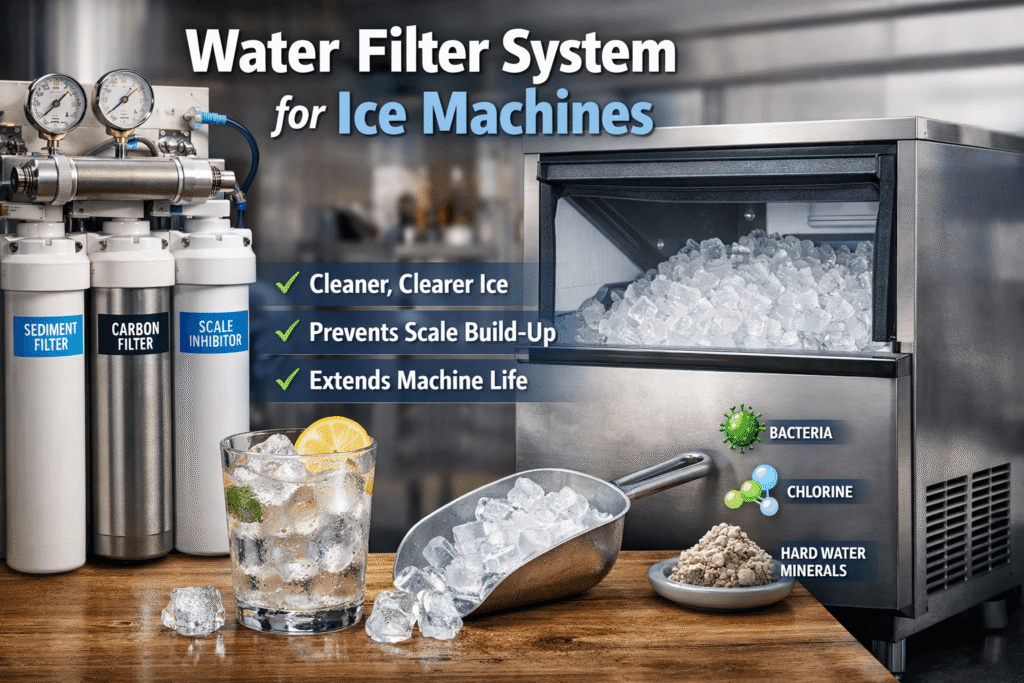
Ice machines are everywhere restaurants, offices, gyms, homes with over‑achievers who chew ice like it’s dessert. But one thing no one talks about at parties? Water quality. The invisible enemy for your ice machine isn’t ghosts or bad music it’s water contaminants.
A water filter system for ice machines isn’t optional if you want clean, clear, and safe ice. It protects your equipment, improves ice quality, and saves you money over time. In this article, we break down everything you need to know from science to shopping tips and installation advice.
Let’s dive in because nobody likes cloudy ice.
What Is a Water Filter System for Ice Machines?
At its core, a water filter system for an ice machine is a set of components that removes impurities from water before freezing it into ice. It’s like a spa treatment for water it gets cleaned, polished, and rejuvenated.
Ice machines pull water directly from your supply line. Without filtration, minerals like calcium and magnesium, chlorine, dirt, and even microbes go straight into the freezing cycle.
A filter system typically includes:
- Sediment filters — Catch sand, rust, and particles.
- Carbon filters — Reduce chlorine and odors.
- Scale inhibitors — Prevent mineral buildup.
- Antimicrobial protection — Protect the filter housing from mold.
The goal? Pure water + better ice + longer machine life.
Why Your Ice Machine Needs a Water Filter
1. Improves Ice Quality and Taste
You might not see contaminants in tap water, but your taste buds do. Substances like chlorine and sulfur can lend a chemical taste to water and ice. Clean filtration removes these, giving you crisp, neutral‑tasting ice.
Fact: Chlorine is commonly added to municipal water for disinfection, but it can affect flavor if not removed.
Humorous aside: if your ice tastes like pool water, it’s doing more lap swimming than chilling your drink.
2. Reduces Scale and Mineral Build‑Up
Hard water minerals (calcium, magnesium) don’t dissolve when freezing; they stick. Over time, scale builds up inside your ice maker, raising energy costs and reducing production.
Scale is to ice machines what spinach in teeth is to first impressions unwanted, harmful, and hard to ignore.
Fact: Hard water scale can reduce heat transfer efficiency and significantly shorten machine life.
3. Extends Equipment Life & Cuts Maintenance Costs
Ice machine repairs are expensive. The cost of replacing worn pistons, contaminated evaporator plates, or clogged nozzles adds up faster than you can say “last call.”
A filter system:
- Protects internal components
- Reduces frequency of descaling
- Lowers risk of bacterial contamination
In the long run, filters save money a fact business owners love more than free ice on a hot day.
4. Health & Safety Benefits
Your ice isn’t just a cooling agent; it touches your drinks, your lips, and occasionally your dignity after one too many sips. Bacteria and cysts can survive in unfiltered water or dirty machines.
Fact: Ice machines can harbor bacteria if not properly maintained.
A good filter system combined with regular cleaning drastically lowers microbial risk making your ice safer for consumption.
How a Water Filter System Works — Simple Breakdown
To understand how filters do their jobs, let’s compare the process to coffee brewing:
- Incoming water enters the filter (like putting water into a coffee machine)
- Pre‑filter stage catches large particles (like catching used coffee grounds)
- Activated carbon stage adsorbs chemicals and odors (like filtering bitter tastes)
- Post‑filter or scale control polishes water (like adding cream to smooth flavor)
Except here, you get ice instead of coffee.
Key components:
| Component | What It Removes | Why It Matters |
|---|---|---|
| Sediment Filter | Dirt, sand, rust particles | Prevents clogs and abrasion |
| Carbon Block | Chlorine & odors | Improves taste and smell |
| Scale Inhibitor | Calcium, magnesium | Reduces scale and boosts efficiency |
| Antimicrobial Housing | Biofilm & bacteria growth | Keeps the filter clean longer |
Types of Water Filters for Ice Machines
Not all filters are the same. Choosing the right one depends on your water quality and machine size.
1. Replacement Cartridge Filters
These are common in both residential and commercial ice machines.
Pros:
- Affordable
- Easy to replace
- Effective for basic impurities
Cons:
- Need regular changes
- Typically no advanced mineral removal
Typical for home and small business use.
2. Reverse Osmosis (RO) Systems
RO systems push water through a semi‑permeable membrane to remove up to 99% of contaminants.
Pros:
- Extremely pure water
- Great for areas with poor water quality
Cons:
- Slower water flow
- Higher cost
- Wastewater produced
RO is ideal for high‑end ice makers or restaurants that serve premium beverages.
3. Scale Control Systems
Instead of removing minerals, these systems change how minerals behave so they don’t stick to surfaces.
Pros:
- Long‑lasting protection
- Low maintenance
Cons:
- Doesn’t improve taste as much
- Best combined with other filters
Great for heavy hard water conditions.
How to Choose the Right Filter
Choosing a filter isn’t guesswork — it’s smart evaluation. Here’s what to consider:
1. Know Your Water Quality
Before buying anything, test your water. Municipal reports often list hardness, chlorine levels, and contaminants.
Water quality reports are public in the U.S. and many countries. You can usually find them via your town’s water utility website.
2. Match Filter Capacity to Ice Production
Filters are rated in gallons. Your machine probably has a production rate (e.g., 300 lbs/day). Make sure the filter isn’t the weak link in your production chain.
Rule of thumb: Filter capacity should exceed daily water usage by 25–30%.
3. Look for Certification
Trusted certifications include:
- NSF/ANSI Standard 42 (chlorine & taste reduction)
- NSF/ANSI Standard 53 (health effects — cysts, lead)
- UL & CE safety ratings
Certification proves that a filter meets industry standards not marketing talk.
4. Consider Environmental Impact
Filter waste and water waste matter. Some systems produce wastewater (like RO systems). Evaluate:
- Waste ratios
- Recyclability of cartridges
- Energy usage
Environmentally smart filtration is both good for the planet and positive for your brand.
Installation and Maintenance: Don’t Skip This
You can’t just drop a filter in and forget it. Regular maintenance keeps it performing well.
Installation Tips
- Install as close to the water inlet as possible
- Use approved tubing and fittings
- Flush filters before first use (as manufacturer recommends)
- Keep filters vertical, not sideways or upside down
If your machine hums suspiciously after installation double‑check the instructions. Ice machines are picky.
Maintenance & Filter Change Schedule
Here’s a practical schedule:
| Frequency | Task |
|---|---|
| Every 1–3 months | Check and replace carbon/sediment cartridges |
| Every 6–12 months | Deep clean ice machine |
| Annually | Inspect scale control components |
| At signs of taste or flow change | Change filter early |
Pro Tip: Set calendar reminders because human memory isn’t always reliable.
Cost Breakdown: What to Expect
The total cost includes:
- Filter unit (one‑time or periodic)
- Replacement cartridges
- Installation
- Water test (if needed)
Example Costs (approximate):
- Basic cartridge filter: $30–$80
- Commercial filter system: $150–$500
- Reverse Osmosis system: $200–$1,000+
- Professional installation: $75–$300
Yes, good filters cost money. But so does a broken ice machine and that’s way colder.
Real Benefits You Can Measure
Ice machines with proper filtration tend to show:
Higher ice clarity
Better ice taste
Longer equipment lifespan
Less scaling & calcium buildup
Fewer repairs & downtime
Improved energy efficiency
Those benefits are measurable not marketing fluff.
Mistakes to Avoid
Even smart owners slip up. Avoid these:
Skipping Water Testing
Guessing water quality is like guessing dessert ingredients without tasting it first messy results.
Using Wrong Filter Type
A carbon filter alone won’t handle hard water minerals. Match filters to needs.
Ignoring Manufacturer Guidelines
Always follow both the ice machine’s manual and the filter manufacturer’s instructions. They wrote them for a reason.
Trusted Brands & Certifications to Consider
These are not endorsements, just brands and standards recognized in the industry:
- Pentair Everpure
- 3M Aqua-Pure
- NSF International
- Water Quality Association (WQA)
You can search these names plus your machine model for compatibility.
Helpful Resources
Here are trusted sources you can reference or use for further research:
- EPA Chlorine Basics: https://www.epa.gov/chlorine/chlorine-basics
- NSF International Standard Listings: https://www.nsf.org/
- CDC Guidelines on Ice Machine Sanitation: https://www.cdc.gov/
- Water Quality Association Hard Water Facts: https://www.wqa.org/
These are authoritative sources widely used by industry professionals.
FAQ: Ice Machine Filters
1. How often should I change my ice machine water filter?
Most systems recommend every 3–6 months, but it depends on water quality and usage. If ice tastes off or production drops, change early.
2. What happens if I don’t use a filter?
Unfiltered water leads to scale buildup, poor taste, equipment stress, and potential bacteria growth.
3. Can I install a filter myself?
Many cartridge filters are DIY‑friendly. Complex setups (like RO systems) may benefit from professional install.
4. Do all ice machines need filters?
Strictly speaking, no. But all ice machines benefit from filtration. In commercial settings, filters are standard.
5. How much does filtration improve ice quality?
Significantly. Filters remove chlorine and particles that cause cloudiness and bad taste.
Final Thoughts
A water filter system for your ice machine isn’t an expense it’s an investment. Good filtration protects your equipment, improves ice production, boosts taste, and keeps customers or family members happy.