
You want a water bottle that looks good, lasts, and doesn’t poison the planet. Bamboo versions keep popping up as the answer. But do they deliver, or is it mostly marketing?
I tested several, read real user complaints, and broke down what matters. Here’s the straight story.
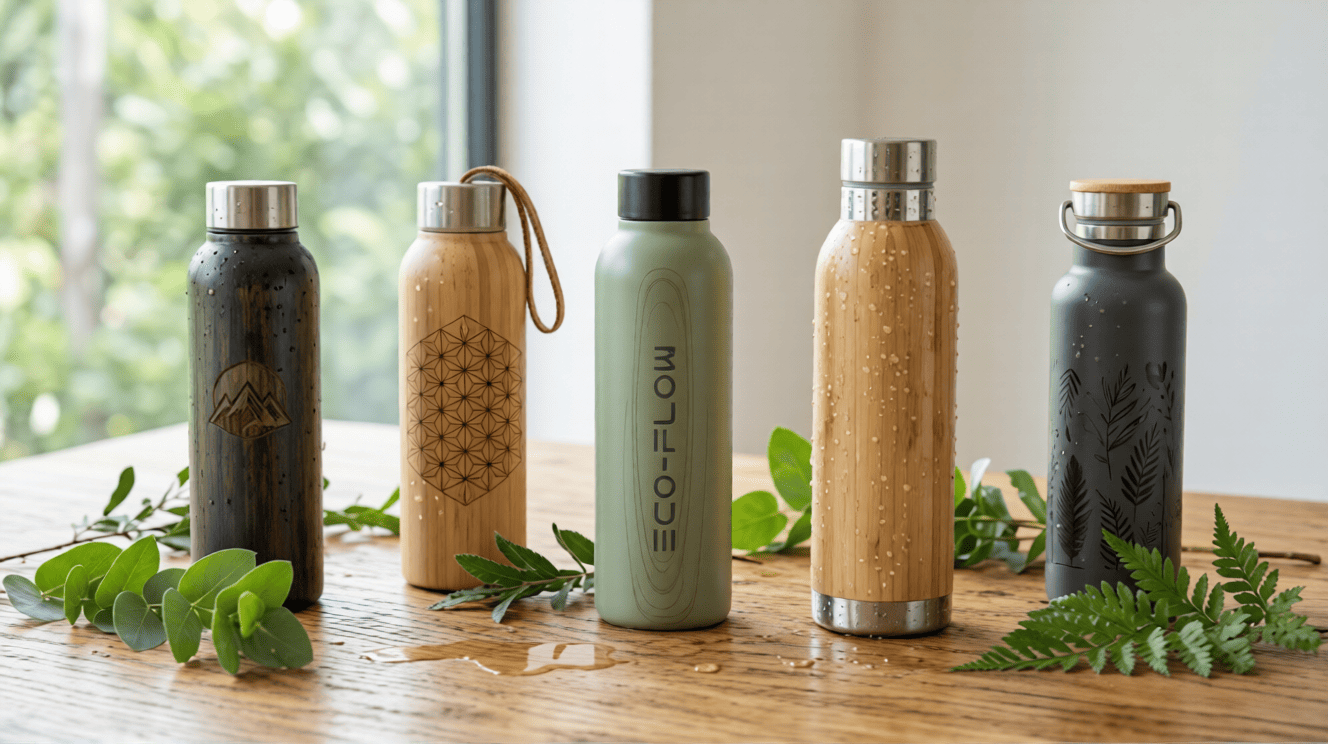
Bamboo water bottles
They look good. They market as green. But do they deliver, or just add another layer to the reusable bottle circus?
I picked one up a while back because the plastic guilt was real and stainless steel felt too industrial. The bamboo version promised natural vibes without the usual trade-offs. After using it, reading how they get made, and testing against the usual suspects, here’s the unfiltered take.
Real Pros of Bamboo Water Bottles
They feel nice in your hand.
They stay cooler than plastic in summer.
Many brands use natural materials and skip BPA.
They look better than plain metal on your desk or in photos.
Some models stay leak-proof even after months of daily use.
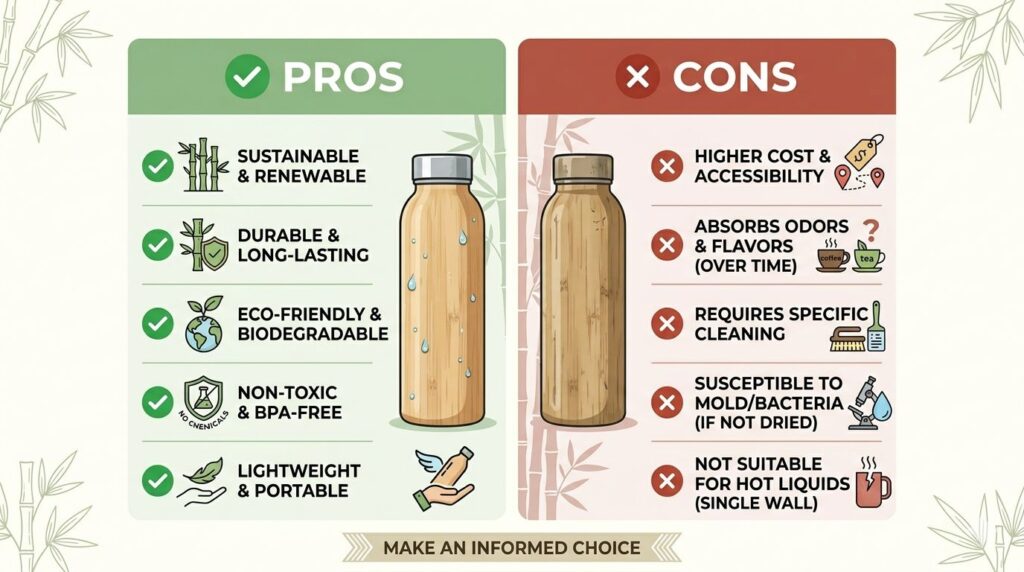
What you’re actually buying
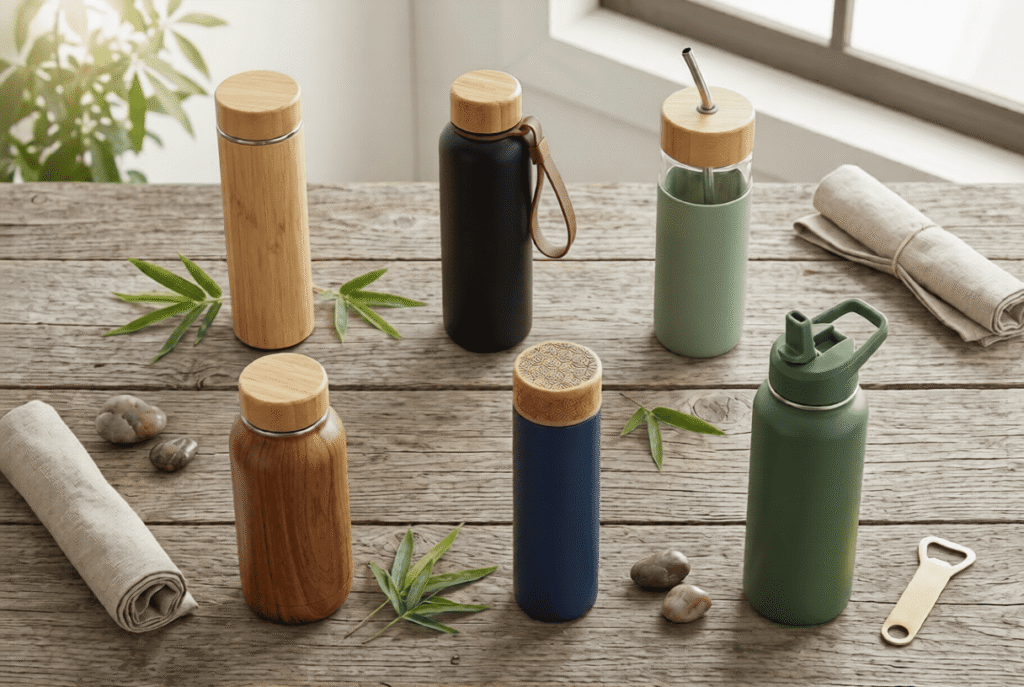
Most bamboo water bottles aren’t carved from a single stalk like those YouTube survival videos. That’s cute for crafts, but not practical for daily carry.
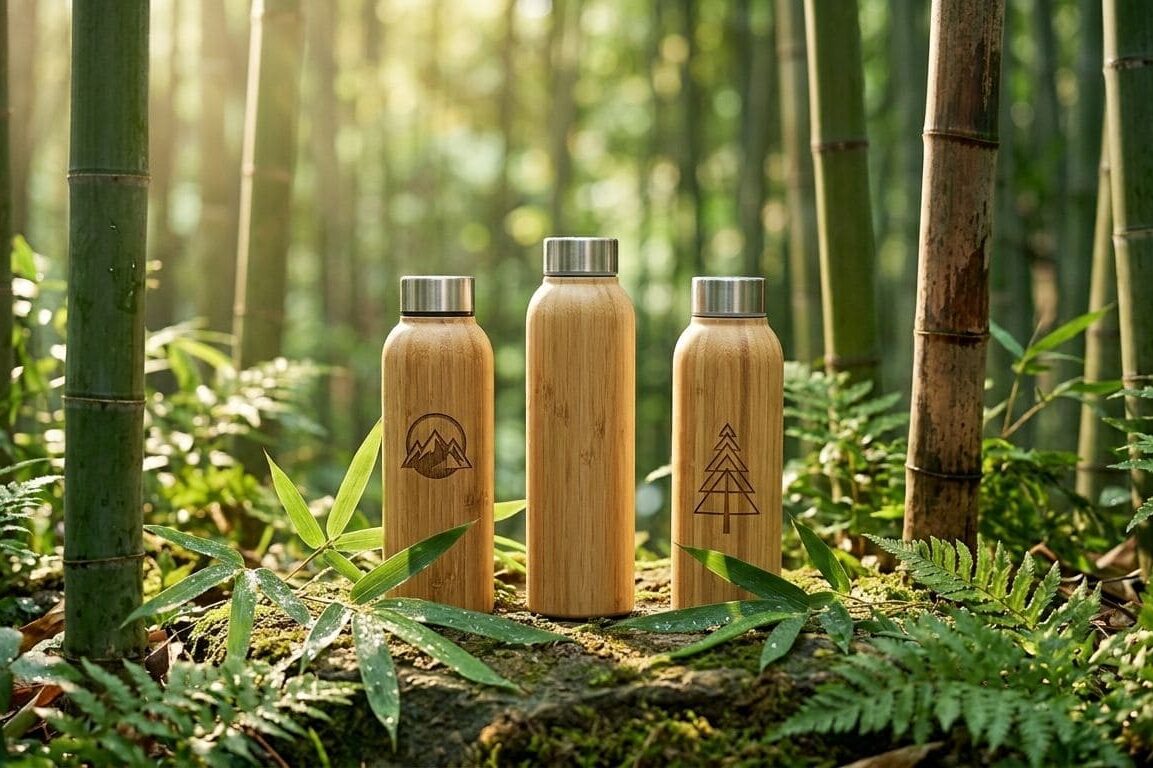
Real ones usually pair a stainless steel or glass liner with a bamboo outer shell or lid. The bamboo gives the aesthetic and some insulation. The liner handles the actual drinking part. Pure hollowed bamboo exists, but it needs serious treatment to hold water without leaking or growing mold.
The process starts simple. Artisans pick mature bamboo, around 3-4 years old. They cut sections, clean them, hollow out the nodes, boil to kill sugars that attract pests, shape, polish, and often coat the inside with food-safe resin or drop in a liner.
It feels handmade even at scale. The grain shows. The weight sits different in your hand than cold metal. That’s part of the appeal.
Why bamboo makes sense
Bamboo grows stupidly fast. Some species shoot up three feet a day. It needs almost no pesticides or fertilizer compared to cotton or traditional timber. Harvest it and the roots stay put, so the plant regrows. No replanting drama.
That beats plastic, which comes from oil and sticks around for centuries. It also sidesteps some of the mining energy baked into stainless steel production. When your bottle reaches end of life, the bamboo part breaks down naturally instead of sitting in a landfill.
I like that part. You drink water from something that grew quick and returns to dirt without much fuss.
The practical side
Temperature control varies. Full stainless with bamboo accents keeps drinks cold for 24 hours in good models. Pure bamboo or thin shells do less heavy lifting but still outperform plastic on hot days.
Weight feels balanced. Not as light as cheap plastic, not as tank-like as big steel bottles. The bamboo texture grips better when your hands get sweaty during a hike.
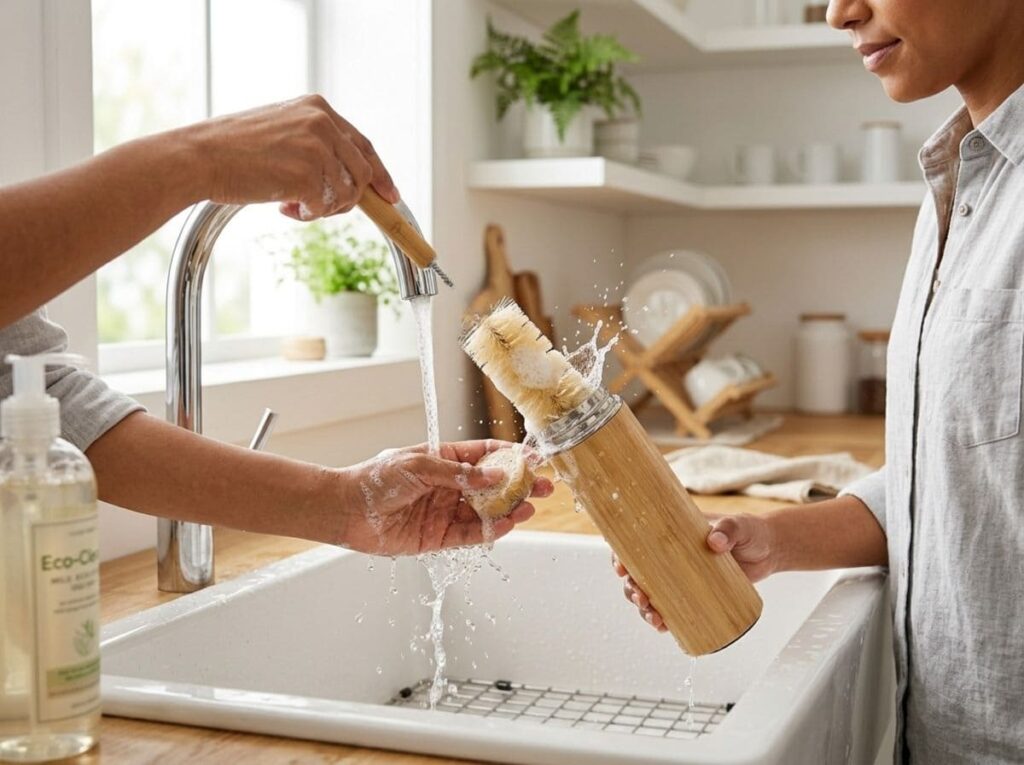
Cleaning takes effort. Narrow mouths hide gunk. Bamboo lids or sleeves can trap moisture if you don’t dry them properly. One Reddit user mentioned mold on bamboo lids after repeated use. Fair warning. Air dry everything.
Durability depends on construction. Drop a full steel-lined one and it probably survives. Pure bamboo might crack. The nice ones use shock-absorbing bits inside to protect the liner.
Compared to the alternatives
Plastic bottles win on price and weight. They lose everywhere else. They leach microplastics over time. They end up in oceans. Even “BPA-free” ones raise eyebrows after repeated heating and washing. No thanks.
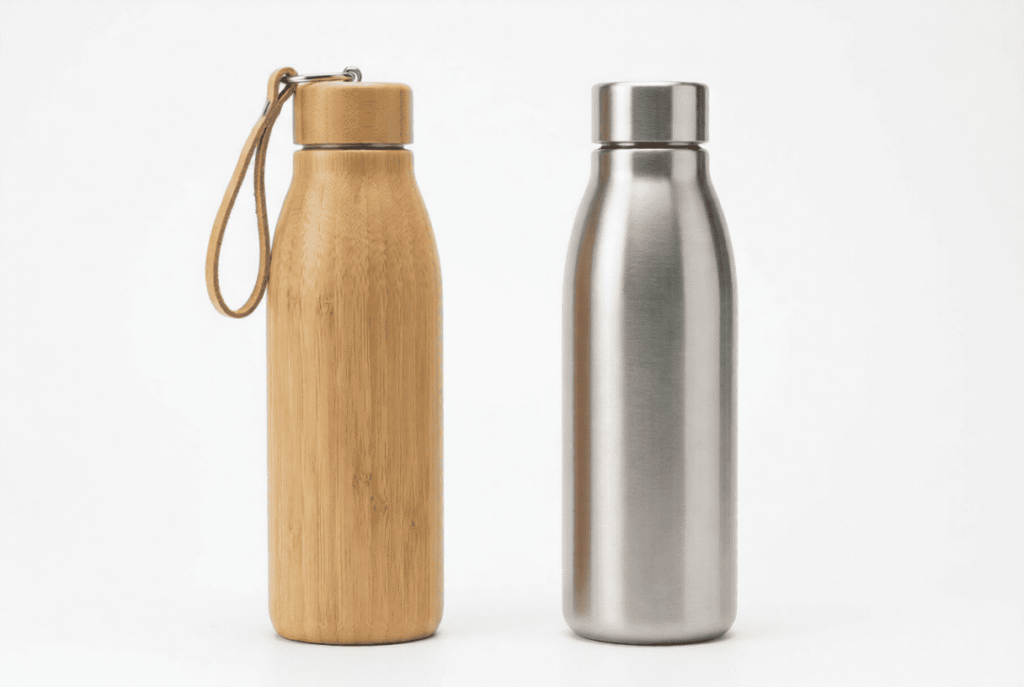
Stainless steel dominates for a reason. Indestructible. No taste transfer. Easy to clean. Recyclable forever. But it feels cold and corporate. Scratches show. Some people hate the metallic look.
Glass gives you the purest taste. Zero chemical worries. Heavy and breakable though. Bamboo accents on glass bottles try to soften that, but you’re still carrying fragile cargo.
Bamboo sits in the middle. It adds warmth and visual calm that metal lacks. The sustainability story feels less compromised than virgin plastic. It doesn’t pretend to solve everything.
Real talk on the downsides
Marketing sometimes stretches. Not every bamboo bottle is 100% natural or magically carbon-negative. Processing, shipping, liners, and resins add footprint. A cheap one might use questionable coatings or low-grade bamboo that splits after a season.
Mold risk is real if you slack on drying. Some lids absorb smells. Laser engraving looks slick but can create spots where bacteria hang out if not sealed right.
Price sits higher than basic plastic, similar to decent steel. You pay for the look and story. Worth it if you actually use it daily. Pointless if it sits on a shelf.
Who should buy one
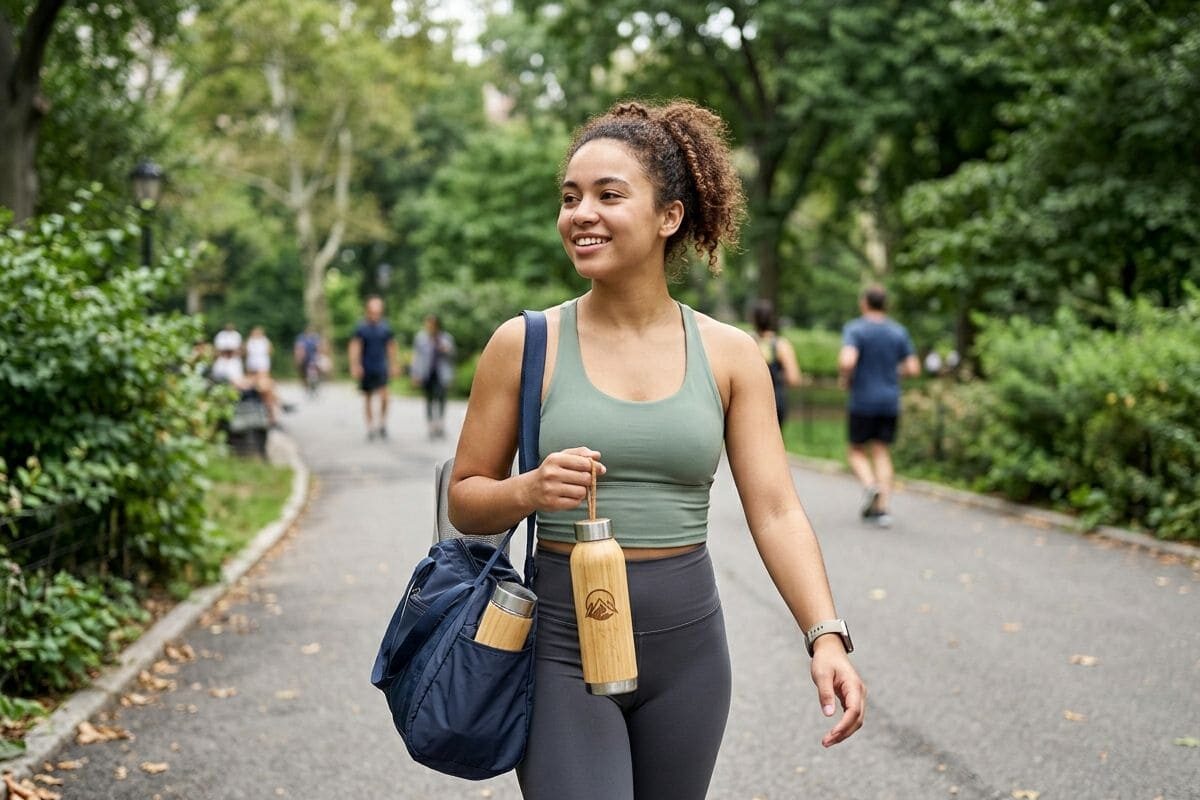
You reach for it every morning and it matches your bag. The natural texture makes you want to pick it up instead of the boring black steel one. You care about cutting single-use plastic but don’t want to preach about it.
Office workers, hikers who like aesthetics, people tired of metal condensation rings on desks. Anyone who wants their water bottle to feel like an object worth keeping instead of disposable gear.
Care tips that actually matter
- Rinse immediately after use.
- Dry the bamboo parts completely. Prop them open.
- Avoid dishwashers unless the brand explicitly says okay. Heat and detergents beat up natural materials.
- Check seals regularly. Replace if they wear out.
- Don’t store sugary drinks for days. That’s asking for bacteria.
Follow those and it lasts years.
The bigger picture
Single bottles won’t save the planet. But they chip away at the 500 billion single-use plastics we toss annually. Bamboo versions make the switch feel less like punishment and more like an upgrade in daily texture.
I still rotate between a steel one for gym abuse and the bamboo for everything else. The bamboo one gets more compliments. People ask where I got it. That small nudge spreads better than lectures.
Bamboo isn’t perfect. No material is. It forces honest trade-offs: beauty and renewability versus raw toughness. For a lot of us, that’s the right balance.
Next time you’re staring at another plastic bottle in the store or scrolling endless steel options, grab the bamboo one if it speaks to you. Use it hard. Dry it properly. See how it holds up in your actual life.
It might not change the world overnight. But it makes your corner of it feel a little better every time you take a sip.
FAQ about bamboo water bottles
Are bamboo water bottles actually 100% bamboo?
No. Most combine a stainless steel or glass liner with a bamboo sleeve or lid. Pure hollowed bamboo exists but stays rare for daily use. The liner does the real work of holding liquid safely.
Do they keep drinks cold or hot?
Depends on the build. Steel-lined versions with thick insulation match decent thermoses — cold for 12-24 hours, hot for several. Basic bamboo shells offer light insulation. Better than plastic, not always better than premium steel.
Is mold a real problem?
Yes, if you slack on drying. Bamboo loves moisture. Rinse after use, air dry everything completely with the lid off, and you stay fine. Skip that step and you risk smells or spots in the lid.
Can I put hot drinks in them?
Only if it has a proper stainless liner. Cheap all-bamboo ones warp or crack with heat. Check the specs before pouring coffee.
How do I clean it?
Warm water and mild soap. Bottle brush for the inside. Hand wash only — dishwashers wreck the bamboo. Dry thoroughly. Some people wipe the exterior with mineral oil now and then to keep it looking fresh.
Are they safe? No weird chemicals?
Food-grade ones use safe liners and low-VOC treatments. Still, buy from brands that spell out their materials. Avoid mystery no-name imports.
How long do they last?
Two to five years with normal use. The bamboo ages gracefully with scratches and patina. The steel liner usually outlives the outer shell. Drops can crack pure bamboo parts.
Are they worth the extra money?
If the look and feel make you use it every day, yes. Otherwise a solid steel bottle does the job cheaper and tougher.
Do bamboo water bottles leak?
Good ones with proper seals don’t. Test the lid at home before trusting it in your bag.
Usefull Links
- https://meserii.com/blogs/bamboo/bottles-pros-and-cons
- https://ecosaathi.com/store/blog/bamboo-water-bottle-benefits
- https://www.bambaw.com/pages/production-process
- https://www.kleankanteen.com/collections/reflect