
|
Getting your Trinity Audio player ready...
|
is a water flosser worth it?
I used to think water flossers were one of those appliances people buy after a dentist guilt-trip.
You know the category.
Right next to posture correctors, dusty treadmills, and the weird vegetable spiralizer somebody used twice in 2022.
Then I tried one consistently for a couple weeks.
And honestly, my gums stopped bleeding almost immediately.
That part surprised me.
Because most people assume water flossers are basically expensive mouth fountains that spray water around dramatically while accomplishing nothing.
Turns out they’re genuinely useful for certain people.
Especially if you hate string floss.
Which, statistically, most people clearly do.
Dentists keep recommending flossing. People keep pretending they’ll start tomorrow. Tomorrow keeps becoming next month.
A water flosser at least gives some people a routine they’ll actually stick with.
That matters more than perfect technique people never use.
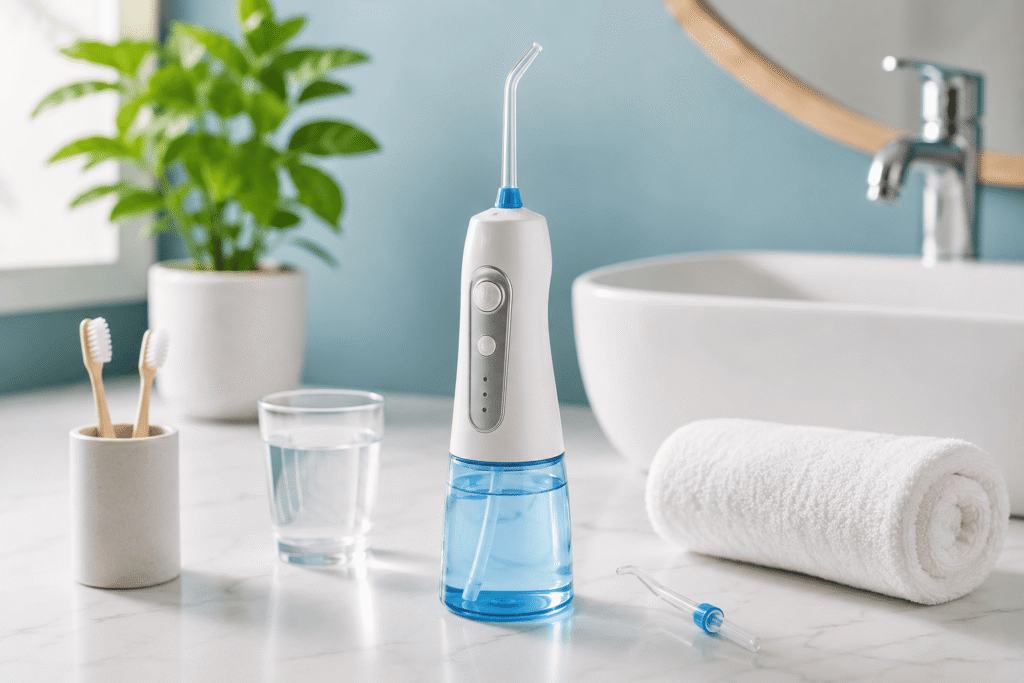
What is a water flosser?
A water flosser shoots a pressurized stream of water between your teeth and along your gumline.
That’s it.
The stream helps remove food debris, plaque, and bacteria from areas toothbrush bristles struggle to reach.
Most units include:
- A water reservoir
- A pump
- A handheld nozzle
- Pressure settings
- Different cleaning tips
Some sit on your bathroom counter looking vaguely medical.
Others are cordless and small enough for travel.
And yes, the first time you use one, you’ll probably spray water across the mirror like somebody losing a tiny pressure washer fight.
Everybody does it.
Do water flossers actually work?
Yeah.
Especially for gum health.
A lot of dental studies show water flossers help reduce gingivitis and gum bleeding when used consistently.
People with braces often benefit the most because brackets trap food constantly. Traditional floss threading around wires becomes annoying fast.
Water flossers simplify the whole process.
Same thing for crowns, bridges, implants, and permanent retainers.
Anything that makes normal floss awkward usually makes water flossers more attractive.
But are they better than regular floss?
Depends who you ask.
Some dentists still prefer traditional floss because it physically scrapes plaque off tooth surfaces. Water flossers don’t create the same scraping action.
But here’s the practical reality:
A mediocre cleaning routine you actually follow beats a perfect routine you avoid forever.
And lots of people genuinely hate string floss.
They rush it.
Skip it.
Lie about it during dental appointments while making intense eye contact with the hygienist.
You know exactly what I mean.
Why gums bleed less with water flossers
Inflamed gums bleed easily.
Food particles and plaque sitting near the gumline irritate tissue over time. Water flossers help flush out that buildup before irritation gets worse.
The improvement can happen surprisingly fast too.
Some people notice reduced bleeding within a week or two.
Especially if they previously flossed approximately never.
Water flossers feel weird at first
Very weird.
The pressure sensation takes adjustment.
The first few uses usually involve:
- Water dripping down your wrist
- Accidental mirror spraying
- Overconfident pressure settings
- Strange gargling noises
- Mild panic when the stream hits sensitive gums
Then your brain adapts.
After that, regular floss can start feeling primitive in comparison.
Like using dial-up internet after broadband.
People with braces love these things
Because braces collect food aggressively.
Tiny spinach fragments somehow survive brushing, mouthwash, and several apparent laws of physics before reappearing later during conversations.
Water flossers blast around brackets far more easily than string floss.
Orthodontists recommend them constantly for that reason.
Especially for teenagers who already struggle maintaining decent oral hygiene during orthodontic treatment.
Are expensive water flossers worth it?
Sometimes.
The cheap models work fine for basic cleaning.
But higher-end machines usually have:
- Better pressure control
- Quieter motors
- Larger reservoirs
- More consistent water flow
- Improved tip designs
- Longer lifespan
Cheap units can feel underpowered or flimsy.
Some sound like angry kitchen appliances fighting for survival at 6 a.m.
And poorly built reservoirs leak eventually.
Usually right onto electrical cords because the universe enjoys irony.
Countertop vs cordless water flossers
This choice matters more than brand for most people.
Countertop models
These plug into the wall and sit permanently on your sink counter.
Pros:
- Stronger pressure
- Bigger water tanks
- Longer cleaning sessions
- Better for families
Cons:
- Takes space
- Looks cluttered
- Harder to travel with
Cordless models
Battery-powered and portable.
Pros:
- Travel friendly
- Easier storage
- Cleaner bathroom setup
Cons:
- Smaller reservoirs
- Less power sometimes
- Frequent charging
If you travel constantly, cordless makes sense.
If you want maximum pressure and daily use, countertop units usually feel better.
Water flossers help people with sensitive gums
Traditional floss can irritate sensitive areas if technique gets rough.
Especially when people aggressively snap floss into the gums like they’re starting a lawnmower.
Water flossers feel gentler for many users.
The adjustable pressure settings help too.
You can start low and increase gradually instead of attacking your gums immediately with full-pressure hydro warfare.
The downside nobody mentions enough
They’re messy.
At least initially.
Using a water flosser correctly requires leaning over the sink while partially closing your mouth around the nozzle.
Otherwise water ends up everywhere.
Including places water should never logically reach.
Once you learn the angle, it’s fine.
But the learning curve exists.
Can water flossers remove plaque?
Partially.
They help disrupt plaque and flush bacteria away from the gumline.
But they don’t scrape hard plaque deposits off teeth the same way physical floss does.
That’s why many dentists recommend using both.
And honestly, combining brushing, regular floss sometimes, and water flossing gives pretty solid results for most people.
Water temperature matters more than expected
Cold water feels brutal on sensitive teeth.
Warm water feels much better.
Especially if you have gum sensitivity or dental work.
Some people add mouthwash into the reservoir too.
Usually diluted.
Straight mouthwash pressure-blasted across your gums feels like making a series of terrible life decisions very quickly.
The time factor matters
Traditional flossing takes patience.
Water flossers feel faster for a lot of people.
That convenience changes consistency.
Because dental habits fail when they feel annoying.
Tiny friction points kill routines constantly.
And people absolutely abandon habits over surprisingly small inconveniences.
Are water flossers good for bad breath?
Sometimes, yes.
Especially if food debris trapped between teeth contributes to odor.
Flushing bacteria from gum pockets can improve breath noticeably for some users.
But chronic bad breath can also come from:
- Cavities
- Dry mouth
- Tonsil stones
- Gum disease
- Digestive issues
A water flosser won’t magically solve every cause.
Still, cleaner gums generally smell better than inflamed ones.
That’s just reality.
Kids and water flossers
Mixed results.
Some kids think they’re fun.
Others treat them like tiny dental flamethrowers and spray siblings across the bathroom.
Parental supervision helps.
Especially during the first few attempts.
The psychology of “fun” dental tools
This sounds silly but it matters.
People maintain habits longer when tools feel satisfying to use.
Electric toothbrushes succeeded partly because vibration timers and smooth movement feel more engaging than manual brushing.
Water flossers tap into the same idea.
The pressure stream feels active.
You can literally see debris flushing out sometimes.
That immediate feedback reinforces the habit.
Human brains love visible results.
Water flossers and gum disease
Dentists often recommend them for periodontal issues because gum pockets trap bacteria below the surface.
Water pressure can reach deeper areas than brushing alone.
People with early gum disease sometimes see noticeable improvement after consistent use.
Still, severe periodontal disease needs professional treatment too.
A countertop appliance can’t undo years of neglect by itself.
Travel water flossers are getting better
Older cordless units felt weak.
Newer ones improved a lot.
Battery life lasts longer now, and USB charging simplified travel.
Still, compact units usually sacrifice reservoir size.
You refill them more often.
That becomes mildly annoying during longer cleaning sessions.
Do dentists personally use them?
A lot do.
Especially orthodontists.
And honestly, dental hygienists can usually tell when somebody cleans between their teeth regularly.
Your gums reveal the truth immediately.
Which is unfortunate for people who confidently claim they floss daily despite obvious evidence suggesting otherwise.
Are they worth the money?
For many people, yes.
Especially if:
- You hate traditional floss
- You have braces
- Your gums bleed easily
- Food gets trapped constantly
- You have implants or bridges
- You avoid flossing because it feels tedious
A water flosser won’t magically create perfect teeth overnight.
But consistent gum cleaning genuinely matters long term.
And oral health problems get expensive fast.
Very fast.
Best situations for a water flosser
They work especially well for:
- Braces
- Permanent retainers
- Crowns
- Dental implants
- Bridges
- Tight teeth spacing
- Gum sensitivity
Basically any mouth situation where regular floss becomes frustrating.
Situations where they matter less
If you already floss thoroughly every single day with excellent technique, you may not notice dramatic improvement.
Though honestly, very few people actually floss that consistently.
Dentists know this.
You know this.
Everybody knows this.
Maintenance matters
Water flossers need cleaning too.
Especially the reservoir.
Warm stagnant water plus bathroom humidity creates perfect conditions for buildup.
Most manufacturers recommend periodic cleaning with vinegar or mild disinfecting solutions.
Ignoring maintenance long enough creates smells that immediately destroy the whole “fresh clean mouth” experience.
Noise levels vary wildly
Some machines hum quietly.
Others sound like a tiny garage compressor waking up for work.
Morning users in shared bathrooms learn this quickly.
Especially apartment dwellers with thin walls.
The real question
You’re asking “is a water flosser worth it” because you want someone to tell you yes. You want permission to buy a gadget. You think the right tool will make you the kind of person who flosses.
It won’t.
Tools don’t change behavior. Systems do. Put the floss next to your toothbrush. Use it before you brush. Do it while you scroll your phone. That’s what works.
A water flosser is just a more expensive way to learn that lesson.
FAQs about is a water flosser worth it?
Is a water flosser better than string floss?
It depends on your needs and consistency. Many dentists recommend using both for the best cleaning.
Do water flossers help with bleeding gums?
Yes. Consistent use often reduces gum inflammation and bleeding.
Can water flossers damage gums?
Using extremely high pressure aggressively can irritate sensitive gums, but normal use is generally safe.
Are water flossers good for braces?
Very good. They help remove trapped food around brackets and wires.
How often should you use a water flosser?
Most people use it once daily, usually before brushing.
Can I put mouthwash in a water flosser?
Usually yes, especially diluted mouthwash. Check manufacturer instructions first.
Are cordless water flossers powerful enough?
Many modern cordless models work well, though countertop units usually provide stronger pressure.
Final thoughts
A water flosser probably won’t transform your life.
Your taxes still exist afterward. Laundry still piles up. Your email inbox still looks mildly threatening.
But your gums might get healthier.
And honestly, that’s enough.
People underestimate how much better a clean mouth feels once inflammation drops and bleeding stops happening every time you brush.
The biggest advantage is consistency.
A lot of people actually use water flossers regularly because they feel easier and more satisfying than string floss.
That habit matters way more than perfection.
Usefull links
https://health.clevelandclinic.org/do-water-flossers-work
https://www.mayoclinic.org/healthy-lifestyle/adult-health/in-depth/dental/art-20047475
https://health.clevelandclinic.org/do-water-flossers-work?
https://www.healthline.com/health/dental-and-oral-health/waterpik-vs-flossing?