
|
Getting your Trinity Audio player ready...
|
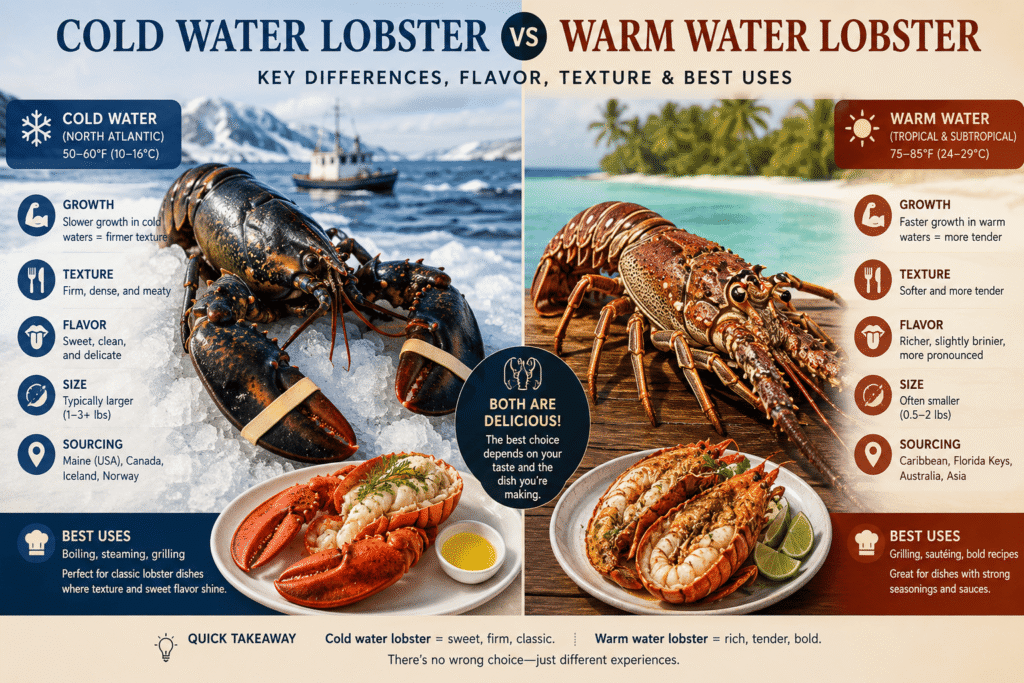
Cold water vs warm water lobster
Walk into a seafood market in Maine, Dubai, Bangkok, or Karachi and you’ll hear the same argument: cold water lobster tastes better.
Maybe. Depends on what you want.
A lobster pulled from icy Atlantic water tastes different from one caught in warm Caribbean seas. The shell looks different. The meat cooks differently. Even the claws tell a story.
And people get weirdly emotional about it.
I’ve watched chefs argue over this like they were debating football teams. One guy in Boston swore warm water lobster tasted “like disappointment wrapped in shellfish.” Then I ate grilled Caribbean lobster with garlic butter in Belize and understood why half the planet loves it.
Both types work. They just work for different meals.
What cold water lobster actually is
Cold water lobster usually means the American lobster caught in the North Atlantic. Think Maine, Nova Scotia, Newfoundland, and parts of New England.
You know the look. Big claws. Dark shell. Thick tail.
The scientific name is Homarus americanus, though nobody at a fish counter is using Latin before lunch.
These lobsters grow slowly because the water stays cold most of the year. Slow growth changes the texture of the meat. The muscle fibers stay tighter. You bite into it and feel a firmer snap.
That texture is the whole reason people pay crazy prices for Maine lobster rolls in summer.
Cold water lobster also tends to carry more meat in the claws. Crack open a large one and you’ll pull out chunky pieces that almost look sculpted.
The flavor leans sweet and briny. Clean. Sharp. You taste the ocean first.
A 2 pound Maine lobster can take 5 to 7 years to reach that size. Cold water slows everything down.
Including arguments at seafood restaurants when someone orders theirs overcooked.
What warm water lobster means
Warm water lobster usually refers to spiny lobster. These live in tropical and subtropical waters across the Caribbean, South Africa, Australia, Brazil, and parts of the Indian Ocean.
Different animal entirely.
No giant claws. Long antennae that look like they belong on a mutant insect. Bigger tails compared to body size.
Warm water lobster is built for tail meat.
Restaurants in beach towns love it because tail presentation looks dramatic on a plate. Slice open a grilled lobster tail beside rice, lemon, and charred vegetables and people immediately start taking photos.
Spiny lobster meat feels softer than cold water lobster. Sometimes buttery. Sometimes slightly chewy if cooked too long.
The flavor is milder.
That’s why warm water lobster works so well with strong sauces. Garlic butter, chili lime, jerk seasoning, Cajun spice, miso glaze. The meat absorbs flavor fast.
Cold water lobster can bully delicate sauces. Warm water lobster plays nicer.
What you’re actually eating
Cold water lobsters come from the North Atlantic. Maine, Canada, Iceland. Homarus americanus if you want the Latin name. They’ve got those big front claws you see in every cartoon. Two of them. One crusher, one cutter.
Warm water lobsters live in the Caribbean, Florida, Brazil, Australia. Spiny lobsters. Rock lobsters. No claws at all. Just antennae that look like spikes.
The texture difference changes everything
Texture decides this debate more than flavor.
Cold water lobster has density. Bite resistance. A kind of clean pull.
Warm water lobster feels looser and softer.
People who grew up eating Maine lobster usually call cold water meat “better.” People who love grilled seafood platters often lean toward warm water tails because they stay juicy under heavy seasoning.
Neither group is wrong.
Think about steak for a second.
Some people love the dense chew of a ribeye. Others want tender filet mignon that barely fights back. Lobster works the same way.
And cooking style matters.
Boiling keeps cold water lobster sweet and structured. Grilling flatters warm water lobster because the tail meat handles smoke and flame really well.
I probably wouldn’t waste expensive cold water claw meat under a thick pineapple glaze. But warm water lobster? Absolutely.
The science nobody talks about
Cold water slows down metabolism. Lobsters in Maine grow like molasses. A 1-pound cold water lobster is probably 5-7 years old. Some live 20+ years before they hit legal size.
Warm water lobsters grow fast. Warmth speeds everything up. They hit harvest size in 2-3 years. Grow like weeds.
That slow growth in cold water packs the meat tighter. Denser muscle fibers. More flavor concentration. Think grass-fed beef vs grain-fed. Same logic.
The cold water lobsters also build more fat. Not a ton—we’re not talking salmon here—but enough to carry flavor. Warm water lobsters are leaner. Less intramuscular fat means less sweetness.
So yeah. The expensive one from Maine? It took seven years to get to your plate. The cheap one from the Bahamas? Grew up in two. You taste every one of those extra years.
I’ve eaten both. Here’s what I actually noticed.
Cold water (Maine):
- Sweeter. Like, noticeably sweet.
- Snappier bite. Meat holds together.
- Tail meat is fatter, more tender.
- Claw meat is the prize. Soft, delicate, almost buttery without butter.
- You pay for it. $25-35 per pound live.
Warm water (Florida/Spiny):
- Milder taste. Less sweet, more just “lobster-ish.”
- Softer texture. Almost spongy sometimes.
- Tail only. No claws means less total meat.
- Cheaper. $12-18 per pound.
- Still good. Just different.
I ordered a warm water tail in a restaurant once, didn’t ask first, and genuinely thought they overcooked it. Nope. That’s just the texture difference. Took me a second to recalibrate.
The price gap tells the real story
Go to any seafood market. Look at the labels.
Maine lobster: 30/lb.Caribbeanspiny:15/lb. Australian rock lobster? That’s the weird one—warm water but expensive because Australia has strict quotas. Rules always mess with the economics.
But generally? Cold water costs double. You’re paying for the slow growth, the shipping from up north, and the fact that claw meat is a pain to pick.
Warm water is the value play. Less meat per pound, but you’re not paying for the claws you won’t eat anyway.
Which one should you actually buy?
Depends what you’re doing.
Boil a whole lobster and crack it at the table? Cold water. No contest. The claw meat alone makes it worth it. That moment when you pull out a whole knuckle in one piece? Warm water can’t do that. No claws.
Lobster rolls? Cold water again. You want that sweet, snappy meat with a little mayo and a toasted bun. Warm water gets lost in the dressing.
Pasta? Soup? Something where the lobster is an ingredient, not the star? Warm water is fine. The sauce carries it. Save your money.
Grilling? Warm water actually holds up better. Cold water tail dries out faster over high heat. Spiny lobster tail on a grill with garlic butter? That works.
I’ve made both mistakes. Tried Maine tail on the grill—rubbery. Tried warm water in a roll—disappointing. Match the lobster to the dish.
Flavor side by side
Here’s the simplest way I can explain it.
Cold water lobster tastes sharper and sweeter.
Warm water lobster tastes softer and more neutral.
If you steam both with almost no seasoning, the difference jumps out immediately.
Cold water lobster gives you that salty Atlantic edge people obsess over in coastal New England.
Warm water lobster stays mellow. Some people describe it as slightly creamy.
I think warm water lobster benefits more from butter, citrus, herbs, or spice.
Cold water lobster can stand alone with almost nothing added.
That’s why classic lobster rolls stay simple.
Butter or mayo. Maybe celery. Maybe chives if the chef wants to get fancy. The lobster carries the sandwich.
Which lobster is better for grilling?
Warm water lobster wins here for me.
Especially tails.
The meat stays flexible on high heat and takes smoky flavor really well. Caribbean restaurants figured this out years ago.
Split lobster tails grilled over charcoal with garlic butter and lime is hard to beat.
Cold water lobster can grill nicely too, especially halved whole lobsters. But the meat tightens fast if you overcook it by even a couple minutes.
And lobster turns rubbery fast.
Every seafood cook has seen somebody destroy a beautiful lobster by cooking it like a chicken breast.
The safe move:
- Pull lobster meat once it turns opaque.
- Use medium heat instead of inferno-level flames.
- Add butter near the end.
- Stop cooking earlier than your instincts tell you.
Residual heat keeps working after the lobster leaves the grill.
Which one works better in pasta?
Cold water lobster gives pasta more personality.
The claw meat especially.
A simple lobster linguine with white wine, garlic, butter, and parsley feels richer with cold water lobster because the meat stays chunky and distinct.
Warm water lobster blends into the sauce more.
That can still taste great. Especially in spicy pasta.
I had a lobster arrabbiata in Miami years ago using warm water tails. The chili sauce grabbed onto the softer meat perfectly.
Cold water lobster probably would’ve fought the sauce a little.
So the answer depends on what you want the pasta to do.
Do you want the lobster leading the dish? Go cold water.
Do you want the sauce driving? Warm water works beautifully.
Nutrition differences
Nutritionally, the gap is small.
Both types are high in protein and low in carbohydrates. Both contain selenium, zinc, vitamin B12, and omega 3 fats.
A 3 ounce serving usually lands around 80 to 100 calories depending on preparation.
Butter changes the math fast.
Dipping lobster in half a cup of melted butter turns a lean seafood dinner into something your cardiologist would probably side-eye.
Still delicious though.
Warm water lobster sometimes contains slightly less sodium naturally, though the difference isn’t dramatic enough for most people to notice.
Protein texture matters more than nutrition stats in real-world eating.
Frozen vs fresh matters more than people admit
Here’s where the conversation gets messy.
A fresh warm water lobster tail can taste better than poorly handled cold water lobster.
Storage changes everything.
Seafood starts losing quality fast once temperature control slips.
A live Maine lobster cooked the same day tastes incredible. A mishandled one sitting too long in weak restaurant tanks can turn mushy and watery.
Frozen warm water tails get mocked sometimes, but modern flash freezing works surprisingly well.
Especially on boats that freeze the tails immediately after harvest.
If you’re buying lobster inland, frozen high-quality tails often beat “fresh” lobster that spent 4 days traveling in stressed-out conditions.
People romanticize fresh seafood.
Sometimes the frozen stuff quietly wins.
Sustainability questions
This part matters more now than it did 20 years ago.
Maine’s lobster fishery has long been treated as one of the better-managed fisheries in the world. Rules around trap limits, breeding females, and minimum sizes helped protect populations.
But warming oceans are changing migration patterns.
Lobsters move north as water temperatures rise. Fisheries in some southern areas have struggled.
Warm water lobster fisheries vary a lot by region.
Some operate responsibly. Others have faced overfishing concerns.
If sustainability matters to you, look for certifications from groups like the entity[“organization”,”Marine Stewardship Council”,”Global seafood certification organization”] or ask where the lobster came from.
Seafood labels stay weirdly vague sometimes.
“Product of multiple countries” tells you almost nothing.
Restaurant menus play tricks with lobster names
This catches people all the time.
A menu saying “lobster tail” often means warm water lobster.
A menu saying “Maine lobster” usually means cold water lobster.
Restaurants know customers associate Maine lobster with premium pricing, so they mention it loudly when they’re using it.
If the menu stays vague, ask.
Especially if you’re paying steakhouse prices.
Some restaurants also use langostino in dishes labeled loosely as lobster-style seafood. Langostino tastes decent, but it’s a squat lobster relative, not true lobster.
Tiny detail. Big price difference.
Best uses for cold water lobster
Cold water lobster shines in dishes where the lobster itself stays center stage.
A few examples:
- Lobster rolls
- Steamed whole lobster
- Butter-poached claw meat
- Lobster bisque
- Lobster mac and cheese
- Cold lobster salad
The meat keeps its structure.
That matters.
You can pull apart chunks cleanly instead of getting shredded seafood threads floating around in sauce.
And claw meat has texture that almost feels luxurious when cooked properly.
There’s a reason New England restaurants built entire tourist economies around this stuff.
Best uses for warm water lobster
Warm water lobster works beautifully in louder dishes.
Especially grilled food.
Great uses include:
- Grilled lobster tails
- Caribbean-style lobster with spice rubs
- Lobster tacos
- Surf and turf plates
- Coconut curry lobster
- Skewers and kebabs
The tail meat handles marinades better.
And the visual presentation looks dramatic because warm water tails tend to be larger and easier to plate cleanly.
A split grilled lobster tail beside steak still has strong “special occasion dinner” energy, even if you’re eating it in flip-flops near a beach.
So which lobster should you buy?
Depends what you’re cooking.
For classic lobster flavor with dense sweet meat, cold water lobster probably wins.
For grilling, heavy seasoning, tacos, pasta with spice, or tropical-style seafood plates, warm water lobster fits naturally.
I keep both in different mental categories.
Cold water lobster feels like something you respect carefully. Warm water lobster feels more relaxed.
One belongs beside melted butter and white tablecloths.
The other belongs near charcoal smoke, citrus, and loud music drifting across a beach restaurant.
And honestly, that’s why this debate never ends.
People aren’t just arguing about lobster.
They’re arguing about the kind of meal they want to remember.
The “best lobster in the world” myth
People argue about this constantly.
Maine says theirs is best. Canada says the same thing (same species, basically identical). Australia says their rock lobster is superior. South Africa says no, ours.
Here’s my take: cold water clawed lobster is a different eating experience than warm water spiny lobster. They’re not better or worse. They’re just different.
If you want sweet claw meat and that classic “lobster” flavor, go cold water. If you want a big tail on the grill with garlic and herbs, warm water does the job for half the price.
The real crime is paying cold water prices for warm water meat. Which happens all the time. Restaurants serve “lobster” and don’t specify. You assume Maine. You get Caribbean. And you wonder why it’s just okay.
Ask. “Where’s this from?” If they can’t answer, order something else.
Conclusion: Which One Should You Choose?
There is no universal winner in the cold water vs. warm water lobster debate. Cold water lobster particularly Maine or Canadian reigns supreme for pure, sweet, luxurious eating experiences and classic preparations. Its firm texture, white meat, and delicate flavor make it the choice for fine dining and special occasions.
Warm water lobster offers excellent value, convenience, and versatility in spiced or grilled dishes. It brings tropical flair and impressive tail sizes to the table at a more accessible price.
Ultimately, the “best” depends on your budget, cooking style, occasion, and personal taste. Many chefs keep both in their repertoire, matching the lobster to the dish rather than forcing one to fit all.
Next time you see lobster on a menu or in the store, ask the origin. Taste both side by side if possible. The ocean offers incredible diversity, and understanding these differences elevates your appreciation and enjoyment of one of nature’s finest gifts.
FAQs about cold water vs warm water lobster
Which tastes better, cold water or warm water lobster?
Most seafood lovers say cold water lobster tastes sweeter and cleaner. Warm water lobster has a softer flavor and works well with bold seasonings, grilled dishes, and spicy sauces.
Why is cold water lobster more expensive?
Cold water lobster grows slower and usually comes from tightly managed fisheries in places like Maine and Canada. Shipping live lobster also raises the cost.
Does warm water lobster have claws?
Usually no. Warm water lobster, often called spiny lobster, doesn’t have the large front claws you see on Maine lobster.
Which lobster is better for grilling?
Warm water lobster tails are excellent for grilling because the meat stays juicy and absorbs smoky flavor well.
Is Maine lobster cold water lobster?
Yes. Maine lobster is one of the most famous types of cold water lobster.
Which lobster is better for lobster rolls?
Cold water lobster is the classic choice for lobster rolls because the meat stays firm, sweet, and chunky.
Is frozen lobster bad quality?
Not always. High-quality frozen lobster tails can taste great, especially if they were flash-frozen immediately after harvest.
What color is warm water lobster?
Warm water lobster shells are often lighter, reddish, or spotted compared to the darker blue-black shell of cold water lobster.
Is warm water lobster healthy?
Yes. Both warm and cold water lobster are high in protein and relatively low in calories when served without heavy butter sauces.
How can I tell what type of lobster a restaurant uses?
Menus usually mention “Maine lobster” for cold water lobster. If the menu only says “lobster tail,” it’s often warm water lobster.