
|
Getting your Trinity Audio player ready...
|
Across the globe, from households in the UK to communities in Southeast Asia, there is a shared, age-old belief: “If you are unsure about the water, just boil it.”
For centuries, this was sound advice. Whether you were using a whistling kettle or a pot on a stove, boiling was the ultimate safety net against biological threats like Cholera, Typhoid, and E. coli.
However, as a Molecular Biologist who has spent years analyzing water quality data, I have to share a difficult truth. The water landscape has shifted dramatically in the last twenty years. We are no longer just fighting biology (bacteria); we are fighting chemistry.
While boiling is excellent at killing living organisms, it is completely helpless against modern industrial contaminants. In fact, by boiling your tap water, you might be inadvertently making toxins like “forever chemicals” (PFAS) and heavy metals more potent.
Here is the scientific breakdown of Boiled Water vs. Filtered Water, and why the method that saved our ancestors might be failing us today.
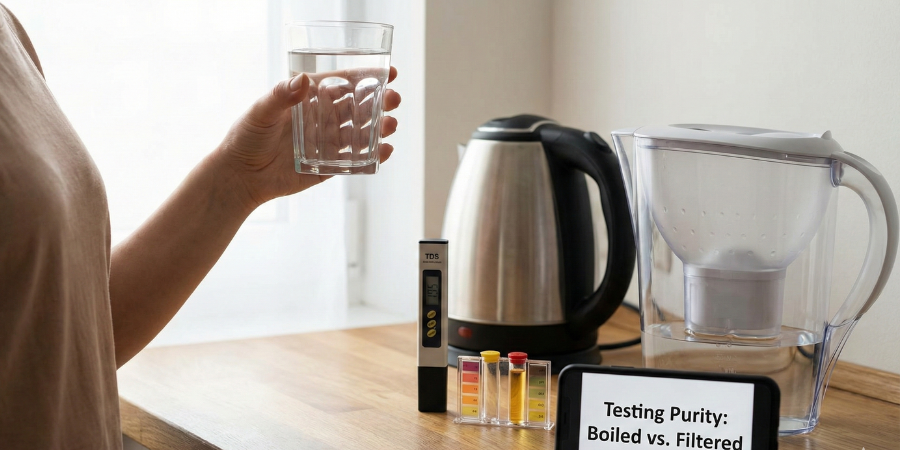
What Is Boiled Water?
To understand the difference, we must first look at the physics. Boiling water involves heating liquid H2O to its boiling point (100°C or 212°F) for a sustained period.
The Benefits of Boiled Water
Historically, the benefit was simple: Sterilization.
Heat ruptures the cell walls of bacteria, viruses, and parasites, effectively “killing” them. If your primary concern is an immediate stomach infection from a biological pathogen, boiling works.
The Dangers: The Myths of Boiling
However, water purification is not just about killing bugs. It is about removing impurities. When you boil water, you generate steam. That steam is pure water leaving your pot. But have you ever asked yourself: What gets left behind?
I call this the “Concentrated Soup Effect.”
Imagine a pot of soup that is too salty. If you boil it for 20 minutes, the water evaporates, but the salt stays. The soup becomes saltier. The same principle applies to your tap water.
- Dissolved Solids: Salts and minerals do not evaporate.
- Chemical Contaminants: Nitrates from agricultural runoff.
- Heavy Metals: Lead from aging pipes or Arsenic from groundwater.
By boiling water, you reduce the volume of the liquid but keep the chemical load constant. You are effectively increasing the concentration of these toxins. You aren’t removing the danger; you are concentrating it.
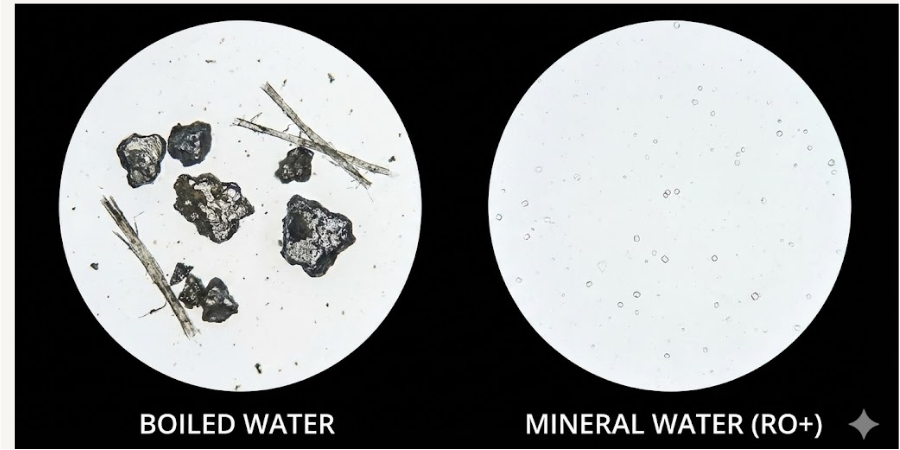
What Is Filtered Water?
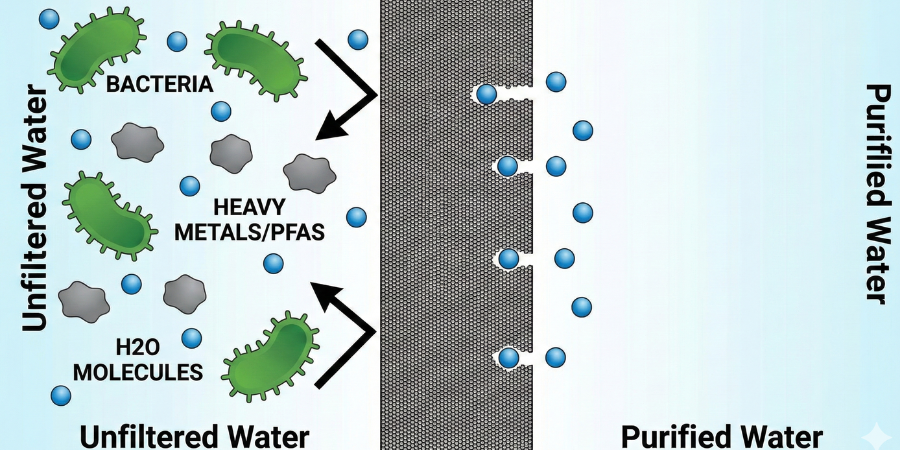
Filtered water creates a physical or chemical barrier to remove impurities. Unlike boiling, which treats the water in the pot, filtration separates the water from the contaminants.
However, not all filters are created equal.
- Standard Carbon Filters: Good for chlorine and taste, but often miss heavy metals.
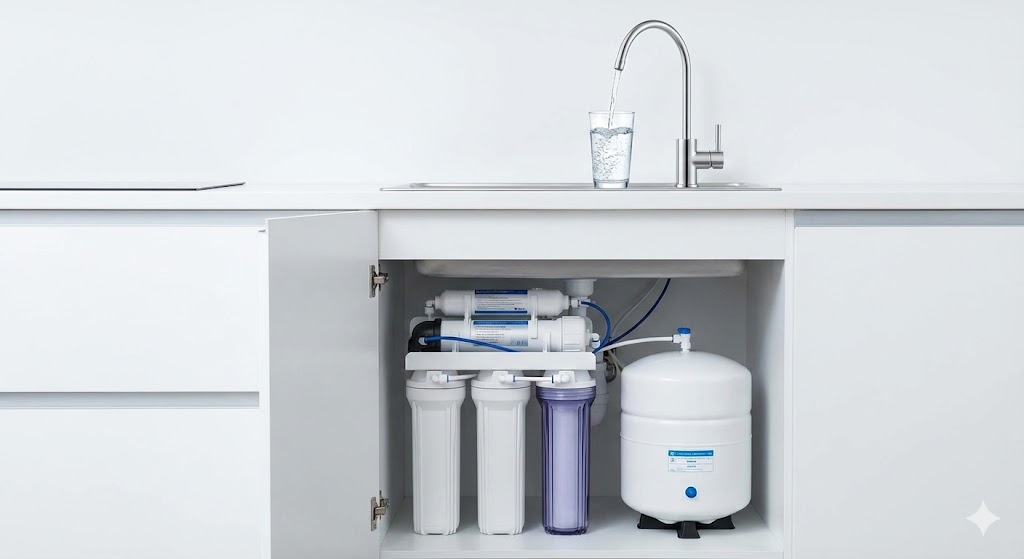
- Reverse Osmosis (RO): The gold standard in molecular separation.
In my facility, we use RO membranes with a pore size of 0.0001 microns. To visualize this: if a bacterium were the size of a basketball, a water molecule would be a marble, and our filter would catch everything in between.
Benefits of Filtered Water
As a Molecular Biologist, you want to move beyond generic benefits like “it tastes better” and explain the physiological and chemical advantages. This section establishes why filtration is superior to boiling from a cellular health perspective.
The 4 Pillars of Filtration Benefits
You can structure this section of your article around these four key scientific points:
1. Chemical Detoxification (Removal of Chlorine & Chloramine)
- The Problem: Municipal tap water is treated with Chlorine or Chloramine to kill bacteria in the pipes. While this protects the water during transport, these are harsh oxidizers. Drinking them daily can damage gut health and irritate the skin. Boiling removes Chlorine (it evaporates), but it cannot easily remove Chloramine (which is more stable).
- The Filter Benefit: A high-quality Carbon or RO filter chemically bonds with these molecules, stripping them from the water.
- The Result: You aren’t drinking “pool water.” The water is chemically neutral and gentler on your body’s cells.
2. Physical Extraction of Heavy Metals (The “Kidney” Function)
- The Problem: As we discussed, boiling concentrates metals like Lead, Mercury, and Arsenic. These are neurotoxins that accumulate in the body over time.
- The Filter Benefit: Think of a Reverse Osmosis (RO) membrane as an external kidney. It physically separates the heavy metal ions from the water molecules. The metals are flushed away in the waste line, and only pure water passes through.
- The Result: Zero accumulation of heavy metals in your brain and tissues.
3. The Microplastic Barrier
- The Problem: Microplastics are solid polymers. When you boil them, they might melt or break down into nanoplastics, but they stay in the cup.
- The Filter Benefit: Filtration provides a physical barrier. The pore size of an RO filter (0.0001 microns) is thousands of times smaller than a microplastic fiber. It is physically impossible for the plastic to pass through.
- The Result: You stop the “plastic cycle” from entering your bloodstream.
4. Taste Optimization (Oxygen Preservation)
- The Problem: Boiled water tastes “flat” or “stale” because the boiling process drives out dissolved oxygen.
- The Filter Benefit: Filtration purifies the water without heating it, preserving the dissolved oxygen levels.
- The Result: The water tastes crisp, refreshing, and “lighter” on the palate, encouraging you to drink more and stay better hydrated.
Is Boiled Water the Same As Filtered Water?
No. They are fundamentally different processes.
| Feature | Boiled Water | Filtered Water (RO/Distilled) |
| Kills Bacteria/Viruses? | Yes (Excellent) | Yes (If UV/RO is used) |
| Removes Heavy Metals? | No (Concentrates them) | Yes |
| Removes Microplastics? | No (Melts them) | Yes |
| Removes PFAS? | No | Yes |
| Taste | Flat / Heavy | Crisp / Clean |
As a scientist, I categorize boiling as “Disinfection” (killing bugs) and filtering as “Purification” (removing impurities).
The Modern Threat: Forever Chemicals (PFAS) and Microplastics
This is the main reason why filtered water is often the better choice in 2026.
Does boiling water remove forever chemicals?
No. Per- and polyfluoroalkyl substances (PFAS) are heat-resistant chemicals used in non-stick cookware and firefighting foam. They are now found in global water supplies. Boiling does not break the strong carbon-fluorine bonds of PFAS. In fact, research suggests heat simply concentrates them.
Microplastics in Your Teapot
Plastic has a melting point, not a biological death point. Boiling tap water containing microplastics might degrade the plastic into nanoplastics—particles so small they can cross cellular barriers in the human body. Only physical filtration can remove these solids.
Does Filtered Water Need Boiling?
Under normal circumstances, no.
If you are using a certified, high-quality filtration system (like an RO system with a UV light), the water is already chemically purified and biologically sterilized. Boiling it again is redundant and will simply drive out the oxygen, making the water taste “flat” (what we call “dead water”).
However, there is one exception:
If your filter is a simple “water pitcher” (activated carbon only) and you are in an area with a confirmed E. coli outbreak or a broken sewage line, the filter will not stop the viruses. In that specific emergency case, you should boil the water.
When Boiled Water Is a Must: Boil Water Advisories
Despite the limitations, boiling is a critical survival tool. Governments issue Boil Water Advisories when there is a drop in water pressure or a pipe burst that introduces raw sewage into the lines.
Why are boil water advisories issued?
They are issued solely for biological protection. The authorities are worried about acute illness (diarrhea/vomiting) from bacteria. They are not usually addressing long-term chemical risks during these advisories.
If you’re under advisory, what should you consider?
- Do not use filtered water from your fridge door (these filters are too weak).
- Boil vigorously for at least 1 minute (3 minutes at high altitudes).
- Cool naturally before drinking.
Why Filtered Water Is The Healthiest Type of Water to Drink
I have dedicated my career to understanding water chemistry. In a modern, industrialized world, the threats in our water are complex. Boiling is a method from the 19th century applied to 21st-century problems.
While boiling is a necessary emergency measure, it cannot protect your family from the chronic risks of Lead, Arsenic, PFAS, and Microplastics.
For daily hydration, a multi-stage filtration system (specifically Reverse Osmosis with remineralization) is the only method that addresses both the biological and chemical safety of your water.
FAQ
1. Is boiled water 100% safe for drinking?
No. While it is safe from bacteria and viruses, boiled water may still contain concentrated levels of heavy metals (like lead and arsenic), nitrates, and chemical contaminants like PFAS.
2. Does boiling water remove chlorine?
Yes, to an extent. Chlorine is a volatile gas, and boiling water for 15-20 minutes can evaporate the chlorine. However, it does not remove Chloramine (a more stable compound used in many cities) or Fluoride.
3. What happens when we boil water for drinking?
You kill biological pathogens (bacteria/viruses) and evaporate some of the pure water. This results in a slightly reduced volume of water with a higher concentration of any dissolved minerals, metals, or chemicals that were originally present.
4. How do you boil water properly?
Bring the water to a full, rolling boil (where bubbles are bursting continuously). Keep it boiling for at least one minute. If you live at an elevation above 6,500 feet (2,000 meters), boil for three minutes.
5. Is filtered water better than boiled water?
For daily use in modern cities, yes. High-quality filtered water removes physical contaminants, heavy metals, and chemicals that boiling cannot remove, providing a more comprehensive safety profile.
6. What are the disadvantages of filtered water?
If you use a low-quality filter (like basic carbon), it may not remove viruses. Additionally, some high-power filters (like RO) remove healthy minerals, creating “acidic” water. It is important to choose a filter that includes a “remineralization” stage to add Calcium and Magnesium back in.
7. Can you drink boiled water every day?
You can, but I do not recommend it as a long-term strategy if your source water is chemically compromised. Over time, you may be exposing yourself to higher levels of concentrated contaminants compared to using a purifier.