
|
Getting your Trinity Audio player ready...
|
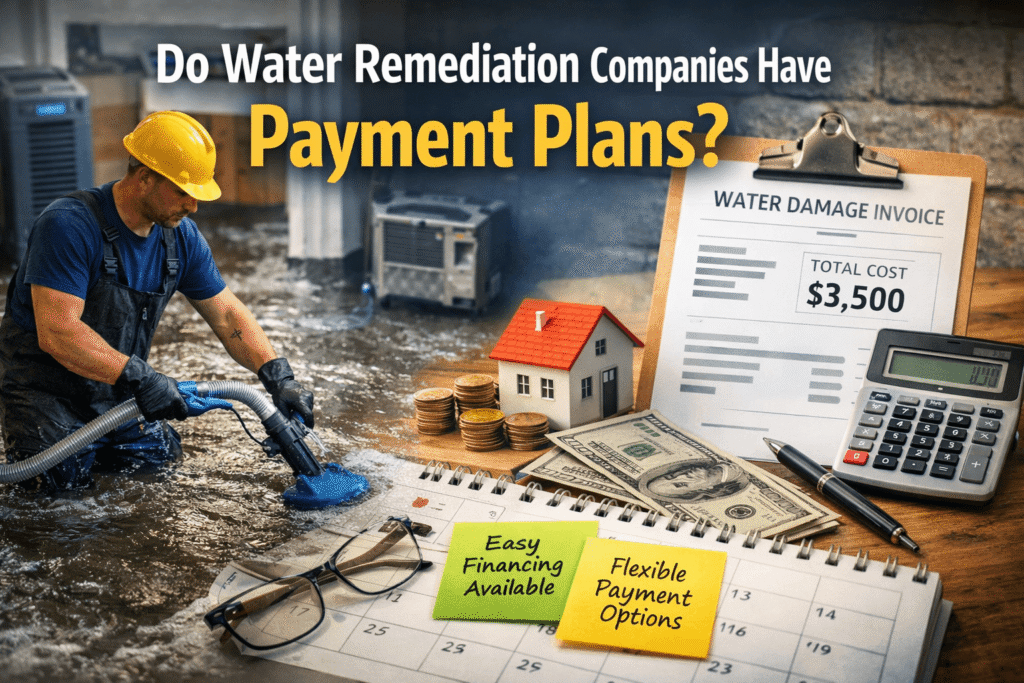
Water damage never arrives politely. A pipe bursts at 2 a.m., your basement floods after heavy rain, or your water heater decides it has lived enough. Then comes the real panic:
How much will this cost and can I afford it right now?
If you’re wondering whether water remediation companies have payment plans, the short answer is: yes, many do. But the details matter.
In this guide, we’ll explain:
- Whether water remediation companies offer financing
- How payment plans work
- What insurance usually covers
- Alternative ways to manage the cost
- What trusted sources say about water damage expenses
Everything here is based on verified industry sources, not guesses.
What Is Water Remediation?
Before we talk money, let’s get clear on the service.
Water remediation (also called water damage restoration) involves:
- Removing standing water
- Drying and dehumidifying affected areas
- Cleaning and sanitizing surfaces
- Preventing mold growth
- Restoring damaged materials
According to the Institute of Inspection, Cleaning and Restoration Certification (IICRC), proper water damage restoration requires controlled drying and professional moisture monitoring to prevent secondary damage like mold growth.
Source: IICRC S500 Standard for Professional Water Damage Restoration
This isn’t just “mopping the floor.” It’s technical, time-sensitive work.
How Much Does Water Remediation Cost?
Costs vary depending on:
- The size of the affected area
- Type of water (clean, gray, or black)
- Structural damage
- Mold presence
- Location
According to HomeAdvisor’s 2023 Cost Guide, homeowners typically pay between $1,300 and $5,700 for water damage restoration, with a national average around $3,000.
Source: HomeAdvisor Water Damage Restoration Cost Guide
Keep in mind: severe damage can cost significantly more, especially if structural repairs are required.
Now imagine getting that bill unexpectedly.
That’s where payment plans come in.
Do Water Remediation Companies Offer Payment Plans?
Yes many water remediation companies offer payment plans or financing options.
However, not all companies handle financing the same way. You’ll usually see one of these options:
1. In-House Payment Plans
Some restoration companies allow customers to:
- Pay a portion upfront
- Split the remaining balance into monthly installments
These plans often depend on:
- The total job cost
- Your credit profile
- Company policy
Local and independently owned restoration companies are more likely to offer flexible in-house plans.
Tip: Always ask directly. Many companies don’t advertise financing heavily, but they still offer it.
2. Third-Party Financing
Large restoration franchises often partner with financing providers.
You may see companies working with:
- GreenSky
- Synchrony
- Service Finance Company
These lenders offer structured installment plans, sometimes with:
- Promotional 0% interest periods
- Fixed monthly payments
- Credit-based approvals
This setup works similarly to financing a home improvement project.
3. Insurance-Based Payment Structures
In many cases, insurance covers water damage but only under specific conditions.
According to the Insurance Information Institute (III):
- Standard homeowners insurance typically covers sudden and accidental water damage (like burst pipes).
- Flood damage from external sources requires separate flood insurance.
Source: Insurance Information Institute Water Damage and Insurance Coverage
Here’s what often happens:
- The remediation company works directly with your insurer.
- You pay your deductible.
- Insurance covers the approved balance.
If insurance delays payment, some companies allow temporary payment arrangements until the claim clears.
When Do You Qualify for a Payment Plan?
Approval depends on several factors:
Your Credit History
Third-party lenders check credit scores.
Job Size
Higher-cost projects are more likely to qualify for structured financing.
Insurance Involvement
If insurance covers most of the work, companies may wait for reimbursement.
Company Policy
Some small restoration firms require full payment upon completion.
Always ask about financing before work begins.
What If You Don’t Have Insurance?
This situation worries many homeowners.
If insurance doesn’t cover the damage, you still have options:
Personal Loans
Banks and online lenders offer unsecured personal loans for home repairs. According to the Federal Trade Commission (FTC), consumers should compare:
- APR (Annual Percentage Rate)
- Fees
- Repayment terms
Source: Federal Trade Commission Personal Loans Guidance
Credit Cards
This option works for smaller restoration costs. Watch interest rates carefully.
Home Equity Loans or HELOCs
For larger damage repairs, some homeowners use home equity financing.
The Consumer Financial Protection Bureau (CFPB) explains that home equity products typically offer lower interest rates than unsecured loans but use your home as collateral.
Source: CFPB Home Equity Loans Guide
Why Water Remediation Companies Offer Financing
Let’s be honest: water damage rarely fits into your monthly budget.
Restoration companies understand:
- Water emergencies demand immediate action
- Delays increase mold risk
- Customers may not have thousands available instantly
Financing removes hesitation and speeds up approval.
From a business perspective, offering payment plans helps companies:
- Close jobs faster
- Reduce unpaid invoices
- Compete with national franchises
It’s practical for both sides.
Should You Use a Payment Plan?
It depends.
A Payment Plan Makes Sense If:
- You face emergency water damage
- Insurance delays payment
- The interest rate is reasonable
- You can comfortably manage installments
Avoid Financing If:
- The APR is extremely high
- The company pressures you
- Terms feel unclear
Always request written terms. Read them carefully.
If something feels rushed or vague, pause.
Questions to Ask Before Agreeing to Financing
Smart homeowners ask questions. Here are the key ones:
- Is this in-house or third-party financing?
- What is the interest rate?
- Is there a 0% promotional period?
- Are there late payment penalties?
- Can I pay it off early without fees?
- Does insurance reimbursement affect the agreement?
Clear answers protect you from future stress.
Red Flags to Watch For
Unfortunately, water damage emergencies can attract aggressive contractors.
Watch for:
- No written contract
- Vague pricing
- Pressure to sign immediately
- Refusal to explain financing terms
- Demands for full cash payment upfront
The Federal Emergency Management Agency (FEMA) advises homeowners to verify contractors after disaster-related damage.
Source: FEMA Hiring Contractors After a Disaster
Choose licensed, insured restoration companies.
Does Every Water Remediation Company Offer Payment Plans?
No.
Small independent contractors may require:
- Full payment upon completion
- Payment upon insurance settlement
Large franchise brands more commonly offer structured financing.
The best approach? Call and ask.
Most companies provide free inspections and estimates. Use that opportunity to discuss payment flexibility.
Final Verdict: Do Water Remediation Companies Have Payment Plans?
Yes many do.
But availability depends on:
- Company size
- Financing partnerships
- Insurance involvement
- Your financial profile
Water damage restoration can cost thousands. Payment plans help homeowners act quickly without delaying essential work.
The key is simple:
✔ Ask early
✔ Read terms carefully
✔ Compare options
✔ Confirm insurance coverage
Water damage feels overwhelming. Payment plans won’t fix the flood but they can ease the financial pressure.
And honestly? That breathing room matters.
Frequently Asked Questions
Do water remediation companies offer payment plans?
Yes, many water remediation companies offer payment plans or financing options. Larger restoration franchises often partner with third-party lenders, while some local companies provide in-house installment plans. Availability depends on company policy, job size, and your financial profile.
Always ask about financing before work begins.
How do water remediation payment plans work?
Payment plans usually work in one of three ways:
- In-house financing – The company allows you to split the total cost into scheduled payments.
- Third-party financing – A lender approves a structured loan with fixed monthly payments.
- Insurance coordination – The company waits for insurance reimbursement while you pay your deductible.
Terms vary. Some plans offer promotional 0% interest periods, while others include standard APR rates.
Do I need good credit to qualify for financing?
It depends on the financing type.
Third-party lenders typically check your credit score. Approval, interest rate, and repayment terms depend on your credit profile. In-house payment plans may have more flexible requirements, especially if insurance covers part of the claim.
Ask the company whether they run a hard or soft credit inquiry.
Does homeowners insurance cover water remediation?
Homeowners insurance usually covers sudden and accidental water damage, such as burst pipes.
According to the Insurance Information Institute (III), most standard policies do not cover flood damage caused by external flooding. Flood coverage requires a separate flood insurance policy.
Always review your policy and contact your insurer immediately after damage occurs.
What if my insurance claim is delayed?
Many water remediation companies work directly with insurance providers. If a claim is delayed, some companies allow temporary payment arrangements until the insurer releases funds.
You remain responsible for your deductible and any uncovered expenses.
How much does water damage restoration typically cost?
Costs vary based on:
- Size of the affected area
- Type of water contamination
- Structural damage
- Mold growth
Industry cost guides report that water damage restoration often ranges in the thousands of dollars, depending on severity. Severe structural damage increases costs significantly.
Always request a written estimate before approving work.
Are payment plans worth it for emergency water damage?
Payment plans can make sense if:
- You face urgent damage
- You lack immediate funds
- Insurance delays payment
- The interest rate is reasonable
However, review the APR, repayment schedule, and penalties carefully. Choose financing only if monthly payments fit comfortably within your budget.
Can I use a personal loan instead of company financing?
Yes. Many homeowners use:
- Personal loans
- Credit cards
- Home equity loans or HELOCs
The Federal Trade Commission (FTC) advises comparing APR, fees, and repayment terms before accepting any loan. Shop around before committing.
Do all water remediation companies provide financing?
No. Smaller independent contractors may require payment upon completion or after insurance settlement. Larger national franchises more commonly offer structured financing programs.
Always confirm payment options during the estimate process.
What questions should I ask before agreeing to a payment plan?
Ask these important questions:
- What is the interest rate?
- Is there a promotional 0% period?
- Are there late payment penalties?
- Can I pay off the balance early without fees?
- Is financing handled in-house or by a third party?
Clear terms protect you from unexpected cost
Video on: Do Water Remediation Companies Have Payment Plans?
Trusted Sources
- Institute of Inspection, Cleaning and Restoration Certification (IICRC) – S500 Standard
- Insurance Information Institute (III) – Water Damage Coverage
- HomeAdvisor – Water Damage Restoration Cost Guide
- Federal Trade Commission (FTC) – Personal Loan Guidance
- Consumer Financial Protection Bureau (CFPB) – Home Equity Loans
- Federal Emergency Management Agency (FEMA) – Hiring Contractors After Disasters