
|
Getting your Trinity Audio player ready...
|
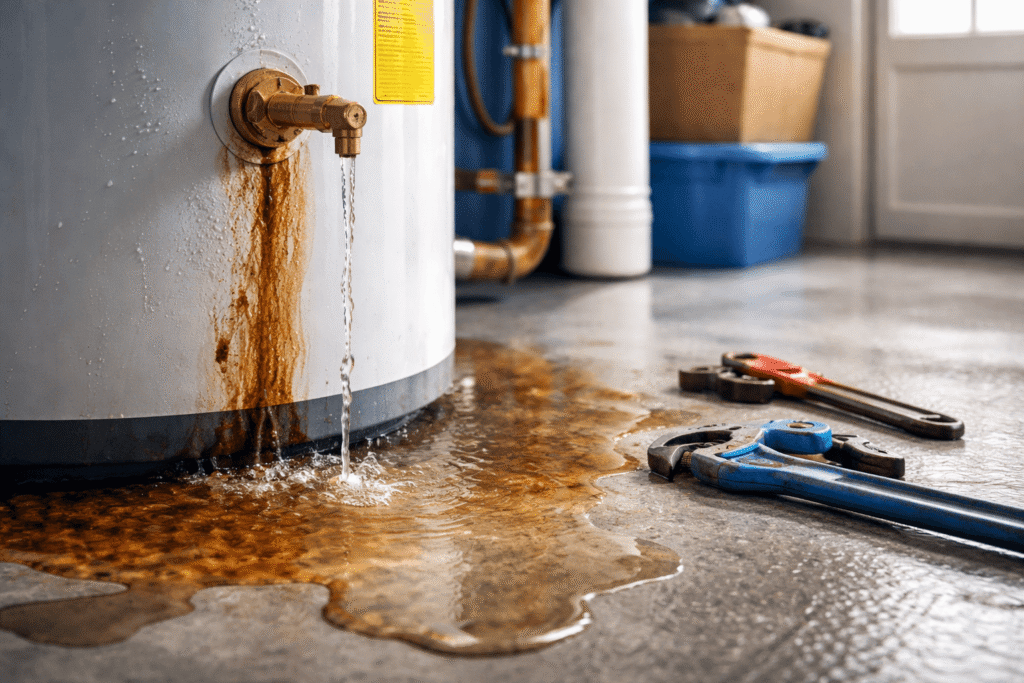
Is a Leaking Water Heater Dangerous ?
A leaking water heater is never “just a small drip.”
It may look harmless at first. You might even place a bucket under it and promise yourself to deal with it later. But here’s the honest truth: a leaking water heater can become dangerous fast.
Water heaters store hot water under pressure. They connect to gas lines or high-voltage electrical systems. When leaks start, multiple risks can follow.
This guide explains everything clearly. No myths. No scare tactics. Just facts from trusted authorities like the U.S. Consumer Product Safety Commission (CPSC), U.S. Department of Energy (DOE), National Fire Protection Association (NFPA), and Environmental Protection Agency (EPA).
Let’s break it down properly.
Why Water Heaters Leak in the First Place
Water heaters are durable, but they do not last forever.
The DOE states that most conventional storage water heaters last 8–12 years. Over time, internal components wear out. Metal corrodes. Seals fail. Pressure builds.
Common causes include:
- Corrosion inside the tank
- Loose drain valves
- Cracked temperature and pressure (T&P) relief valves
- Sediment buildup
- Failing internal tank lining
- High water pressure
Some leaks are minor plumbing issues. Others signal internal tank failure. Knowing the difference matters.
Yes, a Leaking Water Heater Can Be Dangerous
Let’s address the main question directly.
Is a leaking water heater dangerous?
Yes, it can be.
The level of danger depends on:
- Type of heater (gas or electric)
- Source of the leak
- Size of the leak
- Location of the heater
- How long you ignore it
Here’s what can go wrong.
1. Electrical Shock Risk (Electric Water Heaters)
Water and electricity do not mix.
If your electric water heater leaks near wiring or heating elements, you face a serious shock hazard.
The U.S. Consumer Product Safety Commission warns that faulty or damaged electrical appliances in contact with water increase electrocution risk.
If you see water pooling near an electric heater:
- Do not touch the unit
- Do not step in standing water
- Shut off power at the breaker panel
Call a licensed professional immediately.
This situation moves from “home repair” to “safety issue” quickly.
2. Gas Leak and Fire Hazard (Gas Water Heaters)
Gas water heaters add another layer of risk.
If corrosion or shifting damages gas connections, leaking water can eventually affect the gas line or burner assembly.
The National Fire Protection Association reports that heating equipment remains a leading cause of residential fires in the United States.
If you smell gas:
- Leave the area immediately
- Do not turn on lights
- Do not use electronics
- Call your gas company from outside
Water leakage does not automatically mean gas leakage. But structural damage around the unit increases risk over time.
3. Pressure Explosion Risk (Rare but Serious)
Water heaters operate under pressure.
Every unit includes a Temperature and Pressure Relief Valve (T&P valve). This safety device prevents dangerous pressure buildup.
The National Board of Boiler and Pressure Vessel Inspectors explains that a failed or blocked relief valve can allow extreme pressure buildup.
If internal corrosion weakens the tank while pressure rises, rupture can occur.
Explosions remain rare, but they have happened when safety devices failed.
Warning signs include:
- Popping or rumbling noises
- Excessive leaking from the relief valve
- Bulging tank shape
- Very high water temperature
If you notice these signs, shut off the heater and call a professional.
4. Structural Water Damage
Sometimes the biggest danger isn’t fire or shock.
It’s slow damage.
The Insurance Information Institute confirms that water damage ranks among the most common homeowners insurance claims.
A leaking water heater can:
- Soak drywall
- Damage flooring
- Cause wood rot
- Weaken structural framing
- Destroy insulation
Small drips turn into expensive repairs fast.
Water spreads quietly behind walls and under floors. Many homeowners discover the damage weeks later.
5. Mold Growth and Health Concerns
Moisture creates the perfect environment for mold.
The Centers for Disease Control and Prevention (CDC) states that mold grows in damp indoor environments and can cause respiratory symptoms, especially for people with asthma or allergies.
If a water heater leaks in a basement or enclosed utility room:
- Humidity rises
- Mold spores multiply
- Air quality declines
Ignoring leaks for even a few days can start mold growth.
That’s not dramatic. That’s basic biology.
6. Increased Energy Bills
A leaking tank often signals sediment buildup or corrosion.
The DOE explains that sediment reduces heating efficiency. The system must work harder to heat water.
When efficiency drops:
- Energy usage increases
- Utility bills rise
- Components wear faster
So yes, even a small leak can quietly cost you money.
When Is a Leaking Water Heater an Emergency?
Not every leak demands panic. But some require immediate action.
Call a Professional Immediately If:
- Water gushes from the tank
- The tank itself leaks (not just a pipe)
- You see rust-colored water
- You smell gas
- You hear banging or popping
- Water contacts electrical wiring
Monitor (Briefly) If:
- The leak comes from a loose pipe fitting
- The drain valve drips slightly
- Condensation forms on the tank exterior
Still, do not ignore even small issues for long.
Water heaters rarely fix themselves.
How to Identify the Source of the Leak
Before assuming the worst, check these areas carefully.
1. Drain Valve
The drain valve sits near the bottom of the tank.
If it loosens or debris prevents full closure, it may drip. Tightening it slightly may solve the issue.
If dripping continues, replacement usually fixes it.
2. Temperature and Pressure Relief Valve
The T&P valve sits on the top or side of the tank.
If it leaks:
- Pressure may be too high
- The valve may be faulty
Do not plug or cap this valve. It protects you from explosion.
3. Water Supply Connections
Cold and hot water pipes connect at the top.
Loose fittings can drip slowly. Tightening connections may resolve minor leaks.
4. The Tank Itself
If water leaks from the tank body, internal corrosion likely caused it.
You cannot repair a rusted tank.
Replacement remains the only safe solution.
How to Respond Safely
If your water heater leaks, follow these steps calmly:
- Turn off power (breaker for electric, gas control for gas units).
- Shut off the cold water supply valve.
- Avoid standing water near electrical systems.
- Call a licensed plumber if the source isn’t obvious.
These actions reduce risk immediately.
How to Prevent Water Heater Leaks
Prevention costs far less than replacement.
The U.S. Department of Energy recommends regular maintenance to extend lifespan and improve safety.
Here’s what helps:
Flush the Tank Annually
Sediment buildup causes corrosion and overheating.
Annual flushing removes mineral deposits.
Inspect the Anode Rod
The anode rod prevents internal corrosion.
Most manufacturers recommend inspection every 3–5 years.
Test the T&P Valve
Lift and release the lever once per year to confirm operation.
Check for Rust or Moisture
Early detection prevents major damage.
Install a Drain Pan
A drain pan under the heater directs leaks away from flooring.
Gas vs. Electric: Which Is Safer During a Leak?
Both types remain safe when maintained properly.
Electric units present shock risk during leaks.
Gas units present fire risk if gas lines become compromised.
Neither system becomes inherently unsafe unless maintenance fails or leaks go ignored.
The key factor is response time.
Should You Repair or Replace a Leaking Water Heater?
Here’s a simple rule:
- If the tank leaks → replace it.
- If fittings leak → repair may work.
If the unit exceeds 10 years and shows corrosion, replacement often makes more financial sense.
The DOE notes that newer models operate more efficiently, which lowers long-term energy costs.
The Hidden Cost of Waiting
Homeowners often delay action because:
- The leak seems small
- The heater still works
- Replacement costs feel high
But waiting can lead to:
- Structural repairs
- Mold remediation
- Electrical repair
- Emergency plumbing costs
Suddenly, the “cheap delay” becomes expensive.
Final Verdict: Is a Leaking Water Heater Dangerous?
Yes. It can be.
Sometimes the danger appears immediately.
Sometimes it builds quietly.
Electrical shock, gas hazards, pressure buildup, mold growth, and structural damage all remain real possibilities.
That does not mean you should panic.
It means you should act promptly.
Water heaters are safe appliances when maintained correctly. Ignoring leaks turns manageable problems into serious ones.
If you see water where it shouldn’t be, treat it as a warning sign.
Your home—and your safety—depend on it.
Frequently Asked Questions (FAQ)
1. Can a leaking water heater explode?
Explosion remains rare but possible if pressure builds and the temperature and pressure relief valve fails. The National Board of Boiler and Pressure Vessel Inspectors confirms that functioning relief valves prevent this scenario.
2. Is a small water heater leak dangerous?
A small leak may not pose immediate danger, but it can lead to mold, corrosion, electrical hazards, and structural damage if ignored.
3. Should I turn off my water heater if it leaks?
Yes. Turn off power and shut off the water supply until a professional inspects the unit.
4. How long can I use a leaking water heater?
You should not continue using a leaking tank. Minor pipe leaks may allow short-term use, but you should schedule repair quickly.
5. Does homeowners insurance cover water heater leaks?
Coverage depends on your policy. The Insurance Information Institute explains that sudden damage often qualifies, while neglect-related damage may not.
Trusted Sources
- U.S. Consumer Product Safety Commission – https://www.cpsc.gov
- U.S. Department of Energy – https://www.energy.gov
- National Fire Protection Association – https://www.nfpa.org
- National Board of Boiler and Pressure Vessel Inspectors – https://www.nationalboard.org
- Insurance Information Institute – https://www.iii.org
- Centers for Disease Control and Prevention – https://www.cdc.gov
- Environmental Protection Agency – https://www.epa.gov