
|
Getting your Trinity Audio player ready...
|
If you have dined out recently on M.M. Alam Road or grabbed a coffee in DHA Phase 5, you might have noticed a subtle but significant shift. The table settings look different. The generic blue-label water bottles we grew up seeing are disappearing. In their place, you find sleek, branded bottles carrying the restaurant’s own logo, color palette, and ethos.
This isn’t an accident. It isn’t just about aesthetics, either. As someone who has analyzed this industry from two very distinct lenses—first through my background in Molecular Biology and second as a business owner in the digital marketing space—I can tell you that this shift is strategic. The top players in Lahore’s hospitality scene are waking up to a reality that international brands realized years ago: water is not just a utility; it is a communication channel.
For a restaurant owner in Lahore’s hyper-competitive food market, the decision to switch to private label (customized) mineral water is rarely about hydration. It is about brand dominance, safety assurance, and the psychology of the premium experience. Let’s break down why this transition is happening now and why the establishments ignoring it are leaving money—and marketing—on the table.
The “45-Minute Billboard” Theory
In my work as a guest post provider, I spend my days helping clients fight for attention online. We obsess over “dwell time”—how long a user stays on a page. In the physical world of a restaurant, “dwell time” is the duration of the meal.
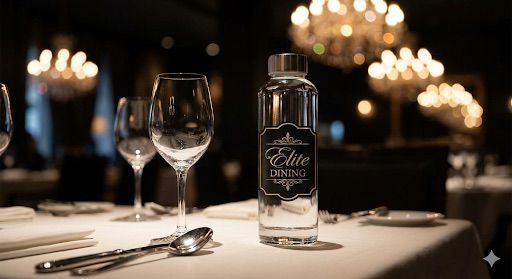
Think about the real estate on a dining table. The food comes and goes. The plates are cleared. The cutlery is used. But the water bottle? It sits there. It remains on the table for the entire 30 to 45 minutes of the dining experience.
If you are serving a generic commercial brand, you are essentially renting out that prime advertising space to another company for free. You are telling your customer, “We cooked the food, but we don’t have our own identity for the water.”
The restaurateurs in Gulberg who are winning the branding war understand that a custom bottle is a 45-minute billboard. It stares the customer in the face. It reinforces the brand identity every time they take a sip. When I help businesses with SEO, we talk about “impressions.” A custom water bottle delivers dozens of impressions throughout a single meal, subtly cementing the brand name in the customer’s subconscious.
The Science of Trust: A Biologist’s Perspective
Here is where I need to take off my marketing hat and put on my scientist hat. Having a degree in Molecular Biology, I look at water differently than the average consumer. I look at microbial loads, Total Dissolved Solids (TDS), and the integrity of the packaging.
In Pakistan, and specifically in Punjab, public trust in water quality is fragile. We have all seen the news reports about unsafe water. When a customer walks into a high-end eatery in DHA Y Block, they are already trusting the kitchen with their health. But water is a different beast.
The old practice of serving “filtered house water” in glass jugs is dying, and for good reason. No matter how clean your jug is, the customer cannot verify the source. It creates a seed of doubt. Is this RO water? Is the filter changed?
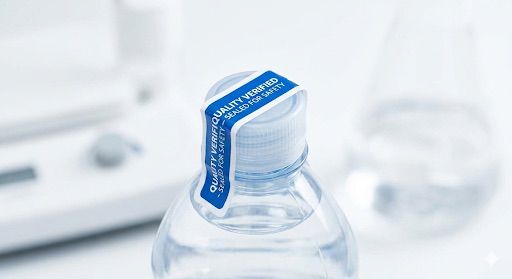
By switching to sealed, private-label mineral water, a restaurant provides a tangible guarantee of safety. But there is a catch—and this is critical. The smartest restaurant owners are not just slapping a sticker on tap water. They are partnering with suppliers who are licensed by the Punjab Food Authority (PFA).
When I started my own water bottle venture in Lahore, I realized that the “PFA Approved” seal on a custom bottle does more than satisfy a legal requirement; it acts as a certificate of trust. It tells the diner, “We care enough about your health to source verified, tested, and sealed mineral water under our own name.” It bridges the gap between the raw biological need for safety and the hospitality need for elegance.
The “Instagrammability” of the Dining Table
We cannot talk about the Lahore food scene without talking about social media. The visual presentation of food is almost as important as the taste.
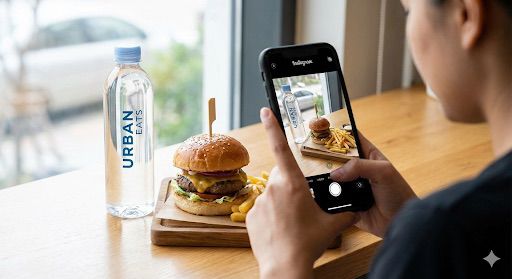
I have observed this behavior countless times: a group of friends sits down, the food arrives, and before a single fork is lifted, the phones come out. They take photos of the spread. In those photos, the background details matter. A bright blue, clashing commercial water bottle ruins the aesthetic of a dimly lit, rustic steakhouse.
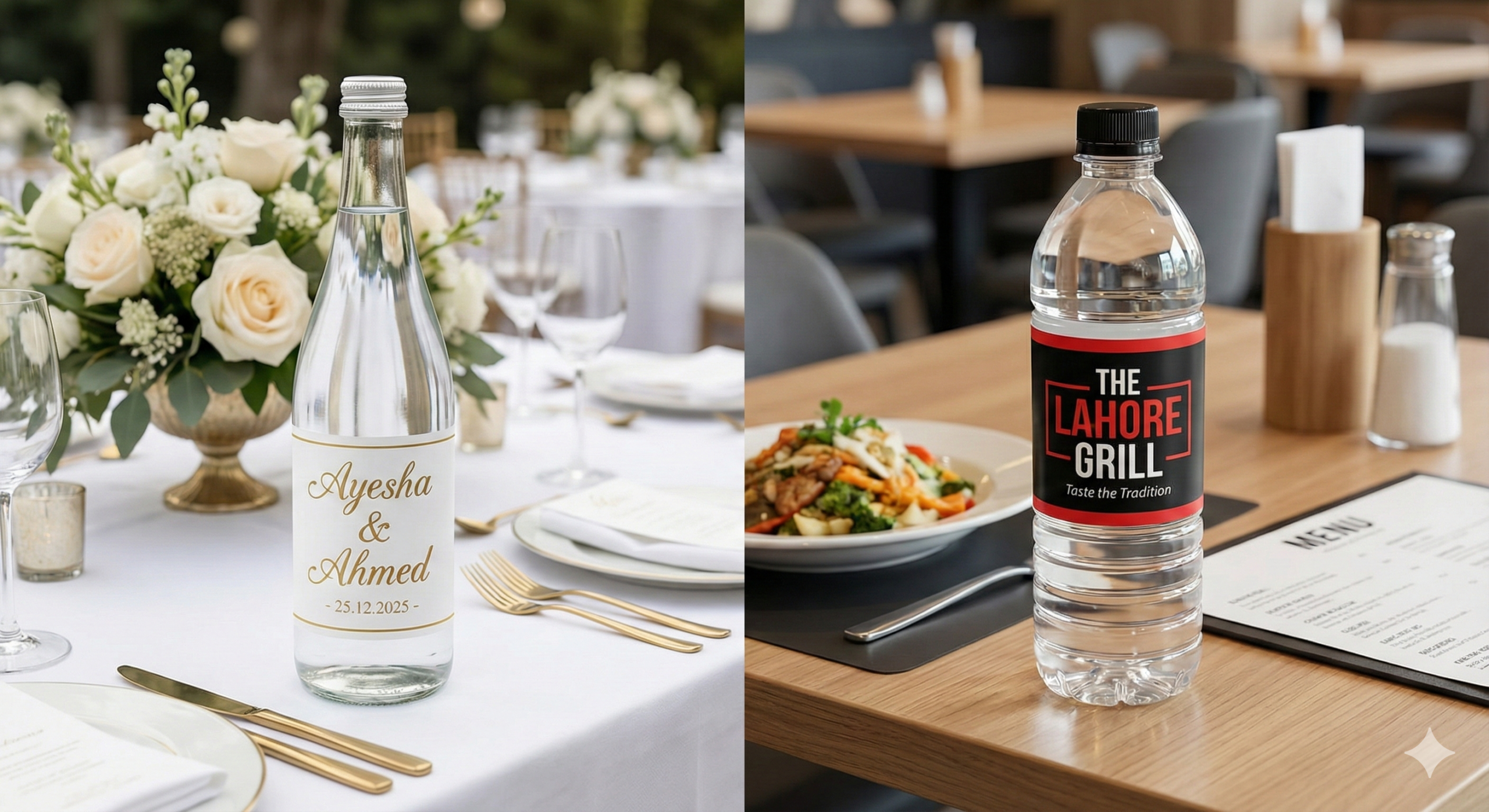
A custom bottle, however, is designed to blend in or stand out according to the venue’s theme. A minimalist cafe might choose a clear label with clean black typography. A wedding marquee might opt for gold foiling. When that photo is posted on Instagram Stories, the branded bottle serves as a watermark. It identifies the location without the user even needing to use a geotag.
In the world of digital marketing, we call this User Generated Content (UGC). It is the holy grail of advertising because it is free and authentic. By switching to private label water, restaurants in DHA are effectively turning their customers into micro-influencers. The bottle becomes a prop in their story, carrying the restaurant’s logo to thousands of potential new customers.
The Economics: Value Perception vs. Cost
One of the most common objections I hear when talking to restaurant managers is the concern about cost. “Isn’t custom labeling expensive?”
This is a misconception rooted in a lack of understanding of value perception. Let’s look at the math, but let’s also look at the psychology.
In a fine dining or smart-casual setting, nobody complains about paying a premium for a steak or a pasta dish because they perceive the value of the chef’s skill and the ambiance. Water is part of that ambiance. If you charge Rs. 150 or Rs. 200 for a bottle of water, the customer expects a premium experience. Serving a bottle they can buy at a tuck shop for Rs. 50 creates a “value disconnect.” They feel ripped off.
However, when you serve a Private Label Water, the comparison stops. The customer cannot price-check your private label at the local store. It becomes a unique product exclusive to your venue. This exclusivity justifies the markup. The perceived value skyrockets because the item feels curated, special, and integrated into the service.
From a business standpoint, the marginal cost difference between stocking a generic brand and a custom brand is negligible compared to the ability to maintain premium pricing without customer complaints. It is a defensive strategy against the feeling of being “overcharged” for basic utilities.
The Competitive Landscape of Lahore
Why is this happening now? Why are we seeing this surge in Gulberg III and DHA specifically?
It comes down to saturation. Lahore has an incredible number of restaurants. The barrier to entry for opening a cafe is relatively low, but the barrier to staying open is incredibly high. Customer loyalty is fickle.
In my experience analyzing market trends, I have noticed that differentiation happens in the margins. The food can be great everywhere. The service can be decent everywhere. The winners are the ones who master the details.
When a customer visits a competitor and gets a seamless, branded experience—from the valet ticket to the wet wipe to the water bottle—and then comes to your place and gets a generic experience, you lose points. You look less established. Private label water has moved from being a “delight” factor to a “hygiene” factor in high-end hospitality. If you aren’t doing it, you look like you are cutting corners.
Connecting the Dots: Biology, Business, and Branding
To wrap this up, I want to bring it back to the intersection of my own interests. Molecular biology teaches us that small inputs can have massive systemic effects. A single enzyme can change a reaction. In business, a single touchpoint—like a water bottle—can alter a customer’s perception of the entire brand.
I started my customized water bottle business in Lahore not just because I saw a gap in the market, but because I saw a gap in quality and branding. I knew that if I could provide PFA-licensed, mineral-rich water that also looked beautiful, I could solve two problems at once for restaurant owners: safety and marketing.
The shift we are seeing in Gulberg and DHA is not a fad. It is the maturation of the Pakistani hospitality industry. It is a move towards total brand ownership