
|
Getting your Trinity Audio player ready...
|
A water trailer looks simple. Tank on wheels. Hook it to a truck. Fill it up. Drive away.
Then you price one out and suddenly you’re comparing axle ratings at 11:40 p.m. while a guy on YouTube argues about baffled tanks beside a muddy cattle gate.
Water trailers get used hard. Farms. Construction sites. Dust control. Landscaping crews. Remote job sites where the nearest water hookup is 20 miles away and somebody forgot the hose again.
And the wrong setup becomes a headache fast.
Too much weight, weak suspension, bad pump pressure, cheap fittings. You feel every mistake once that tank is full.
What is a water trailer?
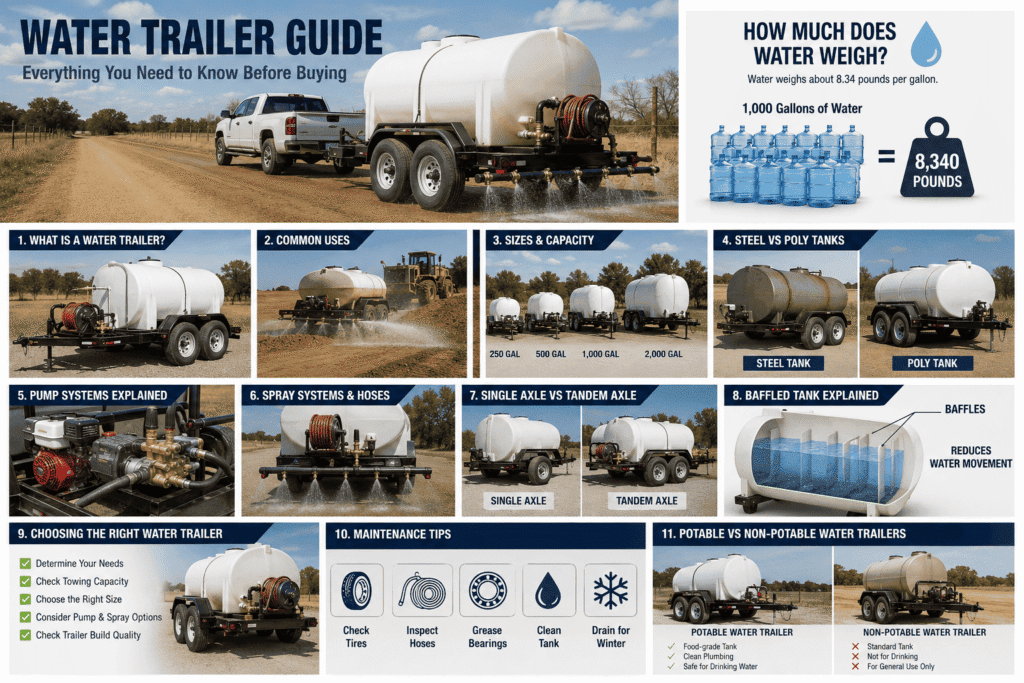
A water trailer is a towable tank system built to transport and spray water.
Most setups include:
- A trailer frame
- A water tank
- A pump
- Hoses or spray nozzles
- A drain and fill system
Tank sizes usually start around 250 gallons and climb past 2,000 gallons. Farm operations and road crews often run much larger systems.
The trailer matters just as much as the tank. Water is heavy. Really heavy.
1 gallon weighs about 8.34 pounds. So a 1,000 gallon water trailer carries more than 8,000 pounds of water before you even count the frame, pump, or trailer weight.
People underestimate that constantly.
Why people use water trailers
The use cases pile up fast once you own one.
Farmers haul water to livestock tanks in dry months. Construction crews spray dirt roads to keep dust down. Landscapers water trees in new developments where irrigation lines haven’t been installed yet.
I’ve also seen water trailers parked beside rodeo grounds, soccer fields, wildfire staging areas, and one extremely questionable homemade racetrack behind a tire shop.
A few common jobs:
- Dust suppression
- Livestock watering
- Tree watering
- Fire prevention
- Pressure washing support
- Remote water delivery
- Soil compaction work
- Agricultural spraying
Some owners only use them 10 days a year. Others run them daily.
That changes what kind of trailer makes sense.
Water trailer sizes and capacity
This is where people either buy too small or go wildly oversized.
A small landscaping crew might only need a 300 to 500 gallon setup. Easy to tow. Easier to store. Lower fuel costs.
Construction crews usually move into the 1,000 to 2,000 gallon range because refilling wastes time.
Here’s a rough breakdown:
| Tank size | Common use |
|---|---|
| 250 to 500 gallons | Small farms, landscaping |
| 500 to 1,000 gallons | General property work |
| 1,000 to 2,000 gallons | Construction, dust control |
| 2,000+ gallons | Heavy commercial hauling |
And towing capacity matters more than enthusiasm.
People love saying, “My truck can probably pull it.”
Probably isn’t a number.
Check:
- GVWR
- Tongue weight
- Axle rating
- Brake system
- Tire load rating
A fully loaded tandem axle water trailer can push a pickup truck around if the balance is off. You feel it on corners first.
Steel vs poly water tanks
This debate never ends.
Steel tanks feel tougher because they are tougher against impact. Ranch work, rocky ground, and heavy abuse usually favor steel.
But steel rusts. Eventually everything rusts if you give it enough weather and bad decisions.
Poly tanks resist corrosion and weigh less. That’s why a lot of agricultural water trailers use them now. They’re easier on fuel and easier to tow.
Still, poly tanks hate sharp impacts and poor mounting setups. A cracked tank on a July afternoon is a miserable experience.
Here’s the short version:
Steel tanks
Good for:
- Rough terrain
- Commercial use
- Long-term abuse
Downsides:
- Heavier
- Rust risk
- Higher fuel use
Poly tanks
Good for:
- Lighter towing
- Corrosion resistance
- General farm use
Downsides:
- Crack risk
- UV wear over time
- Less impact resistance
Most small and mid-size buyers lean toward poly now unless they’re running serious job site work.
Single axle vs tandem axle trailers
Single axle trailers cost less and turn easier.
They’re fine for smaller tanks. Around 500 gallons or less usually works well.
But once water weight climbs, tandem axles make life calmer. Better balance. Better braking. Better road stability.
Water shifts while driving. Even baffled tanks still move some weight around.
You notice that fast during emergency braking.
A tandem axle setup usually tracks straighter on rough roads too. Especially gravel roads with washboarding. If you’ve driven on one, you know the sound. Your teeth know it too.
Why baffled tanks matter
A baffled tank has internal walls that slow water movement.
Without baffles, water slams forward every time you brake. Then backward when you accelerate.
That movement affects:
- Trailer stability
- Tire wear
- Braking distance
- Driver control
Large commercial water trailers almost always use baffled tanks because sloshing water gets sketchy fast.
Especially on hills.
Water trailer pump systems explained
The pump determines whether your trailer feels useful or annoying.
Gravity feed works for simple draining jobs, but pressure systems handle real work.
Most trailers use:
- Gas-powered pumps
- Electric pumps
- PTO-driven systems on larger rigs
Gas pumps dominate because they’re portable and strong enough for spraying.
Electric pumps are quieter. Easier too. But weaker systems struggle with long hose runs or multiple spray nozzles.
And pump quality matters more than people think.
Cheap pumps usually fail during hot weather when you’re already irritated and standing in mud.
Spray systems and hose setups
Some trailers only haul water. Others spray it through:
- Rear spray bars
- Side nozzles
- Fire hoses
- Hose reels
- Hand sprayers
Dust control trailers often use adjustable rear spray systems for roads and construction pads.
Tree watering setups usually run hose reels with long lines so crews can reach landscaping without dragging the trailer everywhere.
A good hose reel saves time every single day. Sounds boring until you’ve spent 20 minutes untangling a hose beside a trench.
How much does a water trailer cost?
Prices move all over the place depending on:
- Tank size
- Pump type
- Trailer frame quality
- Brake systems
- Spray equipment
A small entry-level water trailer might cost $2,500 to $4,000.
Commercial dust suppression rigs can climb past $20,000 fast.
Used trailers are everywhere, but buyers should slow down before jumping on cheap deals.
Water damage hides well.
Check:
- Frame rust
- Cracked welds
- Tire wear
- Brake condition
- Pump pressure
- Tank cracks
- Leaks around fittings
Old plumbing connections tell you a lot about how the trailer got treated.
So do bald tires and electrical tape wrapped around random wires. That’s usually a personality trait, not a one-time repair.
Choosing the right water trailer
Most people start with tank size.
They should start with daily use.
Ask:
- How often will you haul water?
- What vehicle will tow it?
- Do you need spray capability?
- Will it stay on-road or go off-road?
- How far is the water source?
- Do you need potable water transport?
Potable water trailers need food-safe tanks and clean plumbing systems. You can’t treat drinking water setups the same way you treat muddy construction water.
Think about terrain too.
A smooth gravel lane and a rough cattle pasture create very different trailer stress.
Common mistakes buyers make
The biggest mistake is buying too much trailer for the truck.
Second biggest mistake: buying too little trailer for the workload.
People also ignore pump quality because the tank gets all the attention. Then they spend months fighting weak pressure and clogged fittings.
Other common mistakes:
- No trailer brakes
- Cheap tires
- Weak trailer frames
- Poor weight distribution
- Tiny fill ports
- No tank baffles
- Bad hose storage
And storage matters more than people expect.
A neglected water trailer ages fast sitting in direct sun with water left inside for months.
Water trailer maintenance tips
Maintenance isn’t complicated, but skipping it gets expensive.
Flush the tank regularly. Especially if you’re hauling dirty water or agricultural runoff.
Check:
- Tire pressure
- Brake wiring
- Pump seals
- Hose fittings
- Tank straps
- Bearings
Drain the system before freezing weather hits.
Frozen water expands hard enough to crack fittings, pumps, and plumbing lines. One cold night can wreck an entire setup.
Grease wheel bearings too. Trailer owners forget this constantly until smoke appears beside the axle on the highway. Then everybody suddenly becomes interested in maintenance.
Potable water trailers vs standard water trailers
These trailers look similar from the outside.
The inside matters.
Potable water trailers use food-grade tanks and sanitary plumbing. Drinking water systems need clean hoses, proper seals, and contamination control.
Standard construction water trailers don’t follow those standards because they’re built for dirt work, dust suppression, and general hauling.
Using the wrong setup creates health risks fast.
Especially during emergency water delivery situations after storms or utility failures.
Should you buy new or used?
New trailers cost more upfront but usually save repair time early on.
Used water trailers can be a great deal if the frame and tank are solid.
I’d pay close attention to:
- Rust around weld points
- Bent axles
- Pump condition
- Trailer brakes
- Electrical wiring
- Signs of patch repairs
Homemade modifications deserve extra caution too.
Some are excellent.
Some look like they were assembled during a thunderstorm with leftover fence brackets and optimism.
Final thoughts
A good water trailer earns its keep quickly.
You save trips. Save labor. Move water where it needs to go without depending on permanent plumbing or fixed tanks.
But the details matter. Tank size. Trailer balance. Pump quality. Brake systems. Tire ratings.
People usually focus on capacity first because it’s easy to compare numbers on paper.
Daily usability matters more once the trailer hits real roads, rough ground, heat, mud, and long workdays.
That’s where good setups separate themselves from the trailers parked behind barns with flat tires and weeds growing through the frame.
FAQ about water trailers
What is a water trailer used for?
A water trailer transports water to places without direct access to a water supply. Farmers use them for livestock and irrigation. Construction crews use them for dust control. Landscapers use them for tree watering and remote job sites.
How much water can a water trailer hold?
Most water trailers carry between 250 and 2,000 gallons. Small single axle trailers usually stay under 500 gallons. Heavy commercial trailers can carry much more.
How heavy is a full water trailer?
Water weighs about 8.34 pounds per gallon.
A 1,000 gallon water trailer carries more than 8,000 pounds of water before adding the trailer frame, pump, and accessories. That’s why towing capacity matters so much.
Do water trailers need trailer brakes?
Larger water trailers usually need brakes for safety and legal compliance. Tandem axle trailers with full tanks put serious weight behind the tow vehicle.
Check local towing laws too. Brake requirements vary by region and trailer weight.
What size water trailer do I need?
It depends on how often you haul water and how far you travel.
Small farms and landscaping crews often use 300 to 500 gallon trailers. Construction sites and dust suppression work usually need 1,000 gallons or more.
Are poly water tanks better than steel tanks?
Poly tanks weigh less and resist rust. Steel tanks handle rough impacts better and usually last longer under hard commercial use.
A lot of buyers choose poly tanks because they’re easier to tow and maintain.
What is a baffled water tank?
A baffled tank has internal dividers that reduce water movement while driving.
Without baffles, water sloshes hard during braking and turns. That affects trailer stability and towing control.
Can a water trailer carry drinking water?
Yes, but only if it’s built for potable water transport.
Potable water trailers use food-grade tanks, clean plumbing, and sanitary hoses. Standard construction water trailers should not transport drinking water.
What kind of pump does a water trailer use?
Most water trailers use either gas-powered or electric pumps.
Gas pumps produce stronger pressure for spraying and long hose runs. Electric pumps are quieter and simpler for lighter jobs.
How long do water trailers last?
A well-maintained water trailer can last 10 to 20 years or longer.
Tank quality, trailer frame strength, storage conditions, and maintenance habits make a huge difference.
Can you use a water trailer for dust suppression?
Yes. Many construction crews and road maintenance teams use water trailers with rear spray bars for dust control on dirt roads and job sites.
How do you maintain a water trailer?
Basic maintenance includes:
- Checking tire pressure
- Greasing wheel bearings
- Inspecting hoses and fittings
- Cleaning the tank
- Draining water before freezing weather
- Testing brakes and lights
Ignoring small repairs usually turns into expensive repairs later.
Is a tandem axle water trailer better?
For larger tanks, yes.
Tandem axle trailers handle weight better, track more smoothly on rough roads, and improve towing stability. Single axle trailers work better for smaller and lighter setups.
Can you tow a water trailer off-road?
Many water trailers work well off-road if they have:
- Strong suspension
- Good ground clearance
- Heavy-duty tires
- Reinforced frames
Rough terrain puts extra stress on axles, tires, and tank mounts though. Cheap trailers wear out quickly in those conditions.
How much does a water trailer cost?
Prices usually range from $2,500 to more than $20,000 depending on:
- Tank size
- Pump system
- Trailer quality
- Brake setup
- Spray equipment
Commercial dust control trailers cost much more than small farm trailers.
Usefull Links
https://www.marsrvs.com/trailer-tongue-weight-water-tank-impact-guide
https://www.rvsunlimited.ca/rv-how-to-guide/towing
https://www.chinatanktruck.com/how-much-does-a-water-trailer-weigh
https://camec.com.au/blogs/news/why-you-need-to-know-your-water-weight-when-towing-a-caravan?