
|
Getting your Trinity Audio player ready...
|
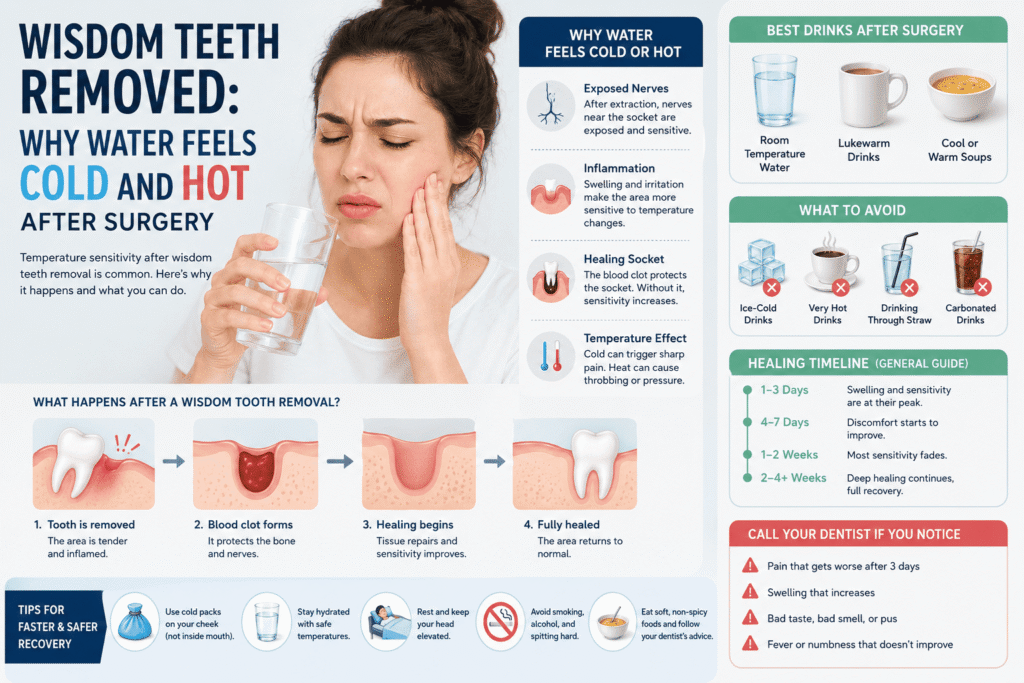
You take a sip of water after wisdom teeth removal and immediately regret existing.
Cold water stings.
Warm water feels weird too.
Sometimes the sensation shoots straight through your jaw like somebody plugged your tooth socket into a car battery for half a second.
People panic when this happens because nobody expects plain water to suddenly feel aggressive.
But temperature sensitivity after wisdom teeth removal is extremely common. Especially during the first few days while nerves, gum tissue, and exposed areas calm down.
And honestly, your mouth just went through surgery. It’s irritated. Swollen. Sometimes stitched together like a tiny construction site.
So if water feels unusually cold or hot after wisdom teeth extraction, your body usually isn’t doing anything mysterious. It’s reacting to healing tissue and exposed nerve sensitivity.
Still, there are moments when the pain crosses into “call the dentist” territory.
That difference matters.
Why water feels cold after wisdom teeth removal
Cold sensitivity after tooth extraction usually comes from exposed tissue and irritated nerves near the extraction site.
Once the wisdom tooth is removed, your body starts building a blood clot over the socket. That clot protects the underlying bone and nerve endings while healing begins.
During those early days:
- Gums are inflamed
- Nerves stay irritated
- Tissue is exposed
- The socket remains sensitive
So cold liquids hit those areas directly.
And your nerves react dramatically.
Some people describe it as:
- Sharp pain
- Tingling
- Sudden jolts
- Electric shock feelings
- Deep aching inside the jaw
The intensity varies a lot depending on:
- How difficult the extraction was
- Whether the tooth was impacted
- Existing tooth sensitivity
- Dry socket risk
- Nerve irritation
Lower wisdom teeth usually create more soreness because the roots sit closer to major jaw nerves.
Those extractions tend to feel rougher afterward too.
Why warm water can hurt too
People assume only cold drinks trigger sensitivity.
Then they try warm tea and suddenly their jaw throbs again.
Warm liquids increase blood flow around the surgical area. That can create pressure inside swollen tissue, especially during the first 48 to 72 hours after surgery.
And if the socket is already inflamed, heat can intensify that feeling.
Some people describe warm water pain as:
- Pulsing
- Pressure
- Deep soreness
- Throbbing
- Dull aching
It’s different from sharp cold sensitivity.
The timing matters too.
During early healing, both hot and cold temperatures can feel exaggerated because the tissue is still raw underneath.
The first 3 days are usually the worst
The first 72 hours after wisdom teeth removal tend to feel chaotic.
Swelling peaks.
Jaw stiffness kicks in.
Eating becomes annoying.
Your sleep schedule falls apart because your mouth suddenly decides 3 a.m. is pain o’clock.
Temperature sensitivity usually spikes during this stage.
That’s normal.
Your mouth is reacting to:
- Surgical trauma
- Swelling
- Healing tissue
- Nerve irritation
- Pressure changes
A lot of people also accidentally trigger pain by drinking water too quickly.
Fast swallowing creates pressure changes inside the mouth. You notice that more after extractions because the surgical areas are sensitive.
Tiny actions suddenly feel dramatic.
Dry socket changes the kind of pain
This is the complication people fear most after wisdom teeth extraction.
Dry socket happens when the protective blood clot either dissolves too early or gets dislodged from the extraction site.
Without that clot, bone and nerves become exposed.
That pain usually feels:
- Severe
- Deep
- Throbbing
- Constant
- Radiating into the ear or jaw
Cold water sensitivity becomes much stronger too because air and liquid hit exposed nerve endings directly.
People with dry socket often say the pain:
- Gets worse instead of better
- Doesn’t improve with medication
- Smells bad
- Creates a foul taste
- Spreads through one side of the jaw
And honestly, dry socket pain has a reputation for a reason. People describe it with the emotional intensity usually reserved for tax audits and airport floor sleeping.
If symptoms suddenly worsen after initial improvement, call your dentist.
Why exposed nerves react so strongly
Teeth and jaw tissue contain tons of nerve endings.
Once wisdom teeth are removed, nearby nerves stay irritated for a while. Even healthy healing tissue becomes hyper-sensitive during recovery.
That’s why:
- Cold air hurts
- Water temperature feels extreme
- Eating feels strange
- Random jaw zaps happen
Some people even feel sensitivity in nearby teeth that weren’t removed.
That happens because inflammation spreads through surrounding tissue temporarily.
Your mouth basically becomes overprotective for a few days.
Ice water is usually a terrible idea at first
People hear “cold helps swelling” and immediately grab ice water.
Bad move sometimes.
External cold packs help swelling because they numb tissue gradually through the skin.
Ice-cold drinks directly hitting extraction sites feel very different.
During the first few days, room-temperature water usually feels safest.
Not exciting advice, I know.
But your mouth wants boring right now.
Extreme temperatures often trigger:
- Pain spikes
- Sensitivity
- Jaw aching
- Pressure sensations
Even carbonated drinks can feel weird because bubbles irritate exposed tissue.
Lukewarm water usually works best
Most dentists recommend:
- Cool water
- Room-temperature water
- Slightly lukewarm liquids
Basically anything emotionally neutral.
You want hydration without shocking the surgical area.
And staying hydrated matters a lot after wisdom teeth removal because:
- Pain medication dries your mouth out
- Swelling increases inflammation
- Healing tissue needs moisture
- Dry mouths feel more painful
Dehydration also makes recovery feel worse overall.
Headaches plus wisdom tooth recovery is an awful combo.
Wisdom teeth removal can irritate nearby teeth too
This surprises people.
The extracted tooth isn’t the only area reacting after surgery.
Nearby molars can become sensitive because:
- Gum tissue got stretched
- Surgical tools contacted adjacent teeth
- Jaw pressure increased
- Inflammation spread temporarily
So when cold water hurts the tooth beside the extraction site, that doesn’t automatically mean something went wrong.
The entire area just went through trauma.
Think about how sore your body feels after getting hit during sports. The bruise spreads wider than the exact impact point.
Mouth tissue behaves similarly.
How long does temperature sensitivity last?
For most people:
- Mild sensitivity improves within 1 week
- Moderate soreness can last 2 weeks
- Jaw tightness sometimes lasts longer
- Nerve irritation may linger for several weeks
Complex extractions usually heal slower.
Impacted wisdom teeth especially tend to create longer recovery timelines because surgeons sometimes need to:
- Cut gum tissue
- Remove bone
- Section the tooth into pieces
That process irritates deeper structures.
Your body needs time to calm everything back down.
Sharp pain weeks later deserves attention
Some lingering sensitivity is common.
Severe pain weeks later deserves a dental follow-up.
Especially if you notice:
- Swelling returning
- Fever
- Bad taste
- Pus
- Increasing pain
- Jaw locking
- Persistent numbness
Those symptoms can point toward:
- Infection
- Dry socket
- Nerve irritation
- Delayed healing
And persistent numbness matters.
Most numbness improves gradually, but long-term nerve symptoms should absolutely get checked.
Drinking through straws can make things worse
Dentists repeat this constantly because people ignore it constantly.
Straws create suction pressure inside the mouth.
That suction can pull the healing blood clot out of the extraction site.
Once the clot dislodges, dry socket risk jumps.
So during recovery:
- Skip straws
- Skip aggressive rinsing
- Skip spitting hard
- Skip smoking too
Smoking after wisdom teeth extraction is especially rough on healing tissue because it combines:
- Heat
- Suction
- Chemical irritation
Your mouth already has enough problems right now.
Sleep position changes swelling too
This sounds unrelated until you wake up feeling like one side of your face belongs to somebody else.
Sleeping flat increases facial swelling after oral surgery.
Keeping your head elevated helps fluid drain better overnight.
Less swelling often means:
- Less pressure
- Less throbbing
- Less temperature sensitivity
The difference feels surprisingly noticeable.
Even an extra pillow helps.
Foods that usually feel safest after wisdom teeth removal
During the first few days, softer foods usually cause less irritation.
People often tolerate:
- Yogurt
- Mashed potatoes
- Applesauce
- Smooth soup
- Scrambled eggs
- Oatmeal
- Smoothies without straws
Temperature matters almost as much as texture though.
Very hot soup can irritate healing tissue fast.
And ice cream sounds smarter than it actually feels for some people because extreme cold can trigger sharp nerve pain.
Room-temperature mashed potatoes quietly become the hero meal nobody talks about enough.
Why your jaw feels weird after surgery
Temperature sensitivity rarely happens alone.
Jaw stiffness usually joins the party too.
That comes from:
- Muscle tension
- Swelling
- Surgical positioning
- Tissue inflammation
Keeping your mouth open during surgery strains jaw muscles more than people expect.
Especially during difficult extractions that take longer.
Some people can barely open wide enough for a spoon afterward.
That part improves gradually.
Anxiety makes pain feel sharper too
This part gets overlooked constantly.
After wisdom teeth removal, people monitor every sensation like they’re tracking suspicious activity.
Every ache suddenly feels alarming.
That hyper-focus makes sensitivity feel more intense because your brain stays locked onto the area constantly.
You start analyzing:
- Water temperature
- Jaw pressure
- Tiny tingles
- Random throbs
- Gum texture
At some point you’re basically conducting emotional weather reports inside your mouth.
Healing becomes easier once you stop checking the extraction site every 14 minutes with your tongue.
Everybody does this anyway though.
When to call your dentist
Call your dentist if:
- Pain suddenly worsens
- Swelling increases after day 3
- Fever develops
- Bleeding continues heavily
- Bad smell appears
- Numbness persists
- Water causes unbearable pain
Mild temperature sensitivity is common.
Pain that feels aggressive, worsening, or constant deserves attention.
Especially if recovery was already improving before symptoms suddenly changed.
Final thoughts
If water feels cold or hot after wisdom teeth removal, your mouth is probably reacting to exposed tissue, inflammation, and irritated nerves during healing.
That sensitivity feels strange because water normally feels harmless.
After oral surgery, harmless things suddenly become weirdly dramatic:
- Drinking
- Swallowing
- Sleeping
- Sneezing
- Existing with a jaw
Most people improve steadily within days to weeks.
The key things usually help the most:
- Staying hydrated
- Avoiding extreme temperatures
- Protecting the blood clot
- Resting properly
- Giving the tissue time to settle down
Healing inside the mouth always feels slower because you use your mouth constantly. Talking, eating, swallowing, breathing. The area never fully gets a break.
Still, the sharp “why does water hurt?” stage usually fades faster than people expect.
FAQ about wisdom teeth removal and water sensitivity
Why does cold water hurt after wisdom teeth removal?
Cold water can trigger exposed nerves and inflamed tissue around the extraction site. After surgery, the gums and socket stay sensitive while healing begins, so cold temperatures may cause sharp pain or tingling.
Is it normal for warm water to hurt after wisdom teeth extraction?
Yes. Warm water can increase blood flow around swollen tissue, which sometimes creates throbbing or pressure near the extraction area during the first few days.
How long does temperature sensitivity last after wisdom teeth removal?
Most people notice improvement within 1 to 2 weeks. Mild sensitivity can disappear sooner, while deeper nerve irritation may linger longer after difficult extractions.
Can wisdom teeth removal cause sensitive teeth nearby?
Yes. Teeth next to the extraction site often become temporarily sensitive because the surrounding gums, nerves, and jaw tissue are irritated during surgery.
What kind of water feels best after wisdom teeth surgery?
Room-temperature or slightly cool water usually feels safest. Extremely cold or very hot drinks often irritate healing tissue.
Does cold water mean I have dry socket?
Not always. Mild cold sensitivity is common after extraction. Dry socket pain usually feels much stronger and often comes with throbbing pain, bad taste, bad smell, or worsening symptoms after initial healing.
Why does my jaw ache when drinking water after wisdom teeth removal?
Jaw muscles and gum tissue become inflamed after surgery. Even small movements like swallowing or drinking can irritate sore tissue during recovery.
Can I drink ice water after wisdom teeth extraction?
Most dentists recommend avoiding ice-cold drinks during the early healing stage because they can trigger sharp nerve pain and sensitivity.
Should I avoid hot drinks after wisdom teeth removal?
Yes, especially during the first 24 to 72 hours. Hot drinks may increase swelling and irritate the extraction site.
Does drinking through a straw affect healing?
Yes. Straws create suction pressure inside the mouth, which can dislodge the protective blood clot and increase dry socket risk.
When should I call my dentist about water sensitivity?
Call your dentist if:
- Pain suddenly worsens
- Swelling increases
- Fever develops
- Numbness lasts too long
- Water causes severe pain
- You notice bad smell or taste
Can wisdom teeth removal damage nerves?
Temporary nerve irritation can happen, especially with lower wisdom teeth. Most cases improve gradually, but persistent numbness or unusual sensations deserve professional evaluation.
Why does my mouth feel weird after wisdom teeth surgery?
Your gums, jaw muscles, and nerves are healing from surgery. Swelling, pressure, and inflammation can make normal activities like drinking water feel strange for several days.
Can dehydration make wisdom tooth pain worse?
Yes. Dry mouth and dehydration can increase irritation and discomfort during healing. Drinking enough water helps recovery.
What foods feel safest after wisdom teeth removal?
Soft foods usually feel easiest during recovery, including:
- Yogurt
- Applesauce
- Mashed potatoes
- Oatmeal
- Scrambled eggs
- Smooth soups
Avoid crunchy, spicy, or extremely hot foods during early healing.
Usefull links
https://www.mayoclinic.org/tests-procedures/wisdom-tooth-extraction/about/pac-20395268?
https://my.clevelandclinic.org/health/diseases/17731-dry-socket?