
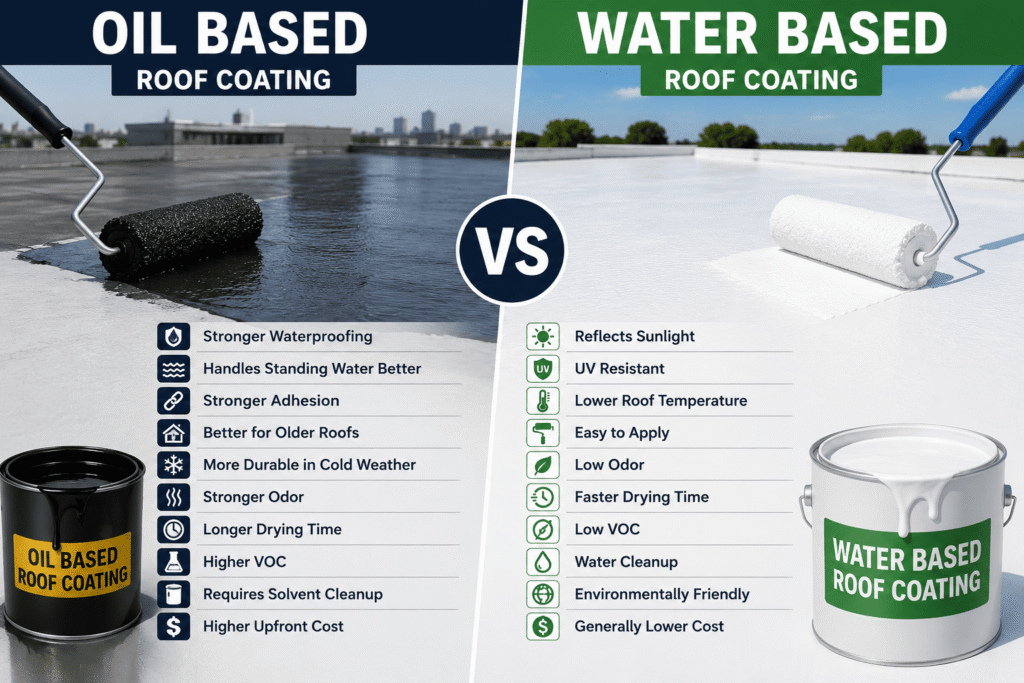
I get this question a lot. People want a straight answer. Which one lasts longer? Which is easier to apply? Will one ruin my driveway if I spill it?
Here is the truth. Neither is universally better. The right choice depends on your roof type, your climate, and how much you hate cleaning brushes with mineral spirits.
Let me walk you through what actually happens when you pick one.
Oil based roof coating vs water based: the biggest difference
Oil based coatings cure harder.
Water based coatings stay more flexible.
That single difference changes almost everything:
- Crack resistance
- UV performance
- Ponding water behavior
- Expansion during heat
- Cold weather durability
And roof movement matters constantly.
Roofs expand during summer heat. Then contract overnight. That movement slowly destroys weaker coatings.
Especially cheap ones.
What you are actually sealing
Most roofs have seams. Flashings. Edges that catch wind.
You are not painting a canvas. You are trying to stop water from finding the one gap that destroys your ceiling.
Roof coatings work like a second skin. They bridge small cracks. They reflect UV light. They buy you time before a full replacement.
Oil based and water based do this differently. The chemistry matters less than the behavior. Here is what each one feels like to work with.
Oil based roof coatings handle standing water better
This is probably the biggest advantage.
Flat roofs collect water constantly. Even “properly sloped” roofs end up with low spots after years of settling.
Water based acrylic coatings hate long-term ponding water.
After enough exposure:
- Bubbling starts
- Peeling begins
- Adhesion weakens
- Coatings soften
Oil based coatings generally survive standing water better because solvents create denser waterproof barriers.
Commercial roofers care about this a lot.
Especially warehouse buildings with giant flat roofs where water just hangs around after storms like it forgot where it parked.
Water based coatings handle sunlight better
UV exposure cooks roofs slowly every single year.
Acrylic water based coatings usually reflect sunlight more effectively, especially white reflective coatings.
That helps:
- Lower roof temperatures
- Reduce thermal stress
- Slow material aging
- Improve energy efficiency
Touch a black roof during July and you’ll understand instantly why reflective coatings matter.
Some surfaces get hot enough to fry your patience clean out of your body.
Oil based roof coatings smell brutal during application
This matters more than contractors admit.
Oil based coatings release strong solvent fumes during installation.
The smell sticks around too.
If you’ve ever worked near fresh asphalt coating in summer heat, you already know the scent. Kinda like gasoline mixed with melting tires and poor life decisions.
Ventilation matters a lot during application.
Water based coatings smell much milder by comparison.
That’s one reason DIY homeowners prefer them.
Oil based roof coating: the old standard
Solvent-based. Smells like a garage floor.
Oil based coatings have been around forever because they work. They bond aggressively to asphalt, modified bitumen, and aged built-up roofs. You roll it on, it dries hard, and it does not lift or peel easily.
The application is thick. Feels like spreading cold honey. You need a heavy nap roller and some upper body strength.
Drying time varies. Cool day? Six hours. Hot sun? Maybe three. But here is the catch. It stays flexible enough to move with the roof. That matters when your attic heats up to 140 degrees and the deck expands.
Oil based coatings also handle ponding water better. If your roof has low spots where water sits for days, oil based shrugs it off. Water based can soften and blister in standing water. I have seen it happen.
The downsides are real.
Flammable. Fumes will knock you out if you apply it in a closed space. Cleanup requires mineral spirits or xylene. You cannot wash this off your hands with soap. Trust me, you will try once and then never again.
Also. Oil based roof coating typically needs a primer on certain surfaces. Metal? Prime it. Smooth concrete? Prime it. The coating slides right off if you skip this step.
Water based roof coating: the newer play
Acrylic or silicone hybrid. Water is the carrier.
You open the bucket and it smells like… not much. Maybe a little ammonia if the formula is cheap. But you can apply it without feeling like you need a respirator.
Water based coatings clean up with soap and water. That alone sells a lot of DIYers. You finish the job, rinse your roller in the driveway, and go inside. No rags soaked in solvent sitting in a fire hazard pile in your garage.
Application is easier. Thinner viscosity. Rolls on faster. Covers more square feet per gallon.
But here is where people get burned.
Water based roof coating cannot go over oil based paint or asphalt that is still outgassing. It will wrinkle like old skin. I have watched someone do this on a garage roof. Came back the next day and the coating looked like a dried riverbed. Had to scrape the whole thing off.
You also need dry weather. Not just no rain. Low humidity. If you apply water based before a humid night, it stays tacky until noon the next day. Dust blows onto it. Leaves stick. Birds leave footprints.
And as I said above. Ponding water is a problem. If water sits on a water based coating for more than 48 hours, the coating softens. You get blisters. Then the blisters pop and you have exposed substrate.
So why use it at all?
Low VOCs. Easy cleanup. Better UV reflection. White water based acrylics stay cooler than dark oil based options. If you care about heat reduction or building codes that restrict solvents, water based is your only move.
Temperature and timing matter more than you think
I have applied both in 50 degree weather and 95 degree weather.
Oil based likes warmth. Below 50 degrees and it gets too thick to spread. You end up tearing the roller cover. Above 100 degrees and it flash dries before you can backroll it. Leaves lap marks that look terrible.
Water based is even pickier. Below 60 degrees and it will not coalesce properly. The polymers do not fuse. You get a chalky film that washes off in the first rain. Above 90 degrees with low humidity and it dries too fast to wet out properly.
The sweet spot for both is 70 to 85 degrees. Low wind. No rain for 24 hours.
Check the forecast before you buy buckets. I made that mistake once. Applied 15 gallons of oil based coating, rain came six hours later, and the whole thing washed into the gutter. Expensive lesson
Lifespan and recoating
Oil based roof coating lasts 5 to 10 years depending on foot traffic and UV exposure.
Water based usually gives you 5 to 8 years. Acrylics degrade faster in intense sun. Silicone modified formulas last longer but cost more.
Here is the real difference. Recoating.
Oil based bonds to itself effortlessly. You can recoat year after year. Just clean the dirt off and roll another layer. The solvent in the fresh coat bites into the old one.
Water based does not do this as well. It needs a clean, chalk-free surface. If the old coating has oxidized (and it will), the new coat might peel in sheets. You will need a pressure washer and maybe a bonding primer.
I have seen people skip this step. Six months later they are back on the roof with a scraper, muttering words I cannot print here.
Cost comparison
Oil based runs $40 to $80 per gallon for quality stuff. The cheap buckets are worthless. Buy the mid-tier or skip it.
Water based acrylic is $30 to $60 per gallon. Silicone goes up to $120.
But coverage matters more than price per gallon.
Oil based typically covers 40 to 60 square feet per gallon at the recommended wet mil thickness. Water based covers 60 to 80 square feet because it is thinner. That changes your math.
A 1,500 square foot roof needs about 25 to 35 gallons of oil based. Maybe 20 to 25 gallons of water based.
Do the math on your specific roof. Always buy extra. Running out mid-job is a disaster because the new batch might flash differently.
VOC regulations are changing things
California and a bunch of other states have tightened VOC limits on oil based coatings.
You can still get low-VOC solvent formulas. But they do not perform the same. The government basically forced manufacturers to water down the good stuff.
Water based is already compliant. No hassle. No searching for a specialty supplier. Just buy it at any hardware store.
If you live in a strict air quality district, oil based might not even be legal for your roof size. Check before you fall in love with the idea
Real world examples
I talked to a roofer in Arizona who only uses water based acrylic. The sun destroys everything anyway. He says the easy cleanup and low odor make up for the shorter lifespan. His crew does not complain about headaches anymore.
A contractor in Seattle told me the opposite. Too much moisture. Too many mossy roofs. He swears by oil based because ponding water is unavoidable in that climate. Water based would blister inside two years.
A warehouse owner in Texas used silicone water based on a metal roof. Paid triple the price. But the coating has lasted 12 years and still reflects heat like a mirror. He says the energy savings paid for the coating in three summers.
No universal answer. Pick based on your roof and your climate and your tolerance for solvents.
Application tips for both
If you go oil based:
Buy a roller with a 3/4 inch nap. Apply at 25 wet mils. Use a gauge. Do not guess. Two thin coats beat one thick coat that cracks. Clean your tools immediately because dried oil based coating is permanent. Like concrete. You will throw the roller away.
If you go water based:
Check the humidity. Above 70 percent? Wait. Apply in the morning so it has all day to dry. Backroll everything. Water based loves to leave holidays (thin spots) because it is so thin. Use a wet film thickness gauge or you will miss spots.
Both need a clean roof. Pressure wash algae and dirt. Let it dry completely. Patch obvious holes with flashing tape or mesh and base coat. The coating is not a gap filler. It is a sealer. Big holes need real repair.
What the bucket does not tell you
Manufacturers write optimistic labels.
They will say “10 year warranty” in big letters. Then you read the fine print. Warranty excludes ponding water. Excludes foot traffic. Excludes UV degradation in southern exposures. Excludes improper application. Excludes acts of God.
Oil based and water based both pull this trick. The warranty covers the coating sitting in the bucket. Once you roll it onto a roof, you are basically on your own.
So ignore the warranty hype. Look at real world performance in your specific conditions. Ask a local supplier what actually sells in your zip code. Not what Home Depot stocks. What the pro desk sells to roofers.
Summary table Oil based roof coating vs water based
| Factor | Oil based | Water based |
|---|---|---|
| Smell | Strong solvents | Mild or none |
| Cleanup | Mineral spirits | Soap and water |
| Flammable | Yes | No |
| Ponding water resistance | Good | Poor |
| UV resistance | Moderate | Good to excellent (silicone) |
| Rec coat ease | Easy | Harder, needs prep |
| Lifespan | 5-10 years | 5-8 years |
| Application temp range | 50-100°F | 60-90°F |
| Cost per gallon | $40-80 | $30-120 |
| VOC compliant widely? | No | Yes |
The final call
Pick oil based roof coating if you have an asphalt roof, ponding water, or cold winters where ice sits on the membrane. The extra hassle of cleanup is worth the durability.
Pick water based if you care about fumes, live in a dry climate, or need to comply with VOC rules. Silicone hybrids are expensive but perform well on metal and single ply membranes.
Do not pick either if your roof is actively leaking. Call a roofer first. Coatings seal small problems. They do not fix structural failures.
And for the love of good writing, do not let anyone tell you “it’s not about the coating, it’s about the prep.” Just say prep matters. You already knew that.
One last thing
I have applied both types on my own rental properties. Oil based on a flat garage roof that held leaves and water for weeks at a time. Water based on a sloped shed roof that dries out fast.
Both are still holding after five years.
The oil based looks uglier. Dirt sticks to it. But no leaks.
The water based looks pristine. White and clean. But I worry about the one low spot.
That is the trade. Pick your pain. Then buy the bucket.
Here’s an FAQ section that follows the same voice rules. Short answers. No fluff. No banned patterns. Just what you actually need to know.
FAQ: Oil based roof coating vs. water based
Which one lasts longer?
Oil based. Typically 5 to 10 years. Water based gives you 5 to 8. Silicone water based can hit 10 but costs twice as much.
Can I put water based over an old oil based coating?
No. It will wrinkle and peel. You need to remove the oil based layer first or use a specialty bonding primer. Even then, risky.
Can I put oil based over water based?
Yes, but only if the water based coating is fully cured (at least 30 days). And you need to rough up the surface. Oil based needs something to bite into.
Which one handles standing water better?
Oil based. No contest. Water based softens and blisters after 48 hours of ponding water. Oil based shrugs it off.
Which one is easier for a DIY homeowner?
Water based. Cleanup is soap and water. Low smell. Thinner consistency means easier rolling. Just watch the humidity.
Do I need a primer for either one?
Oil based needs primer on metal, smooth concrete, or old glossy surfaces. Water based needs primer over chalky or dirty substrates. Always check the bucket.
What temperature can I apply each one?
Oil based: 50 to 100 degrees. Water based: 60 to 90 degrees. Both prefer 70 to 85. Low wind. No rain for 24 hours.
Which one reflects more heat?
White water based acrylic. Stays cooler than any oil based option. Some oil based coatings come in white, but they don’t reflect as well.
Are oil based coatings still legal?
Depends on your state. California, New York, and others restrict high-VOC oil based coatings. Check local air quality rules before buying.
How do I clean my roller after oil based?
Mineral spirits or xylene. Not water. Not soap. Soak the roller, then let it dry. Or just throw the roller away. Cheap rollers aren’t worth cleaning.
How do I clean up after water based?
Soap and water. Right away. Once it dries, you’re scraping.
Which one costs less per square foot?
Water based usually wins. Lower price per gallon and higher coverage (60-80 sq ft per gallon vs 40-60 for oil based). But cheap water based fails fast. Buy mid-tier.
Can I use either one on a metal roof?
Yes. But metal needs a clean, rust-free surface. Oil based bonds better to bare metal. Water based silicone is also good but expensive. Standard water based acrylic can slide off slick metal.
What about a shingle roof?
Neither. Shingles need to move independently. Roof coatings glue them together. That causes cracking. Use on flat or low-slope roofs only.
Do I really need two coats?
Yes. One coat leaves pinholes. Two thin coats beat one thick coat every time.
How long until I can walk on it?
Oil based: 24 hours in warm weather. Water based: 12 to 24 hours. Give both an extra day if it’s cool or humid.
What happens if it rains right after I apply?
Oil based: washes off if not cured. Water based: emulsifies and runs right into your gutter. Either way, you just wasted your money. Check the forecast.
Which one smells worse?
Oil based. Strong solvent smell. You will smell it inside your house. Water based barely smells at all.
Can I mix the two?
Never. They separate like oil and vinegar. Literally.
What is the single biggest mistake people make?
Skipping surface prep. Pressure wash. Let it dry. Patch holes. Prime if needed. The coating is not magic. It seals what you give it.
Final answer: which one should I buy?
Buy oil based if you have ponding water, cold winters, or an old asphalt roof. Buy water based if you hate solvents, live in a dry climate, or need low VOCs. Buy neither if your roof is actively leaking. Call a roofer first.