
|
Getting your Trinity Audio player ready...
|
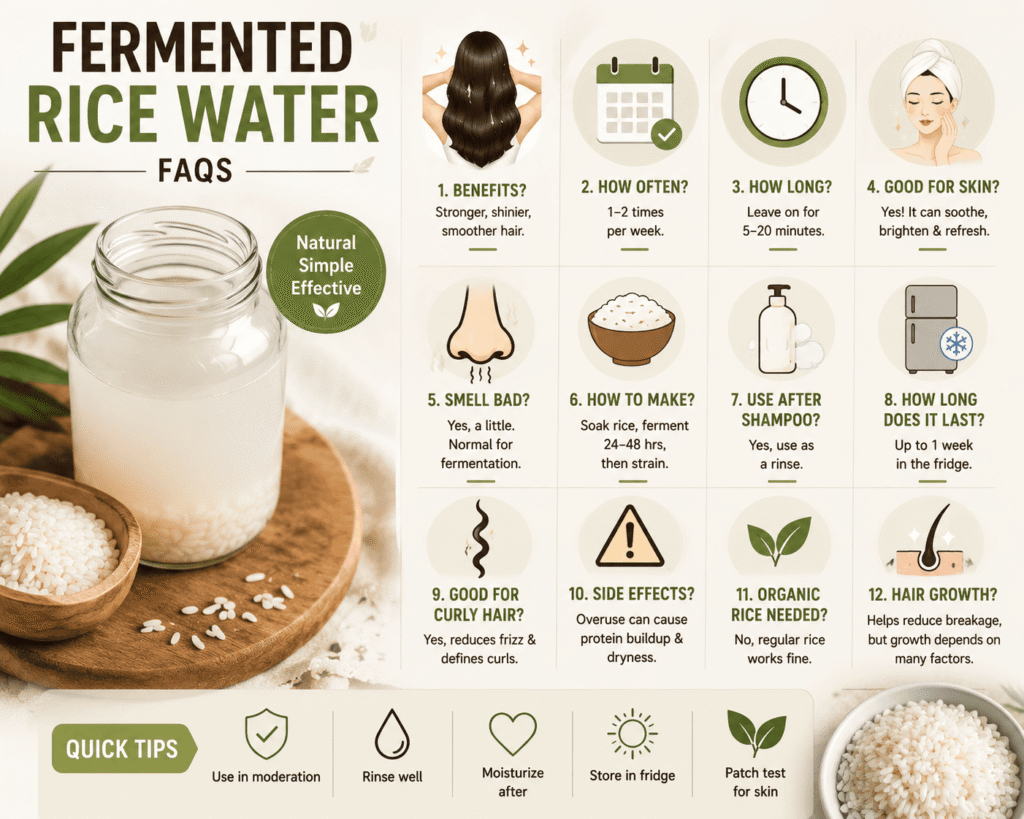
I’m not here to sell you magic. You’ve seen enough of that. But I’ve used this stuff for three years. My hair went from frizzy and dull to something I don’t hate looking at in the mirror. And I spent exactly zero dollars on products.
Here’s how it works. What it actually does. And why you should try it.
What is fermented rice water?
It’s exactly what it sounds like.
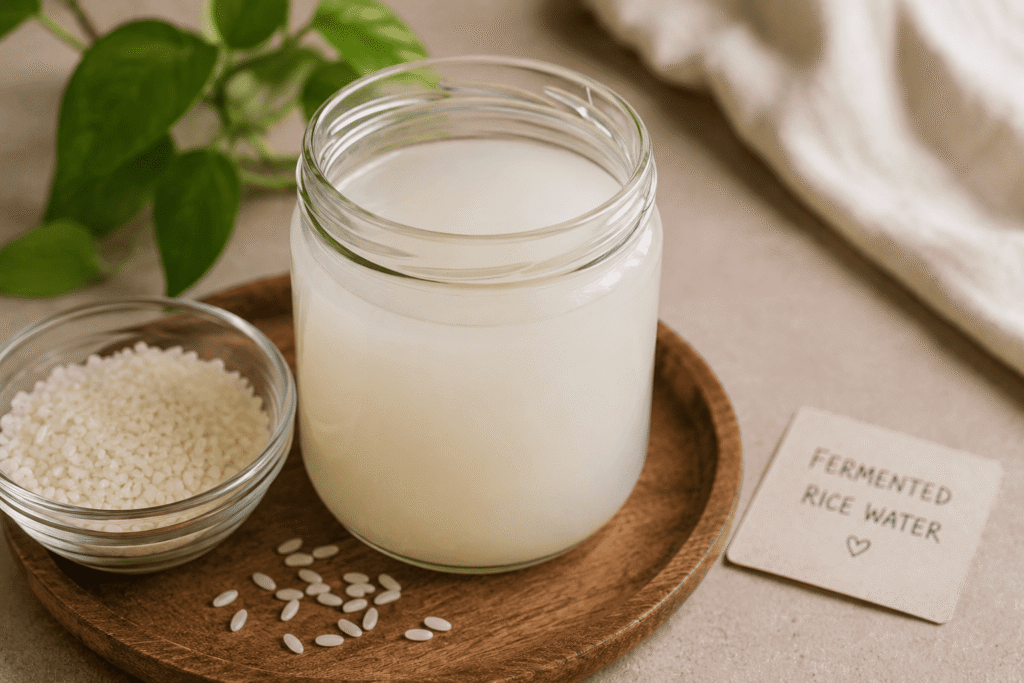
You soak rice in water, leave the liquid out long enough for natural fermentation to start, then use that cloudy liquid on hair or skin.
The fermentation process changes the chemistry a bit. Starches break down. Certain antioxidants and amino acids increase. The liquid becomes more acidic too, which matters for hair health.
Plain rice water and fermented rice water aren’t the same thing.
Fresh rice water is milder. Fermented rice water is stronger, more concentrated, and usually better for smoothing hair cuticles.
That sharper smell? That’s fermentation doing its thing.
What actually happens when you use it
I’ll give you the timeline.
First use: Your hair feels different. Not softer, exactly. Stronger. Like each strand has more backbone. Hard to describe. You’ll know it when you feel it.
After 2‑3 weeks: Less breakage when you brush. Fewer strands in the shower drain. I used to pull out a small animal every wash. Now it’s maybe 10 strands.
After 2 months: New growth. Little baby hairs along your hairline. Places you thought were just thinning permanently. They come back.
I’m not promising miracles. Some people see nothing. But most notice at least one of these changes.
Why people use fermented rice water on hair
Hair growth gets most of the attention.
But honestly, the biggest difference people notice first is texture.
Hair often feels smoother after a few uses. Softer too. Less rough around the ends. Curly hair can look more defined because the strands lie flatter and reflect light better.
There’s a reason people keep sticking with it even after the hype cycle cools down
The science part
Rice water contains inositol. That’s a carbohydrate that penetrates the hair shaft and stays there. Even after you rinse.
Most conditioners coat the outside of your hair. They use silicones and oils to make it feel smooth. But inositol works from the inside. It strengthens the hair from within. Reduces friction between strands. Less tangling. Less breakage.
Fermentation does two things.
First, it increases the concentration of vitamins and minerals. B vitamins, vitamin E, amino acids. Fermentation is basically pre‑digestion. The good stuff becomes more available.
Second, the pH drops. Fresh rice water is neutral or slightly alkaline. Fermented rice water lands around 4.5 to 5.0. That’s close to your scalp’s natural pH. Hair cuticles lie flat when the pH is slightly acidic. Flat cuticles mean less frizz and more shine.
The mistake everyone makes
They use it wrong.
You cannot just pour fermented rice water on your head and rinse immediately. That does almost nothing. The inositol needs time to absorb.
Leave it on for 5 to 20 minutes. I do 10. Put it in a spray bottle. Saturated your scalp and hair. Clip it up. Go do something else. Rinse with plain water.
Also: don’t use it every day. That’s too much protein. Your hair will get stiff and brittle. Twice a week is plenty. Once a week if your hair is fine or low porosity.
How to make it (actual steps, not vague instructions)
Grab a cup of rice. White rice works. Brown rice works. Jasmine, basmati, whatever you have in the pantry.
Rinse the rice first. You don’t want dust or debris.
Put the rice in a bowl. Add 2‑3 cups of water. Swish it around with your hands. You’ll see the water turn cloudy. That’s the starch.
Strain out the rice. Keep the water. (Cook the rice normally. Don’t waste it.)
Pour that water into a clean jar. A mason jar is perfect. Cover it with a cloth or paper towel. Secure with a rubber band. Don’t seal it tight. Fermentation needs air.
Leave it on your counter for 24 to 48 hours. Temperature matters. Warmer kitchen? Closer to 24 hours. Cooler? Maybe 48. You’ll know it’s ready when it smells slightly sour. Like yogurt or sourdough starter. Not rotten. Just… funky.
Some people add a citrus peel or a few drops of essential oil to mask the smell. That’s fine. Doesn’t change the effectiveness.
After fermentation, move it to the fridge. Use it within a week. After that, it gets too funky and loses potency.
What actually happens in the jar
You soak rice in water. Natural bacteria and yeasts go to work. They break down starches into sugars, then into lactic acid and other compounds. The pH drops. That sour smell hits after 24-48 hours. That’s your sign it’s working.
Fermentation creates amino acids, antioxidants, and inositol. Plain rice water has some of this. The fermented version ramps it up. Lower pH helps close the hair cuticle. Smoother strands. More shine. Less friction.
Some studies on rice bran and extracts show it can boost growth factors in follicles and reduce enzymes that push hair into resting phase. Not massive clinical trials on the DIY rinse itself, but the pieces line up.
The Yao women connection
You’ve probably seen photos of the Yao women from Huangluo Village in China.
They became famous for extremely long hair, often reaching the floor even in older age. Rice water rinses are part of their traditional hair care routine.
People latched onto that immediately.
The thing most internet videos skip: genetics, diet, low heat styling, and lifelong hair practices matter too. You can’t isolate one ingredient from an entire lifestyle and expect identical results.
Still, rice water clearly remained part of that routine for generations. That says something.
How fermented rice water affects different hair types
Curly and coily hair
Curly hair often responds well because fermented rice water smooths the outer cuticle and reduces frizz.
Some people use it almost like a protein treatment.
But overdoing it can make curls stiff. Hair starts feeling straw-like instead of hydrated. That’s usually a sign you’re using it too often.
Once a week is enough for many people.
Fine hair
Fine hair can get weighed down quickly.
Too much rice water leaves buildup that makes hair feel coated and dull. A short rinse works better than soaking the hair for an hour like some social videos recommend.
Your scalp shouldn’t feel sticky afterward.
Bleached or damaged hair
This is where fermented rice water sometimes shines.
Bleached hair loses strength fast because the cuticle gets roughed up during chemical processing. Rice water can temporarily improve smoothness and reduce that fried, rough texture.
It won’t reverse bleach damage though. Split ends remain split ends.
No liquid on Earth glues them back together permanently.
How to make fermented rice water at home
You don’t need fancy ingredients.
Basic white rice works fine.
Simple method
- Rinse 1 cup of rice briefly
- Add 2 to 3 cups of water
- Let it soak for 30 minutes
- Strain the water into a jar
- Leave the jar at room temperature for 24 to 48 hours
- Refrigerate once it smells slightly sour
That’s it.
Some people boil the rice first. Others add orange peel or rosemary to soften the smell a bit. Honestly, the citrus trick helps.
Because fermented rice water can smell like old yogurt mixed with wet cereal.
How to use it on hair
Most people apply it after shampooing.
Massage it into the scalp and lengths, leave it on for 5 to 20 minutes, then rinse thoroughly.
You don’t need to drench your head for an entire afternoon.
A lot of viral routines go overboard. Hair care usually works better when you stop before the “science experiment” phase.
Can fermented rice water damage hair?
Yes, absolutely.
Too much protein exposure can make hair brittle. Rice water behaves similarly to a light protein treatment for some hair types.
Signs you’re overusing it:
- Hair feels stiff
- Ends snap easily
- Texture turns rough
- Curls lose bounce
- Hair tangles more
That’s usually your cue to stop for a while and use moisture-heavy conditioners instead.
People with low-porosity hair sometimes struggle most because product buildup sits on the surface instead of absorbing properly.
Fermented rice water for scalp health
Some users report reduced itchiness and less flaking.
That might come from the starches and antioxidants calming irritation slightly. Fermentation also changes the pH, which may help certain scalps feel less dry.
But if you have severe dandruff, psoriasis, or fungal scalp issues, rice water probably won’t fix the root problem.
Sometimes people mistake irritation from overuse as “detox.” Usually it’s just irritation.
Your scalp doesn’t need a spiritual cleansing journey.
Can you leave fermented rice water overnight?
You can, but I probably wouldn’t.
Long exposure increases the risk of dryness and protein overload, especially on already fragile hair.
Short treatments tend to work better.
There’s also the smell issue. Sleeping with fermented rice water on your pillowcase creates a very specific kind of regret by morning.
Fermented rice water for skin
Hair gets most of the attention, but people use rice water on skin too.
It’s commonly applied as a facial rinse or toner because it contains antioxidants and starches that can calm irritation temporarily.
Some people notice:
- Softer skin
- Less oiliness
- Mild brightening
- Reduced redness
The effects are usually subtle.
This isn’t industrial-strength skincare chemistry. You’re working with fermented starch water from your kitchen.
Still, gentle homemade treatments sometimes work surprisingly well because they avoid overly aggressive ingredients.
Does fermented rice water help acne?
Maybe a little for mild irritation.
But acne has multiple causes:
- Hormones
- Oil production
- Bacteria
- Inflammation
- Genetics
Rice water won’t override all that.
If fermented rice water causes stinging, redness, or clogged pores, stop using it immediately.
Natural ingredients can still irritate skin. Poison ivy is natural too.
How long does fermented rice water last?
Usually about 1 week in the refrigerator.
After that, the smell gets stronger and bacterial growth becomes more likely.
If the liquid develops mold or smells aggressively rotten, throw it out.
And please don’t keep re-fermenting the same batch endlessly like a medieval potion master.
Fermented rice water vs regular rice water
Fermented rice water is stronger and more acidic.
Regular rice water is gentler and often safer for beginners.
Some people actually prefer plain rice water because it causes less dryness. Fermented versions tend to give more dramatic texture changes, especially on damaged hair.
It depends on your hair type and how often you use it.
Common mistakes people make
Using it daily
Too much rice water usually backfires.
Hair becomes stiff and dry instead of shiny.
Skipping conditioner
Rice water works better alongside moisture.
Protein without hydration creates crunchy hair. Think broom bristles.
Letting it ferment too long
There’s a difference between fermented and biologically questionable.
Three days at room temperature during summer heat can get nasty fast.
Expecting instant growth
Hair grows slowly.
Around half an inch per month for many people. Any product claiming explosive overnight growth deserves skepticism immediately.
Who should avoid fermented rice water?
Some people simply don’t respond well to it.
You may want to avoid it if you have:
- Very protein-sensitive hair
- Extremely dry scalp
- Active scalp infections
- Allergic reactions after use
- Low-porosity hair prone to buildup
Patch testing matters, especially for skin use.
Why fermented rice water stayed popular for so long
Because it’s cheap, easy, and sometimes genuinely helpful.
That combination survives trends.
You can make it in a kitchen with ingredients that cost almost nothing. And when something improves shine or softness after a couple uses, people notice quickly.
The internet tends to inflate every beauty treatment into a miracle cure. Fermented rice water escaped that trap for a while because the expectations started small.
Softer hair. Less frizz. A healthier feel.
Honestly, those are already pretty good outcomes from leftover rice water sitting in a jar on your counter.
The smell problem
Let’s be honest. Fermented rice water smells weird. Not horrible. But it’s not perfume.
Two fixes.
First, rinse with water that has a few drops of peppermint or tea tree oil. Just add them to your final rinse. The oil smell overpowers the rice smell.
Second, follow with a conditioner that has fragrance. Your regular conditioner is fine. The rice water does its job in the first 10 minutes. A conditioner afterward won’t wash away the benefits.
I’ve done this for three years. No one has ever smelled my hair and said “what’s that sour rice thing?” It rinses clean.
Why this beats store‑bought “rice water” products
I’ve tried three different brands selling rice water shampoo and conditioner. They all had the same problem: too many other ingredients.
Preservatives. Fragrances. Thickeners. None of those help your hair. Some of them (sulfates, silicones) actively work against the rice water benefits.
Homemade fermented rice water has one ingredient. Rice water. That’s it.
Also, store‑bought versions aren’t fermented. They’re usually just rice extract in a bottle. Fermentation changes the chemistry. You don’t get the low pH or the concentrated vitamins.
And the cost? A bag of rice is $5. It lasts you six months. A “rice water system” from a beauty brand is $40 and lasts three weeks.
You do the math.
Pro tips from people who do this regularly
Use filtered or distilled water to control the process better. Add a spoonful of plain yogurt or rice from a previous batch to jumpstart good bacteria. Don’t expect overnight miracles. Give it 4-8 weeks of consistent use. Combine with good diet, gentle handling, and not frying your hair with heat tools. Low porosity hair? Be extra careful with protein. High porosity might love it more. Track your results with photos in the same lighting.
Who should not use this
If you have seborrheic dermatitis or a very sensitive scalp, go slow. The fermentation creates mild acids and alcohols. Most people tolerate it fine. But some get irritation.
Do a patch test. Put a few drops behind your ear. Wait 24 hours. No redness or itching? You’re good.
If your hair is already strong and healthy, you might not notice a difference. Rice water is best for damaged, over‑processed, or thinning hair. If you have perfect hair already (lucky you), this won’t do much.
Also: color‑treated hair? Fine. Rice water won’t strip color. But it might slightly darken blonde or grey hair over time. The minerals in rice water can deposit a tiny bit of color. I’ve only seen this in very porous, light hair. Most people don’t notice.
One real example
My friend Maya. She bleached her hair for three years. It looked like straw. Broke off at the shoulders. She tried Olaplex, K18, all the expensive stuff. Helped a little. But her hair still snapped when she brushed it.
I gave her a jar of fermented rice water. Told her to try it twice a week for a month.
She texted me after three weeks. “My hair doesn’t break anymore. I don’t understand how this works but I don’t care.”
She’s still using it. Her hair is past her collarbone now. First time in two years.
The over‑processing warning
I’ve seen people get obsessed. They use rice water every day. They leave it on for an hour. They think more is better.
It’s not.
Protein overload is real. Your hair becomes stiff, brittle, and snaps off. The fix is simple: stop using rice water for a few weeks. Use a deep conditioner without protein. Your hair will recover.
Signs you’ve overdone it:
- Hair feels like straw when wet
- No elasticity (pull a strand – it breaks immediately instead of stretching)
- Tangles worse than before
Back off to once a week. Or once every two weeks. Find your sweet spot.
The lazy version no fermentation
Don’t have 48 hours? Fine.
Soak rice in water for 30 minutes. Strain. Use that water immediately. It’s not as potent as fermented. But it still has inositol and starch. You’ll get maybe 60% of the benefit.
Better than nothing.
But fermentation is worth the wait. The smell tells you it’s working. Trust the funk.
How to store it long‑term
You can freeze fermented rice water.
Pour it into an ice cube tray. Each cube is about one tablespoon. Pop them out and store in a freezer bag.
When you need it, drop 2‑3 cubes into a cup. Microwave for 15 seconds. Or just let them melt at room temperature.
Frozen rice water keeps for 3‑4 months.
Do not can it. Do not bottle it and leave it on the shelf. It will grow mold. Fermentation continues even in the fridge, just slower. A week is the limit.
The bottom line
Fermented rice water is cheap, simple, and works for most people.
You don’t need a PhD in chemistry. You don’t need a brand to trust. You just need rice, water, and a jar.
Try it for one month. Twice a week. 10 minutes each time.
If you see no difference? Stop. You lost nothing but a few cents of rice.
If you see a difference? You just found a hair treatment that costs almost nothing and doesn’t come in a plastic bottle.
That’s the whole thing.
Make the rice water. Leave it on your counter. Use it. Rinse it. See what happens.
FAQs about fermented rice water
How often should you use fermented rice water on hair?
1 to 2 times a week is enough for most people.
Using it daily can leave hair stiff or dry, especially if your hair already struggles with protein overload.
How long should fermented rice water stay on hair?
Usually 5 to 20 minutes works well.
Some people leave it longer, but extended treatments can make hair feel rough instead of soft.
Can fermented rice water grow hair faster?
It may help hair look longer over time because healthier strands break less.
Actual hair growth still depends heavily on genetics, hormones, nutrition, and scalp health.
Does fermented rice water smell bad?
Yeah, kinda.
Fermentation creates a sour smell that some people compare to yogurt or vinegar. Adding orange peel, rosemary, or lavender can make it less intense.
Can fermented rice water damage hair?
Yes, if you overuse it.
Too much can create protein buildup, which makes hair brittle, tangled, or straw-like.
Is fermented rice water good for curly hair?
A lot of people with curly or coily hair like it because it can reduce frizz and improve curl definition.
But curls can lose softness if rice water is used too often.
Should you shampoo after using fermented rice water?
Most people shampoo first, then apply rice water afterward as a rinse or treatment.
You usually rinse it out with plain water after the treatment.
Can fermented rice water help dandruff?
Some users notice less dryness or itchiness on the scalp.
Still, severe dandruff or scalp conditions often need medicated treatment instead of DIY remedies.
How long does fermented rice water last in the fridge?
About 1 week.
If it smells rotten, develops mold, or changes color dramatically, throw it away.
Can you use fermented rice water on skin?
Yes, some people use it as a facial rinse or toner.
It may help calm mild irritation or oiliness, though results tend to be subtle.
Is boiled rice water better than soaked rice water?
Both work.
Boiled rice water is usually more concentrated, while soaked and fermented rice water tends to have stronger acidity and a different nutrient profile.
Can low-porosity hair use fermented rice water?
It can, but buildup happens faster on low-porosity hair.
Short treatments and less frequent use usually work better.
Do you need organic rice for fermented rice water?
No.
Regular white rice works fine for most homemade rice water recipes.
Why does fermented rice water make hair feel hard sometimes?
That usually means protein buildup.
Hair needs moisture balance. Too much protein without conditioning can leave strands stiff and dry.
Can you leave fermented rice water overnight?
You can, but many people find overnight use too drying.
Shorter treatments usually give better results with less buildup.
Usefull Links
https://ro.co/womens-hair-loss/rice-water-for-hair/
https://wimpoleclinic.com/blog/rice-water-for-hair-growth-myth-or-reality-evidence-review