
|
Getting your Trinity Audio player ready...
|
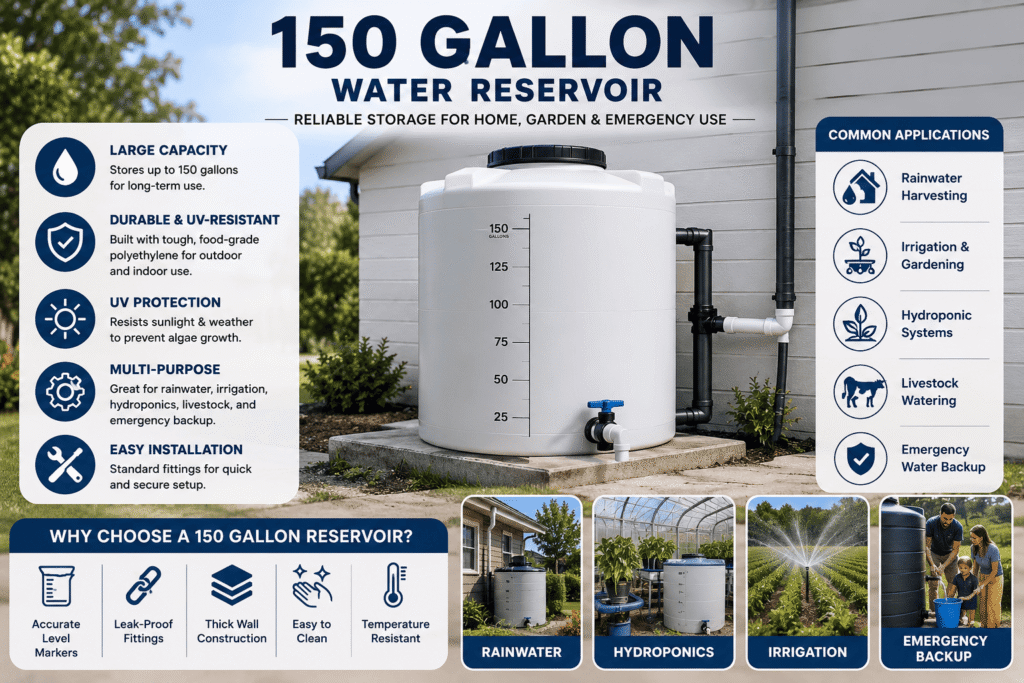
A 150 gallon water reservoir sits in a weird middle ground.
It’s way bigger than the average plastic storage barrel you’d keep in a garage. But it’s still small enough to fit in sheds, greenhouses, RV setups, grow rooms, workshops, and backup water systems without turning your property into a construction site.
That’s exactly why people buy them.
A 150 gallon reservoir gives you enough water storage to actually matter, without dealing with commercial-scale installation headaches.
And honestly, this size works for far more situations than people think.
I’ve seen 150 gallon reservoirs used for hydroponic farms, off-grid cabins, emergency backup water, drip irrigation systems, mobile detailing rigs, livestock watering, and even homemade rainwater harvesting setups built from old greenhouse gutters and stubborn optimism.
Some setups look clean and professional.
Others look like somebody assembled them during a 2 a.m. hardware store panic run.
Both can work.
The trick is choosing the right reservoir for your situation before you spend money on the wrong shape, wrong material, or wrong fittings.
How big is a 150 gallon water reservoir?
Bigger than most people expect.
Water weighs about 8.34 pounds per gallon.
So a completely full 150 gallon reservoir weighs roughly:
- 1,251 pounds of water
- Plus the tank itself
- Plus fittings, pumps, lids, or support framing
You’re usually dealing with around 1,300 to 1,500 pounds total once everything is assembled.
That matters because people constantly underestimate floor strength.
Especially in garages, balconies, sheds, or indoor grow spaces.
A typical vertical 150 gallon tank may stand around 3 to 4 feet tall with a diameter near 2 to 3 feet depending on design.
Horizontal tanks stretch wider and lower.
Slimline tanks save space against walls.
Rectangle reservoirs are common in hydroponics because they fit efficiently under benches and inside grow rooms.
Shape changes everything.
Common uses for a 150 gallon water reservoir
This size reservoir works because it’s flexible.
Large enough for real storage.
Small enough to manage without heavy equipment.
Hydroponic systems
Hydro growers love reservoirs around this size.
Especially for medium and large indoor systems.
A 150 gallon reservoir can feed:
- NFT systems
- Deep water culture setups
- Drip irrigation grow systems
- Vertical farming racks
- Greenhouse nutrient systems
And stable water volume matters in hydroponics.
Smaller tanks swing wildly in temperature and nutrient concentration.
A bigger reservoir creates more consistency.
Which usually means happier plants and fewer late-night panic checks with a pH meter.
Emergency water storage
A lot of homeowners keep backup water reservoirs now.
Especially in areas with storms, unreliable municipal systems, or long power outages.
A 150 gallon supply can cover:
- Drinking water
- Toilet flushing
- Basic washing
- Pet water
- Short-term emergency needs
For a family of 4, that amount can last several days depending on usage.
Longer if you’re careful.
Rainwater harvesting
This is probably one of the most common uses.
A 150 gallon reservoir works well for collecting roof runoff from:
- Sheds
- Small greenhouses
- Garages
- Tiny homes
- Backyard workshops
And unlike giant cistern systems, this size stays manageable.
You can actually clean it without climbing inside like a sewer maintenance worker from a disaster movie.
RV and mobile setups
Mobile businesses use these constantly.
Especially:
- Mobile car detailing
- Pressure washing
- Food trailers
- Agricultural spraying rigs
A 150 gallon reservoir gives decent water supply without overloading smaller trailers.
Weight matters fast when towing.
Types of 150 gallon water reservoirs
Material choice changes durability, water quality, lifespan, and price.
And cheap reservoirs usually reveal themselves pretty quickly.
Especially outdoors.
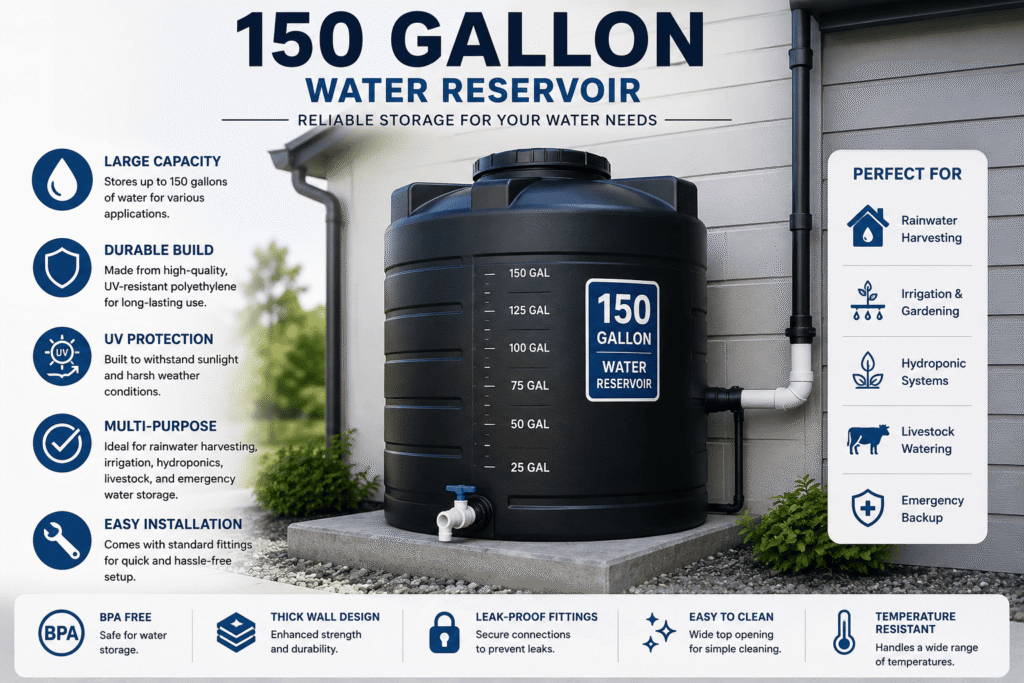
Polyethylene reservoirs
Poly tanks dominate this category.
Mostly because they’re affordable and lightweight.
Good polyethylene tanks usually include:
- UV protection
- Food-grade plastic
- Molded drain fittings
- Thick sidewalls
- Algae-resistant coloring
Black and dark green reservoirs tend to block sunlight better.
That helps reduce algae growth.
Clear tanks look cool for about 3 days. Then they start growing science experiments.
Steel reservoirs
Less common at this size.
But they exist.
Steel reservoirs handle rough environments well and resist impacts better than thin plastic.
Some industrial setups prefer them for durability.
Corrosion protection matters though.
Especially around welded seams and fittings.
Flexible bladder tanks
These are surprisingly useful.
Flexible reservoirs collapse as water drains out.
That makes them useful for temporary storage, emergency response, and transport applications.
Some farmers use portable bladder reservoirs during seasonal irrigation work.
When empty, they fold down into something roughly the size of a large duffel bag.
Pretty practical honestly.
Vertical vs horizontal reservoirs
This decision matters more than people realize.
Vertical reservoirs
Vertical tanks save floor space.
They work well for:
- Garages
- Utility rooms
- Grow tents
- Tight corners
- Small greenhouses
The downside is center of gravity.
A tall narrow tank becomes less stable if the base isn’t level.
Horizontal reservoirs
Horizontal tanks spread weight more evenly.
They’re common on:
- Trailers
- Trucks
- Mobile rigs
- Agricultural sprayers
And they usually fit under structures more easily.
The tradeoff is footprint.
They eat up more horizontal space.
Food-grade vs non-potable reservoirs
This distinction matters a lot.
Some reservoirs are safe for drinking water.
Others absolutely are not.
Food-grade reservoirs use approved plastics designed for potable water storage.
Non-potable tanks are fine for:
- Irrigation
- Hydroponics
- Equipment washing
- Agricultural spraying
- Rain collection for gardens
If humans or animals will drink from it, check certifications carefully.
A cheap unknown plastic tank from an online marketplace gets sketchy fast.
Especially if it smells weird right out of the box.
Trust your instincts there.
How much does a 150 gallon water reservoir cost?
Prices vary heavily depending on shape and material.
Typical ranges look something like this:
- Basic poly reservoir: $150 to $400
- Heavy-duty food-grade tank: $300 to $800
- Specialty hydroponic reservoir: $250 to $700
- Steel systems: often higher
- Mobile transport tanks: varies wildly
And then accessories start stacking up:
- Pumps
- Float valves
- Bulkhead fittings
- Hose kits
- Filters
- UV covers
- Stands
- Drain assemblies
That “cheap” reservoir setup suddenly becomes a $900 weekend project.
Happens constantly.
Using a 150 gallon reservoir for hydroponics
This is where reservoir quality really matters.
Hydroponic systems expose every weakness.
Poor lids allow light leaks.
Weak plastics flex under weight.
Bad fittings drip nutrients everywhere.
Temperature control becomes a huge deal too.
Water warms up fast under grow lights.
And warm nutrient solution creates perfect conditions for algae and root disease.
A lot of growers insulate reservoirs or place them outside the grow area entirely.
Some even bury water lines underground to cool nutrient circulation naturally.
Honestly, hydro growers become amateur plumbers faster than they expect.
Can a 150 gallon reservoir support household water use?
Temporarily, yes.
Permanently, probably not unless water usage stays extremely low.
Average household consumption adds up quickly.
A normal shower alone can use 15 to 25 gallons depending on fixtures.
Toilet flushing burns through more than people think too.
Still, a 150 gallon reservoir works great for:
- Emergency reserve
- Cabin systems
- Tiny homes
- Weekend properties
- Supplemental rainwater storage
And paired with filtration, it becomes surprisingly useful during outages.
Indoor vs outdoor installation
Outdoor setups need more protection than people expect.
Sunlight destroys cheap plastic over time.
UV damage makes tanks brittle.
Then fittings crack.
Then suddenly you’re ankle-deep in water wondering why the “heavy-duty” tank split open after 2 summers.
Outdoor reservoirs benefit from:
- Shade covers
- UV-resistant materials
- Insulation
- Stable foundations
- Freeze protection
Indoor reservoirs avoid weather damage but introduce other issues.
Humidity.
Condensation.
Leaks.
And the occasional disaster where someone forgets to tighten a bulkhead fitting before leaving for work.
That’s a rough phone call to come home to.
Foundation and support requirements
Water is heavy.
Even relatively small reservoirs need proper support underneath.
Good bases include:
- Reinforced platforms
- Concrete slabs
- Compacted gravel
- Steel support frames
Uneven flooring creates stress points.
Especially with rigid plastic reservoirs.
Over time, uneven pressure can warp the tank or damage fittings near the base.
And once a fitting starts leaking, it rarely fixes itself out of kindness.
Maintenance requirements
Most reservoirs need occasional cleaning.
Especially rainwater and hydroponic systems.
Typical maintenance includes:
- Removing sediment
- Cleaning algae buildup
- Inspecting fittings
- Checking lids and vents
- Flushing lines
- Sanitizing interior walls
Neglected reservoirs get nasty surprisingly fast.
Warm standing water plus sunlight creates swamp conditions in record time.
Opaque tanks help a lot.
So do tight-fitting lids.
How long does a 150 gallon reservoir last?
Depends mostly on material quality and sunlight exposure.
General estimates look like this:
- Cheap plastic tanks: 3 to 7 years
- Quality UV-resistant poly tanks: 10 to 20 years
- Steel reservoirs: potentially decades with maintenance
Outdoor exposure shortens lifespan dramatically.
Especially in hot climates.
I’ve seen bargain tanks become brittle enough to crack after a few brutal summers.
Meanwhile some thick-walled agricultural reservoirs seem nearly indestructible.
You can feel the difference immediately just by knocking on the sidewalls.
Thin plastic sounds sad.
Good tanks sound solid.
Best features to look for
A few details make life much easier later.
Large access lid
You’ll eventually need to clean the inside.
Small lids turn that into a frustrating arm-twisting circus act.
Drain port placement
Bottom drains simplify cleaning and maintenance.
Side drains leave sludge sitting inside forever.
UV protection
Essential for outdoor use.
Seriously.
Molded gallon markers
Helpful for mixing nutrients, measuring usage, or monitoring consumption.
Strong bulkhead fittings
Weak fittings are leak factories.
Good fittings save headaches.
Choosing the right reservoir for your setup
This depends entirely on how you’ll use it.
For hydroponics, focus on:
- Light blocking
- Easy cleaning
- Stable temperature
- Quality fittings
For rainwater harvesting:
- UV resistance
- Debris screens
- Overflow management
- Strong lids
For mobile use:
- Low-profile shape
- Baffling
- Weight distribution
- Secure mounting points
And honestly, buying slightly better quality usually pays off.
Water systems punish cheap shortcuts.
FAQs about 150 gallon water reservoir
How heavy is a 150 gallon water reservoir when full?
A full reservoir weighs around 1,250 pounds just from the water alone.
Total system weight is usually higher once fittings and pumps are included.
Can a 150 gallon reservoir hold drinking water?
Yes, if it’s rated food-grade and approved for potable water storage.
Always verify the material specifications before using it for drinking water.
Is a 150 gallon reservoir good for hydroponics?
Absolutely.
This size works well for medium and large hydroponic systems because it stabilizes nutrient concentration and water temperature better than smaller tanks.
How long will 150 gallons of water last?
Depends on usage.
For emergency household use, it may last a family several days. For irrigation or hydroponics, consumption varies heavily based on system size.
Can a 150 gallon reservoir freeze?
Yes.
Outdoor systems in cold climates may require insulation or heat protection during winter.
What’s the best material for a water reservoir?
Quality polyethylene is the most common option because it’s durable, affordable, and resistant to corrosion.
Can I use a rain barrel instead of a reservoir?
Sometimes.
But dedicated reservoirs usually include stronger walls, better fittings, and larger storage capacity than standard rain barrels.
Final thoughts
A 150 gallon water reservoir hits a sweet spot.
Big enough to matter.
Small enough to manage without commercial equipment or major construction.
That’s why you see them everywhere once you start noticing them.
Behind greenhouses.
Inside grow rooms.
Mounted on trailers.
Tucked beside barns.
Sitting quietly behind garages collecting rainwater one storm at a time.
And the right reservoir usually disappears into the background.
It just works.
That’s the goal.
Usefull links
https://rainwaterharvesting.tamu.edu/
https://www.fda.gov/food/food-ingredients-packaging/food-contact-substances-fcs
https://www.fda.gov/food/food-ingredients-packaging/food-contact-substances-fcs