
|
Getting your Trinity Audio player ready...
|
You see them in forced-air heating setups, especially with outdoor wood boilers or hydronic systems. Hot water from a boiler snakes through copper tubes. Fins grab that heat. A blower pushes house air across them. Warm air comes out the ducts. That’s the core idea.
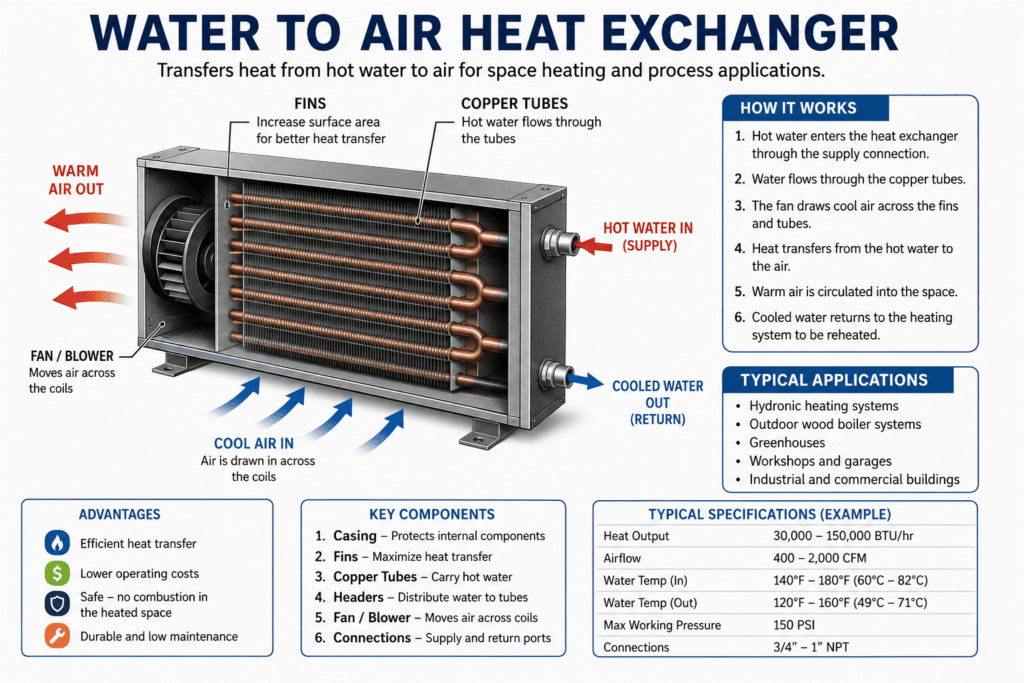
How water to air heat exchanger actually work
Hot water enters the inlet. It flows through a bundle of tubes, usually copper for good conductivity. Aluminum fins attach to those tubes. They multiply the surface area big time. Air from your return ducts blasts across the fins. Heat jumps from water to tube wall to fins to air. Cooler water exits back to the boiler. Warmer air heads into your rooms.
Physics stays basic. Convection on the water side. Conduction through metal. Convection again on the air side. Fins make the air side way more effective. Without them, you’d need a massive box.
Temperature difference drives everything. Bigger delta between water and air means faster transfer. 180°F water into 70°F air works great. Drop the water temp too low and efficiency tanks.
Common setups
Most people bolt these into the plenum of an existing furnace. The exchanger sits right where the blower pushes air. Hot water lines connect from your boiler. You keep the gas or electric elements as backup or for AC.
Some systems run standalone. Dedicated air handler with its own blower. Good for additions or shops. Outdoor boiler folks love this. They heat the house without burning propane inside.
Cooling works too. Run chilled water through the coil and you get air conditioning. Well water at 55-60°F can do some dehumidification in summer, though it’s not as strong as a real AC.
Types worth knowing
Finned tube coils dominate residential use. Copper tubes, aluminum fins. Robust and affordable. You get them in different sizes: 12×12, 16×16, 20×20, up to bigger for commercial. BTU ratings range from 30k to 200k+ depending on size, water temp, airflow.
Some use stainless for corrosive water. Others go with different fin spacing. Tighter fins grab more heat but restrict airflow more. You balance that.
Shell and tube versions exist but they’re overkill for most home heating. Those shine in industrial spots with high pressure or dirty fluids.
Why people pick water to air
Efficiency. Water carries heat better than air. About 3-4 times the capacity per volume. You move less fluid for the same heat. Pumps sip electricity compared to big fans.
Integration. Got an existing forced air system? This slots right in. No ripping out ducts. Pair it with a wood boiler or geothermal and your heating bill drops hard.
Flexibility. One boiler can feed multiple zones, domestic hot water, and these air exchangers. Snow melt on the driveway too if you’re fancy.
Cost. Cheaper than ripping in radiant floor everywhere. Especially in retrofits.
Sizing it right
This part trips people up. Undersize and you stay cold. Oversize and you waste money or get short cycling.
Start with your heat loss calculation. Square footage, insulation, windows, climate. A decent online calculator or HVAC guy gives you the BTU needed at design temperature. Say 80,000 BTU/hr for your house on the coldest day.
Then look at exchanger ratings. Manufacturers list BTU at specific conditions: 180°F water in, 160°F out, 70°F air in, 500 CFM airflow or whatever. Real world differs.
Formula basics: BTU = GPM × 500 × Delta T (water side). Or for air: CFM × 1.08 × Delta T (air side). Match them.
Water flow matters. Too slow and it cools too much before leaving the coil. Too fast and it doesn’t transfer enough. 8-12 GPM common for medium units.
Airflow too. Your blower needs to push enough without sounding like a jet engine. Filter clean, ducts not crushed.
Get this wrong and performance sucks. Many folks buy 100k+ rated units for 60k needs because ratings assume perfect conditions.
Installation basics
Plenum install is popular. Cut into the supply plenum above the furnace. Slide the coil in. Seal it. Connect 3/4″ or 1″ copper lines with shutoffs and unions. Add a circulator pump if needed. Zone valve ties into your thermostat.
Purging air from the lines is key. Air pockets kill heat transfer. Use bleeder valves.
Insulate the water lines. No point losing heat in the basement.
Control it. Aquastat on the water or simple relay with the blower. When heat is called, pump runs, blower runs.
For cooling, you need a condensate drain. Chilled coils sweat.
Maintenance
Not much. Check the fins yearly. Bent fins kill efficiency. Straighten gently with a fin comb.
Clean if dusty. Vacuum or gentle brush. Dirty fins act like insulation.
Water side: good quality water or glycol mix in closed loops. Scale or corrosion hurts performance over years. Flush occasionally.
Watch for leaks. Copper holds up but fittings fail eventually.
Change air filters religiously. Dirty filter means less airflow, less heat moved.
Expect 15-25 years if you treat it decent.
Real world performance
I talked to guys with outdoor boilers. One in Pennsylvania runs a 16×18 coil. Keeps 2500 sq ft comfortable down to single digits with 160-180°F water. Another added a second exchanger for his shop.
Efficiency beats straight electric. Pairs great with heat pumps too. Some modern setups use a buffer tank and low temp water for better heat pump COP.
In cooling mode, expect 10-15°F drop on a good day with 55°F well water. Not full AC but takes the edge off.
Comparisons
Water to air versus air to air. Air to air recovers heat from exhaust but can’t create it. Water to air brings new heat from a source.
Versus radiant floor. Radiant feels nicer, more even. But slower response and harder/expensive in existing homes. Air systems heat up fast.
Versus mini splits. Ductless is efficient and zoned. But you already have ducts? Water to air leverages that investment.
Water to water heat exchangers do liquid to liquid. Different animal. Great for separating loops or geothermal but not for direct air heating.
Picking one
Look at brands like those from Outdoor Boiler suppliers, AH&S Dragon, or generic copper finned coils on Amazon. Check BTU ratings carefully. Copper ports, thick fins, good brazing.
Price runs $300-800 for residential sizes. Bigger commercial ones more.
Match the face area to your duct. Too small and high velocity noise. Too big and weak airflow over parts of the coil.
Pressure drop specs matter for your blower.
Common mistakes
Ignoring airflow. Biggest one. No heat transfer without movement.
Bad water temps. 140°F water won’t cut it in cold weather.
Poor placement. Downstream of AC coil sometimes causes issues.
No expansion tank or proper pressure relief on closed systems.
Forgetting insulation.
Going deeper: efficiency numbers
Expect 70-90% effectiveness in good conditions. Not 100% because water doesn’t give up all its heat.
Log mean temperature difference (LMTD) nerds use fancy calcs. You don’t need that. Rule of thumb works for homes.
Glycol mixes drop performance 10-20% but protect against freeze.
Variable speed blowers help. Match flow to need.
Commercial and other uses
Garages, warehouses, greenhouses. Process drying. Server rooms with chilled water. Anywhere you have a liquid heat source/sink and need to move air.
Industrial versions get rugged. Stainless, higher pressure ratings.
The bottom line
Water to air heat exchangers solve real problems. They turn hot water into warm air efficiently. Perfect bridge for boilers, wood heat, geothermal into existing ducts.
Do the math on sizing. Install clean. Maintain simple. You get reliable heat without reinventing your whole system.
They won’t win beauty contests. Look like old car radiators. But they work year after year with almost no drama.
If you’re heating with anything that makes hot water, this deserves a look. Cheap insurance against high energy prices. Solid addition to any hydronic setup.
Water to Air Heat Exchanger FAQ
What exactly is a water to air heat exchanger?
It’s a coil that transfers heat from hot water to air without the fluids mixing. Hot water runs through copper tubes with aluminum fins. A fan blows air across those fins. The air warms up and gets pushed through your ducts.
Where do people use them most?
Forced air furnaces. Outdoor wood boilers. Geothermal systems. Shops and garages. Anywhere you have a hot water source and existing ductwork. They slot right into the plenum above your blower.
How well do they actually heat a house?
Pretty damn well when sized right. A properly matched unit can deliver 60k–150k BTU/hr depending on water temp and airflow. Guys with outdoor boilers heat 2,000–3,000 sq ft homes down to single digits using 160–180°F water.
What water temperature works best?
180°F inlet gives strong performance. 140–160°F still works but you need bigger coils or more airflow. Below 130°F the output drops fast. Your boiler or heat source needs to hit those numbers.
Can it do cooling too?
Yes. Run cold water (well water at 55°F or chilled loop) through the same coil. You’ll get 10–20°F temperature drop and some dehumidification. It’s not full central AC but it takes the edge off humid summers.
How do I size one correctly?
Calculate your house heat loss first. Then pick a coil rated for that BTU at your expected water temp and CFM. Match face area to your duct size. Undersized coils leave you cold. Oversized ones cost more and can cause short cycling.
What’s the install like?
Cut into the supply plenum. Slide the coil in. Connect ¾” or 1” water lines with shutoffs. Wire the circulator pump and blower to run together. Purge air from the lines. Insulate the pipes. Takes a weekend for a handy person.
Do I need extra pumps or controls?
Usually a small circulator pump. Zone valve or relay tied to your thermostat. Aquastat on the supply line prevents cold water from circulating. Keep it simple.
How much do they cost?
Residential coils run $300–$800. Add $200–400 for pumps, valves, and fittings. Professional install pushes total to $1,500–3,000. Still way cheaper than new radiant or ductless systems.
What brands or types should I look for?
Copper tube with aluminum fins is standard. Brands from outdoor boiler suppliers, ADP, or generic heavy-duty coils on specialty sites. Avoid the super cheap thin-fin imports if you want longevity.
How long do they last?
15–25 years easy with decent water quality. Clean fins yearly. Flush the loop occasionally. Copper holds up. Fittings and pumps fail first.
What maintenance does it need?
Vacuum the fins once a year. Straighten any bent fins. Change your air filter every 1–3 months. Check for leaks at connections. That’s basically it.
Will it work with my existing furnace?
Yes. Most installs keep the gas or electric elements as backup. The water coil sits upstream or in parallel. Thermostat calls for heat, both can work together if needed.
What are the biggest mistakes people make?
Bad sizing. Poor airflow from dirty filters or crushed ducts. Running water temps too low. Skipping air purging. Not insulating the water lines in cold spaces.
Is it efficient?
Water moves heat better than air. You use a small pump instead of massive fans. Paired with wood, geothermal, or a good boiler it crushes straight electric or propane costs.
Can I use it with a heat pump?
Absolutely. Many modern setups use a hydronic heat pump with a buffer tank feeding the water to air coil. Gives you good efficiency and leverages existing ducts.
Any noise issues?
The coil adds some pressure drop. Keep airflow reasonable and it stays quiet. Dirty filters or undersized ducts make it loud. Same as any forced air system.
Should I go water to air or radiant floor?
If you already have ducts, water to air wins for cost and speed. Radiant feels more even but costs more and responds slower in retrofits.
Where can I buy one?
Online suppliers for outdoor wood boilers, HVAC parts sites, or local sheet metal shops that build custom coils. Check BTU ratings and pressure drop specs before ordering.
Final thought:
These things are straightforward workhorses. They don’t look fancy but they deliver reliable heat year after year. Get the sizing right and install it clean. You’ll forget it’s even there until the heating bill comes.
Useful links
https://outdoorboiler.com/blogs/product-info/water-to-air-heat-exchanger-all-you-need-to-know
https://centralboiler.com/support/articles/water-flow-connections-water-air-heat-exchanger
https://www.outdoorfurnacesupply.com/heat-exchangers/water-to-air-heat-exchangers.html