
|
Getting your Trinity Audio player ready...
|
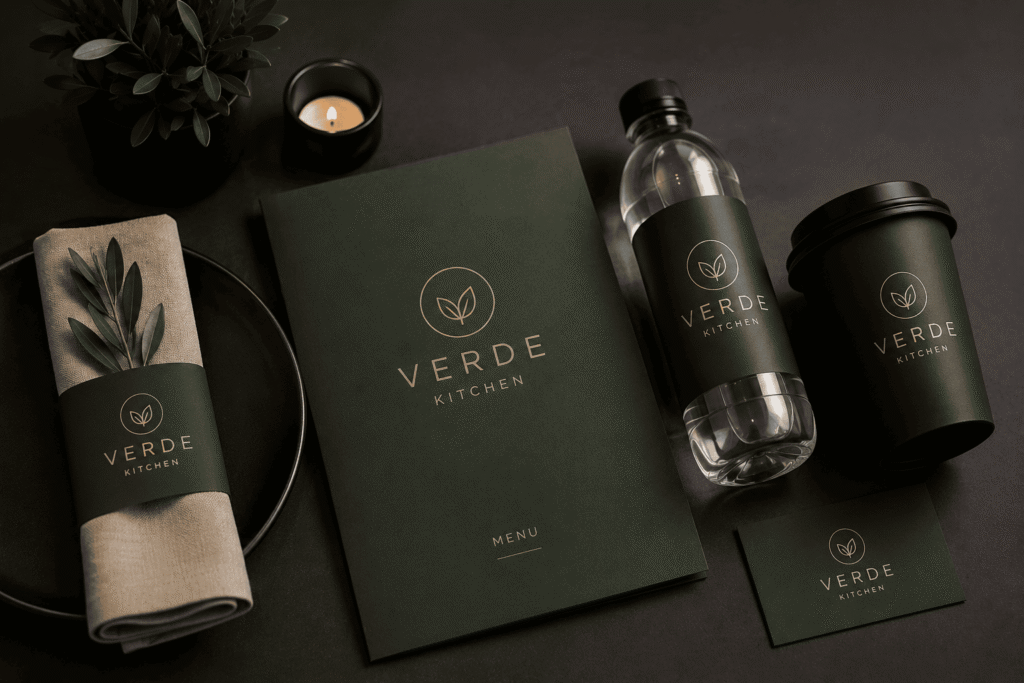
Running a successful restaurant requires more than great food.
Many restaurants serve delicious meals.
Many provide excellent customer service.
Yet only a few become memorable brands.
The difference often comes down to branding.
Restaurant branding is how customers perceive your business.
It’s the personality of your restaurant.
It’s the image people remember after they leave.
Strong branding helps restaurants attract new customers, encourage repeat visits, and stand out in a competitive market.
The good news is that effective branding doesn’t always require a massive budget.
Sometimes small details create the biggest impact.
Let’s explore some of the best restaurant branding ideas that can help your business grow.
Create a memorable restaurant logo
Your logo is often the first thing customers notice.
It appears everywhere.
Menus.
Signs.
Packaging.
Social media.
Websites.
A strong logo should be simple, recognizable, and easy to remember.
The best restaurant logos reflect the restaurant’s identity.
A fine dining restaurant may choose elegant typography.
A burger restaurant might use bold and playful graphics.
The logo becomes the foundation of the entire brand.
Develop a unique brand identity
A brand is more than a logo.
It’s the complete experience.
Ask yourself:
- What makes your restaurant different?
- What experience do you want customers to have?
- How should people describe your restaurant?
The answers help define your brand identity.
Everything should support that identity.
From the menu design to employee uniforms.
Consistency creates recognition.
Recognition builds trust.
Use custom water bottles
Custom water bottles are becoming increasingly popular in restaurants.
They provide guests with a useful product while reinforcing brand awareness.
Customers see the restaurant’s logo throughout their meal.
Some take the bottle home.
Others carry it throughout the day.
The branding continues working long after the dining experience ends.
It’s a simple but effective marketing tool.
Design attractive menus
Menus are branding tools.
Many restaurant owners focus only on food descriptions.
Design matters too.
The menu should reflect the restaurant’s personality.
Colors.
Fonts.
Photography.
Layout.
Everything contributes to the customer experience.
A well-designed menu feels professional.
It also encourages guests to spend more time exploring offerings.
Create branded packaging
Takeout and delivery have become essential.
Customers frequently interact with restaurants through packaging.
Branded bags, boxes, cups, and containers create additional exposure.
Every order becomes a marketing opportunity.
Professional packaging also improves perceived value.
Customers notice when branding feels polished.
Develop a strong social media presence
Social media plays a major role in restaurant marketing.
Customers often discover restaurants online before visiting.
Platforms like Instagram, Facebook, and TikTok help restaurants showcase food and personality.
Consistency matters.
Use the same logo.
The same colors.
The same messaging.
A recognizable social media presence strengthens overall branding.
Tell your restaurant story
People connect with stories.
Why was the restaurant created?
What inspired the menu?
What makes the business unique?
Sharing your story helps customers build emotional connections.
Restaurants with strong stories often feel more authentic.
Authenticity creates loyalty.
Focus on interior design
Your restaurant environment communicates your brand.
Customers begin forming opinions immediately after walking through the door.
The furniture.
Lighting.
Wall art.
Music.
Colors.
Everything contributes to the experience.
Strong branding extends beyond marketing materials.
It should be visible throughout the restaurant.
Create a signature dish
Some restaurants become famous for a single menu item.
That signature dish becomes part of the brand.
Customers associate the restaurant with that experience.
The dish helps differentiate the business from competitors.
It also creates word-of-mouth marketing opportunities.
People love recommending memorable food.
Invest in professional photography
Food photography influences customer decisions.
Many people browse photos before choosing where to eat.
High-quality images make restaurants appear more professional.
They also perform better on websites and social media.
Professional photography strengthens brand perception.
Poor images can have the opposite effect.
Use branded uniforms
Employee uniforms contribute to brand consistency.
Uniforms create a professional appearance.
They also reinforce visual identity.
Colors and designs should align with the restaurant’s overall branding.
Customers notice consistency.
It creates a stronger impression.
Offer branded merchandise
Many restaurants sell merchandise.
Popular options include:
- T-shirts
- Coffee mugs
- Water bottles
- Tote bags
- Hats
Merchandise creates additional revenue while expanding brand visibility.
Customers become brand ambassadors.
The marketing continues beyond the restaurant.
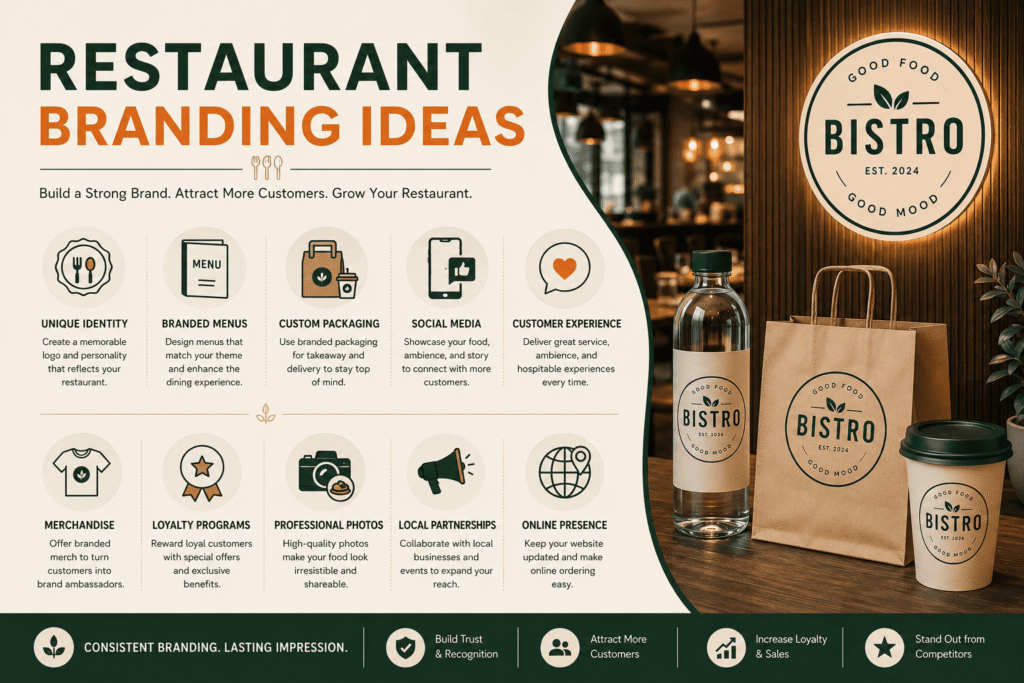
Create an unforgettable customer experience
Branding isn’t just visual.
Experiences matter.
Friendly staff.
Fast service.
Attention to detail.
Clean facilities.
Customers remember how a restaurant makes them feel.
Positive experiences strengthen brand loyalty.
Negative experiences weaken it.
Build a user-friendly website
Your website often serves as a digital storefront.
Customers expect:
- Menus
- Hours
- Location information
- Online ordering
- Contact details
The design should reflect the restaurant’s branding.
A professional website builds credibility.
It also improves customer convenience.
Encourage customer reviews
Online reviews influence purchasing decisions.
Positive reviews strengthen reputation.
Responding to reviews shows engagement.
Customers appreciate businesses that listen.
Strong review management supports brand image.
Use local partnerships
Collaborating with local businesses creates additional exposure.
Restaurants can partner with:
- Coffee shops
- Event organizers
- Hotels
- Schools
- Community organizations
Partnerships introduce the brand to new audiences.
They also strengthen community connections.
Create branded loyalty programs
Loyalty programs encourage repeat business.
Customers enjoy rewards.
Restaurants benefit from increased retention.
Branded loyalty cards or digital programs reinforce recognition.
The goal is simple.
Give customers a reason to return.
Host special events
Events create memorable experiences.
Restaurants can host:
- Live music nights
- Cooking classes
- Wine tastings
- Holiday celebrations
- Community fundraisers
Events strengthen relationships with customers.
They also provide valuable marketing content.
Use email marketing
Email remains one of the most effective marketing channels.
Restaurants can share:
- Promotions
- New menu items
- Upcoming events
- Seasonal specials
Consistent branding across emails reinforces recognition.
Customers stay informed.
The restaurant remains top of mind.
Create seasonal campaigns
Seasonal branding keeps marketing fresh.
Restaurants can create promotions for:
- Summer menus
- Holiday specials
- Valentine’s Day
- Thanksgiving
- New Year’s celebrations
Seasonal campaigns generate excitement and encourage repeat visits.
Focus on customer engagement
Customers appreciate interaction.
Respond to comments.
Answer questions.
Share customer content.
Engaged businesses often build stronger communities.
Strong communities support long-term growth.
Develop a recognizable color scheme
Colors influence perception.
Many successful brands use consistent color palettes.
Restaurants should do the same.
Brand colors should appear across:
- Menus
- Packaging
- Websites
- Signage
- Social media
Consistency improves recognition.
Use QR codes creatively
QR codes create interactive experiences.
Customers can access:
- Menus
- Promotions
- Loyalty programs
- Online ordering
The technology is simple but effective.
It also reduces printing costs.
Prioritize consistency
Consistency may be the most important branding principle.
Customers should receive the same experience regardless of how they interact with the restaurant.
The website should match the restaurant.
Packaging should match social media.
Menus should match advertising.
Consistency builds trust.
Trust builds loyalty.
Why restaurant branding matters
Branding helps restaurants compete.
It creates recognition.
It influences perception.
It encourages customer loyalty.
Food remains important.
But food alone rarely builds a memorable brand.
The restaurants people remember usually deliver complete experiences.
Strong branding helps create those experiences.
Final thoughts
Restaurant branding is not one thing.
It’s the combination of many details working together.
A memorable logo.
Professional packaging.
Consistent messaging.
Exceptional customer experiences.
Thoughtful marketing.
Each element contributes to the bigger picture.
The strongest restaurant brands understand this.
They focus on every customer touchpoint.
They create experiences people remember.
And they build relationships that extend far beyond a single meal.
Whether you’re opening a new restaurant or improving an existing one, investing in branding can produce long-term benefits.
Because in today’s competitive restaurant industry, being memorable matters just as much as being delicious.
Frequently Asked Questions (FAQs)
1. What is restaurant branding?
Restaurant branding is the process of creating a unique identity for a restaurant through its logo, colors, menu design, packaging, customer experience, and marketing efforts.
2. Why is branding important for restaurants?
Strong branding helps restaurants stand out from competitors, attract new customers, increase loyalty, and create memorable dining experiences.
3. What are some effective restaurant branding ideas?
Popular restaurant branding ideas include:
- Custom logos
- Branded packaging
- Custom water bottles
- Social media marketing
- Loyalty programs
- Signature menu items
- Professional photography
- Branded uniforms
4. How can a restaurant create a strong brand identity?
A restaurant can create a strong identity by defining its mission, target audience, visual style, and customer experience, then maintaining consistency across all platforms.
5. Do custom water bottles help restaurant branding?
Yes. Custom water bottles provide additional brand exposure during and after the dining experience while enhancing professionalism.
6. How does social media support restaurant branding?
Social media allows restaurants to showcase their food, atmosphere, promotions, and personality while building stronger connections with customers.
7. What role does packaging play in restaurant branding?
Packaging acts as a marketing tool that keeps branding visible during takeout and delivery orders, helping restaurants stay memorable.
8. Can small restaurants benefit from branding?
Absolutely. Strong branding helps small restaurants compete with larger chains by creating recognition and customer loyalty.
9. What makes a restaurant brand memorable?
Consistency, quality service, unique experiences, recognizable visuals, and a clear brand story all contribute to a memorable restaurant brand.
10. How often should restaurants update their branding?
Most restaurants should maintain a consistent identity while refreshing marketing campaigns, seasonal promotions, and visual content as needed.