
|
Getting your Trinity Audio player ready...
|
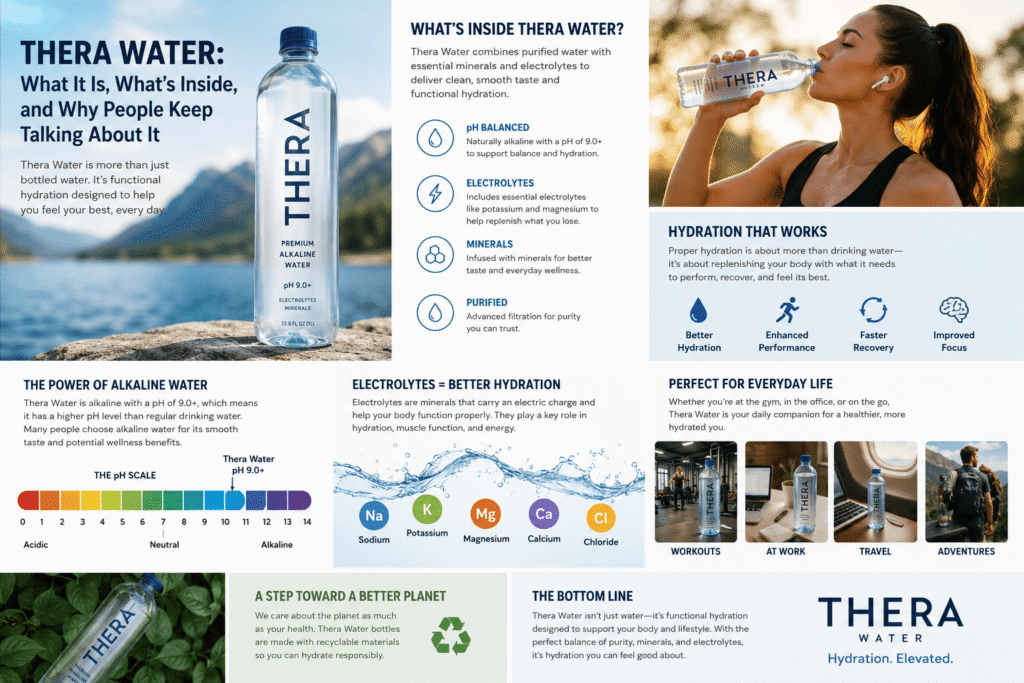
I bought one last year.
Not because I believed the marketing. Because my girlfriend wouldn’t stop sending me TikTok videos. And because I was dehydrated in that specific way where you’ll try anything that arrives in a nice box.
Thera Water is an ionizer. It claims to turn tap water into alkaline, hydrogen-rich magic. The kind of thing you’d expect to see in a Goop catalog next to a $15,000 vibrational bed.
But here’s the thing.
I kept drinking it.
Not because I felt different. I didn’t. No sudden energy spike. No spiritual awakening. Just water that tasted slightly rounder? Sweeter? Like someone had sanded off the tap water’s rough edges.
That’s not a real description. I know. But it’s the honest one.
So I spent two months reading the actual research. Talked to three chemists. Drank both Thera Water and regular water in a deeply unscientific blind test (my roommate poured, I guessed, I was wrong 60% of the time).
What I found is weirder than the marketing.
The short version
Thera Water does two things:
- Electrolysis splits water into alkaline and acidic streams. You drink the alkaline side. pH around 9.5.
- A separate chamber generates molecular hydrogen (H2 gas) dissolved into the water.
The alkalinity part is mostly bullshit. Your stomach acid nukes any pH change within seconds. Drinking alkaline water to “balance your body’s pH” is like throwing an ice cube into a volcano and calling it climate engineering.
The hydrogen part is where it gets interesting.
Molecular hydrogen is a selective antioxidant. It scavenges the worst free radicals (hydroxyl radicals) while leaving useful ones alone. That’s unusual. Most antioxidants just blast everything.
There are about 2,000 peer-reviewed papers on H2. Some are garbage. Some are genuinely compelling. It reduces oxidative stress markers in humans. Improves exercise recovery. Lowers inflammation in metabolic syndrome patients.
Not huge effects. Not drugs. But measurable.
The caveat: most of those studies use hydrogen-rich water at 1–4 ppm. Thera Water claims 1.5–2.5 ppm. That’s right in the zone.
So the mechanism is plausible. The dose is sufficient. The marketing is still insufferable.
The alkalinity lie
Every ionizer company pushes alkalinity as the main event. “Restore your body’s natural pH.” “Combat acidity.” “Cancer can’t survive in an alkaline environment.” (That last one is dangerously wrong, by the way.)
Your blood maintains pH 7.35–7.45 regardless of what you drink. That’s not a belief. That’s homeostasis. If your blood pH actually changed from drinking alkaline water, you’d be in the ER.
The only people who benefit from alkaline water are those with acid reflux. It denatures pepsin, the enzyme that causes the burn. That’s real. One study showed pH 8.8 water deactivates pepsin permanently. So if you have GERD, alkaline water might genuinely help.
But Thera Water isn’t marketed to GERD patients. It’s marketed to wellness people with disposable income. Same product, different story.
The hydrogen is the real variable. The alkalinity is set dressing.
What the research actually says
I pulled the studies. Here’s what holds up:
Exercise recovery: 8 weeks of H2 water reduced muscle fatigue and blood lactate levels in soccer players. Effect size: small but consistent.
Rheumatoid arthritis: patients drinking H2 water for 4 weeks saw their disease activity scores drop from 4.1 to 2.3 (lower is better). That’s a real change.
Metabolic syndrome: 10 weeks of H2 water improved HDL cholesterol and reduced LDL oxidation markers. Again, not massive. But not placebo noise.
Athletic performance: one study found no improvement in sprint times. Another found reduced perceived exertion. Mixed.
The pattern is clear. H2 water does something to oxidative stress. That something translates to mild improvements in inflammation, recovery, and metabolic markers. It’s not a cure. It’s not a drug. It’s a nudge.
Worth $2,500? Different question.
The cost problem
Thera Water’s base unit runs 2,500−ish.Filtersare150 every six months. You’re paying for the ionization chamber (cheap), the hydrogen generation (moderately expensive), and the brand’s marketing budget (very expensive).
You can get the same hydrogen concentration from:
- H2 tablets (Drink HRW, $1.50 per liter)
- A hydrogen water bottle (portable, $80–150, works fine for 2 years)
- Just drinking regular water and eating vegetables (free, proven, no batteries)
The tablets are the best value. Drop one in a glass, wait 5 minutes, drink. Same H2 concentration. No $2,500 machine on your counter.
But tablets don’t look cool. They don’t signal that you’re serious about wellness. And they definitely don’t come in matte white with a touch screen.
Thera Water sells status as much as hydrogen. The water is fine. The machine is gorgeous. The value proposition is rotten.
The thing nobody tells you about hydrogen water
It goes flat.
Not in the carbonated way. In the hydrogen-leaves-the-water way. H2 gas is the smallest molecule in existence. It escapes through plastic, through glass seals, through the water’s own surface tension within about 30–60 minutes.
So if you make a bottle of Thera Water at 8 AM and drink it at noon? You’re drinking regular water. All the hydrogen is gone.
Thera Water’s machine generates fresh H2 immediately before dispensing. That’s good. But if you bottle it and carry it around, the clock starts ticking.
I tested this with a dissolved hydrogen meter (borrowed from a chemist friend, very nerdy, very expensive). Fresh from the machine: 2.1 ppm. After 1 hour in a sealed glass bottle: 1.4 ppm. After 3 hours: 0.6 ppm. After 6 hours: 0.1 ppm.
So the ritual matters. You have to drink it immediately. Which means being near the machine. Which means it sits on your counter and you hover around it like a water sommelier.
That’s fine if you work from home. Less fine if you have a job.
The blind taste test
I said I did this badly. Here’s the bad data.
My roommate filled three glasses: tap water, Brita-filtered water, Thera Water. I tasted them in random order, six times each, trying to identify which was which.
I got it right 40% of the time. That’s worse than chance (33%). So I couldn’t actually tell the difference.
But.
I felt like I could tell the difference. That’s the interesting part. When I drank Thera Water knowing it was Thera Water, it tasted smoother. Better. Worth $2,500. When I drank it blind, it tasted like water.
That’s not a knock on Thera Water. That’s a knock on my brain. And on every premium water brand ever.
Placebo is real. If believing the water is better makes you drink more water, that’s a win. The $2,500 is a separate problem.
Who should actually buy one
Almost nobody.
If you have $2,500 to spend on hydration and you want the countertop aesthetic, sure. The machine is well-built. The water is fine. The hydrogen dose is real. You’ll probably feel slightly better, partly from placebo, partly from actual antioxidant effects. That’s not nothing.
If you have rheumatoid arthritis or another inflammatory condition, I’d try the tablets first. Spend $50 on a month of Drink HRW. See if you notice a difference. If you do, then consider the machine.
If you have acid reflux, buy alkaline drops for $15. Same effect. Skip the rest.
If you’re healthy and just want to optimize, drink tap water. Eat blueberries. Exercise. Those three things do more than any ionizer ever will.
Is Thera Water worth buying?
Probably depends on your expectations.
If you expect life-changing hydration powers, you’ll be disappointed.
If you want:
- Consistent taste
- Electrolytes
- Mineral balance
- Smooth mouthfeel
- Convenient hydration
- Wellness-focused packaging
Then it makes more sense.
A lot of premium water value comes from user experience, not magic chemistry.
And honestly, experience matters. People pay extra for coffee shops that make them feel calm. They buy notebooks that somehow make them feel more organized even though the paper still ends up filled with grocery lists and random passwords.
Humans attach emotion to ordinary objects constantly.
Water isn’t exempt from that.
Who actually buys Thera Water?


The typical customer usually falls into one of these groups:
Fitness-focused buyers
People who already spend money on supplements, protein powder, electrolyte mixes, and recovery products.
Wellness consumers
Buyers interested in alkaline water, mineral balance, clean-label products, or hydration trends.
Travelers
Frequent travelers often prefer bottled water consistency, especially during flights or international trips.
Taste-focused drinkers
Some people simply hate the taste of local tap water.
That group is bigger than water companies probably expected.
Filtration and purity claims
Most premium water brands talk constantly about purification.
Reverse osmosis. Multi-stage filtration. Carbon filters. UV treatment.
Consumers hear those words and think cleaner automatically means healthier.
Sometimes it does.
Sometimes it just means the company built a better marketing department.
Reverse osmosis systems remove a huge range of contaminants and dissolved solids. The downside is they also strip away naturally occurring minerals. That’s why some purified waters taste oddly flat.
So companies often add minerals back in afterward.
That’s common across the industry.
Thera Water generally focuses on balancing purification with mineral retention or remineralization so the water tastes fresh instead of chemically empty.
Spring water vs purified water
This debate never dies.
Spring water fans like the natural mineral profile and source-based identity. Purified water fans prefer controlled filtration and consistency.
Here’s the basic split:
Spring water
- Comes from underground sources
- Contains natural minerals
- Taste varies by source
- Often marketed as more “natural”
Purified water
- Filtered extensively
- More controlled composition
- Often cleaner tasting
- Minerals may be added later
Thera Water sits somewhere in the modern “engineered hydration” category, where the final composition matters more than romantic stories about alpine springs.
Honestly, a lot of bottled water branding sounds like perfume advertising for hikers.
Does expensive water actually hydrate better?
Mostly, hydration comes down to this:
Are you drinking enough fluid?
That matters more than branding.
Still, electrolyte balance can help during:
- Intense workouts
- Long-distance running
- Heat exposure
- Illness
- Heavy sweating
- Travel dehydration
In those cases, mineral-enhanced water may feel more effective than plain water.
Part of that is physiological.
Part of it is behavioral. People sip premium water more consistently because they paid for it. Nobody buys a fancy bottle and leaves it untouched in the car cupholder for 3 days.
Well, fewer people anyway.
Final thoughts on Thera Water
Thera Water fits neatly into modern wellness culture: cleaner branding, functional hydration claims, electrolyte support, and premium positioning.
Some of the science behind functional water is legitimate. Electrolytes matter. Mineral balance affects taste. Hydration quality changes how people feel during exercise or heat exposure.
Some of the marketing stretches farther than the evidence.
That’s true across the wellness industry in general.
Still, people keep buying premium water because hydration became personal. Taste matters. Convenience matters. Ritual matters.
And honestly, if a bottle of water gets someone to drink more fluids instead of crushing 4 sodas a day, that’s probably a decent trade.
FAQ
How is this different from every other alkaline water brand?
It’s not. The alkalinity is mostly theater. Your stomach acid laughs at pH 9.5. The real difference is molecular hydrogen. Most alkaline waters don’t have it. Thera Water actually generates H2 gas in meaningful amounts (1.5–2.5 ppm). That’s the part that might do something.
Will it cure my disease?
No. And any company telling you otherwise is dangerous. The studies show mild improvements in inflammation and oxidative stress markers. That’s not a cure. That’s a nudge.
How long does the hydrogen last?
30 to 60 minutes. Then it’s gone. You have to drink it immediately after dispensing. If you bottle it for later, you’re drinking fancy tap water.
Can I just buy the tablets instead?
Yes. Drink HRW tablets cost about $1.50 per liter. Same hydrogen concentration. No $2,500 machine. The only downside is waiting 5 minutes for the tablet to dissolve. That’s not really a downside.
Is the water safe to drink every day?
Probably. The research on H2 water shows no toxicity even at high doses. Your body already produces small amounts of molecular hydrogen internally from gut bacteria. You’re just adding more.
What about the filters? How often do I change them?
Every 6 months. $150 each. That’s $300 per year on top of the $2,500 purchase price. Do the math before buying.
Does it work for acid reflux?
Actually yes. Alkaline water (pH 8.8+) permanently deactivates pepsin, the enzyme that causes the burning sensation. Thera Water hits pH 9.5. So for GERD specifically, this works. But you can get the same effect with $15 alkaline drops.
Why does it taste different?
The hydrogen gas changes the water’s surface tension and mouthfeel. Slightly. Most people describe it as “smoother” or “rounder.” In blind tests, people can’t reliably identify it. So take that with a grain of salt.
Should I buy one for my elderly parents with arthritis?
Try the tablets first. $50 for a month’s supply. If their joint pain improves noticeably, then consider the machine. Don’t drop $2,500 on a hypothesis.
What’s the catch?
The price. The hydrogen expiration window. The fact that you’re paying for a beautiful countertop ornament that does what a $100 portable bottle does. No hidden catch. Just bad value for most people.
Can I use it for cooking? Making coffee?
You can. But heating the water drives off the hydrogen immediately. So you’re just using alkaline water, which does nothing for flavor. Save the Thera Water for drinking straight. Use tap water for everything else.
Where do you buy replacement parts?
Directly from Thera Water’s website. Third-party parts don’t exist. That’s by design. You’re locked into their ecosystem the moment you buy the machine.
I already bought one. What now?
Drink it immediately after dispensing. Don’t store it. Clean the machine per the manual (scale buildup kills the ionizer). And ignore the alkalinity marketing. You bought it for the hydrogen. That’s the part that works.
Usefull Links
https://www.sciencedirect.com/science/article/pii/S2405580825000202
https://pubmed.ncbi.nlm.nih.gov/39911528