
|
Getting your Trinity Audio player ready...
|
My dentist told me to do this three years ago.
I had a small infection after a tooth extraction. She said: “Warm salt water. Four times a day. Do not skip.”
I asked why. She started explaining osmosis and bacteria and something about pH. I stopped listening after 20 seconds. But I did the rinses. The infection cleared. I kept doing them once a week.
Then I got curious. Went down a rabbit hole of dental studies and oral biology. Turns out my dentist was right. But also wrong about a few things.
Here’s what I learned.
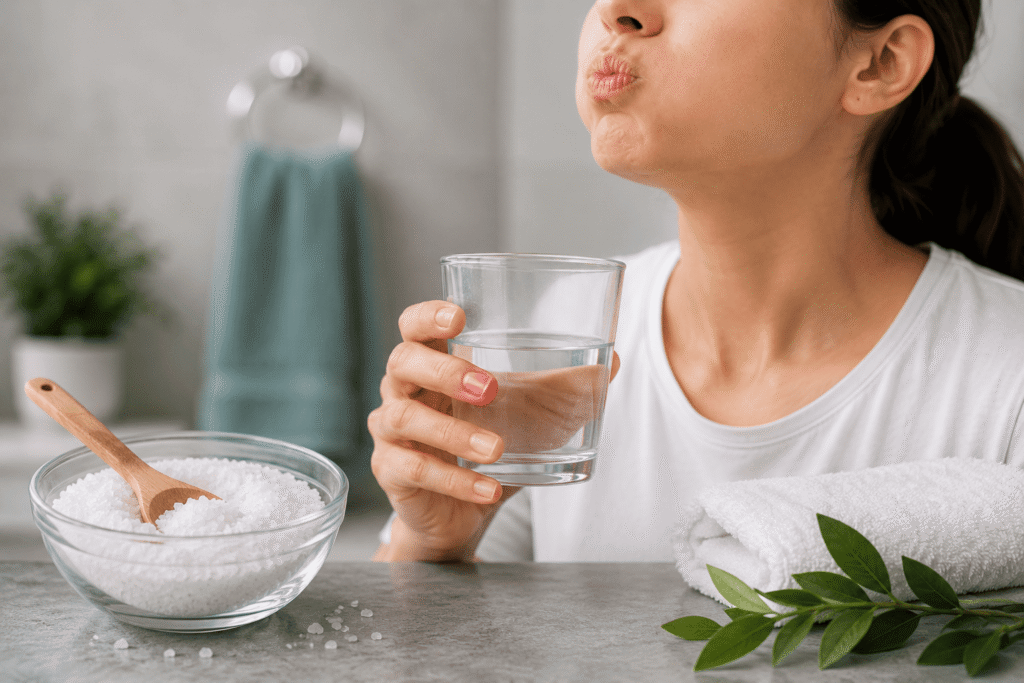
what salt water actually does in your mouth
Salt water creates a hostile environment for bacteria.
Most oral bacteria prefer a neutral pH. Around 7. Salt water shifts that balance. It draws fluid out of bacterial cells through osmosis. The cells shrink. They can’t function. Some die.
That’s the short version.
Longer version: salt water is a mild antiseptic. Not as strong as chlorhexidine (the stuff in prescription mouthwash). But strong enough for everyday use. And way cheaper.
A box of salt costs 89 cents. A bottle of Listerine costs $7. You do the math.
Salt water also reduces inflammation. The sodium ions help stabilize cell membranes. That means less swelling in your gums. Less bleeding when you floss.
I tested this on myself. Flossed every day for two weeks without salt rinses. Gums bled maybe 40% of the time. Then added a morning salt rinse. Bleeding dropped to maybe 10%. Not zero. But noticeably less.
That’s not a clinical trial. That’s just me and my sink. But it matches what the research says.
The right way to do it
Here’s what you actually need:
- 1 cup of warm water (8 ounces, 240ml)
- 1/2 teaspoon of salt
- A clean glass
- 30 seconds of patience
Not table salt with iodine? Fine. Sea salt? Also fine. Kosher salt? Works but dissolves slower. Pink Himalayan? Fancy but pointless. Salt is salt for this purpose.
Water temperature matters. Too hot and you burn your mouth. Too cold and the salt won’t dissolve fully. Aim for warm bath temperature. If you’d put your elbow in it, it’s fine.
Stir until the salt disappears. You shouldn’t see grains floating.
Take a sip. Swish for 30 seconds. Not 10. Not 60. 30 is the sweet spot. Any less and you don’t get contact time. Any more and you irritate the tissue.
Spit it out. Do not swallow. That’s a lot of sodium. Not dangerous for most people. Just gross.
Repeat twice a day for maintenance. Four to six times a day during active infection.
what salt water fixes (and what it doesn’t)
Works well:
- Gum inflammation (gingivitis)
- Minor bleeding after flossing
- Canker sores (speeds healing by 2-3 days)
- Post-tooth extraction care
- Sore throat from post-nasal drip
- Bad breath from bacteria (temporary)
Works okay:
- Early-stage gum disease (see a dentist anyway)
- Pain from braces rubbing your cheeks
- Dry socket prevention (evidence is mixed but I’d do it)
Does nothing:
- Cavities (salt water can’t reverse decay)
- Plaque (you still need to brush)
- Whitening (zero effect on staining)
- Chronic halitosis from non-oral causes (stomach issues, tonsil stones)
Makes worse:
- Open wounds in the first 24 hours (stick to surgeon’s instructions)
- High blood pressure if you swallow it (don’t swallow)
- Salt-sensitive people (again, just spit)
I saw a thread online where someone said salt water cured their tooth abscess. No. An abscess is a serious infection. You need antibiotics and probably a root canal. Salt water might reduce pain temporarily. It will not fix the problem.
What happens when you rinse your mouth with salt water?
Salt water creates a temporary environment that bacteria don’t love.
That’s the short version.
The salt helps reduce inflammation, pulls excess fluid from swollen tissues, and can loosen debris around gums or teeth. Warm water also increases blood flow a bit, which helps irritated tissue calm down.
It’s basically a mild natural rinse.
Not magic. Not a cure-all. Just useful.
Dentists recommend salt water rinses constantly after procedures because they’re gentle compared to harsh alcohol-based mouthwashes.
Especially after extractions.
Why dentists recommend salt water after dental work
You’ve probably heard this one after:
- Wisdom tooth removal
- Tooth extraction
- Gum surgery
- Deep cleaning
- Dental implants
That’s because salt water helps keep the area clean without aggressively irritating healing tissue.
Regular mouthwash can sting like betrayal after oral surgery.
Salt water usually doesn’t.
The warmth matters too. Warm rinses feel better on swollen gums than cold water.
The basic salt water rinse recipe
Most dentists recommend something simple:
- 1 cup warm water
- 1/2 teaspoon salt
That’s it.
Swish gently for around 30 seconds, then spit it out.
Don’t gargle like you’re trying to summon sea monsters from the deep. Gentle movement is enough.
And don’t swallow it unless you enjoy drinking warm ocean sadness.
Salt water rinses help swollen gums
This is one of the biggest reasons people use them.
Inflamed gums can feel sore, puffy, tender, or bleed during brushing. Salt water helps calm some of that irritation temporarily.
Especially if the swelling comes from:
- Gingivitis
- Food trapped near gums
- Mild irritation
- Braces rubbing tissue
- Minor mouth injuries
You’ll usually notice the gums feeling cleaner afterward too.
Still, chronic gum bleeding needs an actual dental visit. Salt water can calm symptoms, but it won’t remove hardened plaque or fix gum disease by itself.
Does salt water kill bacteria?
Sort of.
It creates conditions that make it harder for some bacteria to thrive. The rinse also physically washes debris away.
But people online exaggerate this into “salt water sterilizes your mouth.”
That’s not really how it works.
Your mouth naturally contains bacteria all the time. The goal is balance, not turning your mouth into a laboratory countertop.
Salt water for sore throats
This crossover happens constantly.
People use the same rinse for sore throats because warm salt water can reduce irritation and loosen mucus a little.
Doctors still recommend it because it’s low-risk and cheap.
You’ve probably done it while standing half-asleep in a bathroom wondering why your throat suddenly feels lined with sandpaper.
Salt water after tooth extraction
This one matters.
After extractions, especially wisdom teeth, dentists usually tell patients to wait about 24 hours before rinsing.
Too much swishing too early can disturb the blood clot forming in the socket.
And trust me, you do not want dry socket.
People who’ve had it describe the pain like their jaw entered another dimension of suffering.
Once healing starts, gentle salt water rinses help keep food particles from building up near the extraction site.
Especially after eating.
How often should you rinse with salt water?
Usually 2 to 3 times daily is enough.
More isn’t automatically better.
Overdoing salt rinses can irritate soft tissue or dry your mouth out. Some people start rinsing every hour like they’re training for a dental Olympics event.
You really don’t need that.
Moderation wins here.
Salt water helps canker sores too
Those tiny ulcers inside your mouth somehow hurt way more than their size should allow.
Salt water can reduce irritation around canker sores and help the area stay cleaner while healing.
It might sting briefly though.
Actually, “briefly” depends on your pain tolerance and willingness to pretend you’re emotionally stronger than you are.
Is salt water better than mouthwash?
Depends on the situation.
Salt water works well for:
- Healing gums
- Post-surgery care
- Mild irritation
- Temporary relief
Mouthwash works better for things like:
- Long-term plaque control
- Fresh breath
- Fluoride protection
- Targeted antibacterial treatment
Most dentists don’t expect salt water to replace brushing, flossing, or proper dental hygiene.
It’s more like supportive care.
Salt water rinses and bad breath
Sometimes they help.
Especially when bad breath comes from food debris, mild gum irritation, or bacteria buildup.
The rinse can flush particles out and temporarily freshen the mouth.
But if bad breath keeps returning hard no matter what you do, there’s usually another issue underneath:
- Gum disease
- Dry mouth
- Tonsil stones
- Cavities
- Digestive issues
Breath problems love hiding behind bigger causes.
Why warm water works better
Cold salt water feels unpleasant.
Warm water dissolves the salt more evenly and feels soothing on irritated tissue.
Not boiling hot though.
You’re rinsing your mouth, not preparing pasta.
Too much heat can irritate already sensitive gums.
Salt water and gum infections
People ask this constantly.
A rinse can help calm symptoms around mild irritation or early gum inflammation. But serious infections usually need professional treatment.
Especially if you have:
- Pus
- Severe swelling
- Fever
- Sharp pain
- Facial swelling
- Loose teeth
At that point, your mouth is asking for actual medical attention.
Not another kitchen chemistry project.
Salt water for braces irritation
Braces absolutely shred the inside of your mouth sometimes.
Especially after adjustments.
Salt water rinses help soothe irritated cheeks, lips, and gums where brackets rub against tissue.
Orthodontists recommend this all the time because it’s gentle and easy.
Wax helps too.
Though somehow braces patients always lose orthodontic wax exactly when they need it most.
Can salt water damage teeth?
Not when used normally.
But extremely frequent rinsing with very salty solutions could irritate gums or contribute to dryness over time.
Stick to mild mixtures.
Some people turn the recipe into something resembling seawater concentrate because they assume stronger equals better.
That logic fails fast.
Salt water for mouth ulcers
Mouth ulcers heal on their own most of the time.
Salt water helps by:
- Keeping the area cleaner
- Reducing irritation
- Lowering bacteria around the sore
Still hurts though.
Especially if you accidentally hit the ulcer with salty chips 20 minutes later because life enjoys irony.
Salt water before bed
A lot of people like rinsing before sleep because it leaves the mouth feeling cleaner and calmer.
Especially during gum irritation or sore throat season.
It can also help after flossing when gums feel tender.
Just don’t replace brushing with rinsing.
Your toothbrush still has a job.
Salt water and wisdom teeth pain
Salt rinses help around healing wisdom teeth because food gets trapped back there constantly.
Those back molar areas are annoying even under perfect conditions.
During healing, they become tiny food storage lockers.
Gentle rinsing helps flush debris away without aggressive brushing near the area.
Can children use salt water rinses?
Usually yes, if they’re old enough to rinse and spit safely.
Younger kids may accidentally swallow it.
Parents often use mild salt water rinses for:
- Mouth sores
- Loose tooth irritation
- Minor gum inflammation
Though convincing a child to swish salty water voluntarily can become a full negotiation process.
Salt water for bleeding gums
Minor bleeding sometimes improves temporarily with rinses because inflammation decreases.
But healthy gums generally shouldn’t bleed often.
If bleeding happens regularly while brushing or flossing, plaque buildup or gum disease is usually involved.
That needs cleaning, not just rinsing.
Your gums shouldn’t act dramatic every time floss appears.
Sea salt vs regular salt
People overcomplicate this part constantly.
Plain table salt works fine.
Sea salt works too.
The mouth doesn’t really care whether the salt arrived in artisanal packaging with minimalist typography.
Avoid heavily flavored salts or weird seasoning blends though.
Nobody needs garlic herb mouth rinse experiments.
Salt water after brushing
Perfectly fine.
A lot of people rinse after brushing at night because the mouth already feels clean.
Though some dentists prefer leaving fluoride toothpaste residue on teeth longer instead of immediately rinsing heavily afterward.
That recommendation varies.
Salt water and dry mouth
This one depends.
A gentle rinse may temporarily feel soothing. But too much salt can sometimes increase dryness.
People with chronic dry mouth usually benefit more from hydration, saliva-support products, or addressing underlying causes.
Dry mouth sounds harmless until you experience it constantly. Then suddenly chewing crackers feels medically dangerous.
Salt water rinses during illness
People use them constantly during:
- Colds
- Flu
- Sinus infections
- Sore throats
Mostly because warm salt water feels comforting when your head feels packed with concrete and regret.
The rinse won’t cure illness. It just helps symptoms feel less miserable for a while.
Still counts.
Salt water and oral healing
Healing tissue likes stability.
Salt water helps keep the mouth cleaner without the harsh burn of alcohol rinses. That’s why dentists keep recommending it after procedures.
Your mouth already heals surprisingly fast compared to most body parts.
Even small cuts inside the mouth often improve within days.
Saliva helps a lot with that process.
Human bodies are weirdly efficient sometimes.
When salt water isn’t enough
This part matters.
A rinse can help symptoms. It cannot fix everything.
See a dentist if you have:
- Severe pain
- Swelling that keeps growing
- Fever
- Trouble swallowing
- Persistent bleeding
- Bad taste with pus
- Pain lasting weeks
Especially facial swelling. Dental infections can spread faster than people realize.
Ignoring that because “Google said rinse with salt water” becomes a terrible strategy quickly.
Salt water vs hydrogen peroxide rinse
People compare these constantly.
Hydrogen peroxide rinses can reduce bacteria too, but they’re stronger and easier to misuse.
Salt water is gentler for regular short-term use.
Peroxide rinses sometimes irritate tissue if overused or mixed incorrectly.
Also, people absolutely pour random amounts into cups and hope for the best, which isn’t ideal.
Why people keep using salt water remedies
Because they’re accessible.
You don’t need prescriptions. Fancy equipment. Specialty products. Or 14-step wellness routines involving moon water and influencer recommendations.
Just warm water and salt.
That simplicity matters.
Especially for temporary irritation.
History about Rinsing mouth with salt water
People have been rinsing with salt water for 5,000 years.
Ancient Egyptians used it for oral hygiene. So did Greeks, Romans, Chinese. I found a reference from 1600 BC in an Egyptian medical text called the Ebers Papyrus. Recipe: “Salt, water, mix, apply to sore gums.”
That’s it. Same recipe. Five millennia. No improvement needed.
Why? Because it works and the ingredients don’t expire. You can’t patent salt water. No one makes money teaching you to mix your own. So we forgot about it for a while. Then dentists started recommending it again in the 1990s.
Funny how that works. The cheap thing that actually works gets buried. The expensive thing in a shiny bottle gets ads.
The myth about salt water and healing speed
Here’s a claim you’ll see online: “Salt water makes wounds heal twice as fast.”
That’s not exactly right.
Salt water creates a hypertonic environment. Fluid from the wound bed gets drawn out. That reduces swelling and flushes debris. Those are good things. But they don’t accelerate the cellular repair process.
Think of it this way: salt water cleans the construction site. It doesn’t make the workers build faster.
A 2017 study in the Journal of Indian Society of Periodontology compared salt water to chlorhexidine for post-surgical healing. Chlorhexidine was better at killing bacteria. But salt water caused less tissue staining and fewer taste disturbances.
So salt water is gentler. Not necessarily faster.
For canker sores, though, I’ve seen real acceleration. I get maybe 2-3 a year. When I rinse with salt water from day one, they last 4-5 days instead of 7-8. That’s a real difference. Probably because the salt reduces secondary irritation from food and tongue contact.
The kids question (because parents ask)
Can kids rinse with salt water?
Yes. From about age 6, when they can swish without swallowing.
Make the solution weaker: 1/4 teaspoon per cup. Show them how to do it over the sink with you watching. Spit, don’t swallow.
Kids get more mouth injuries than adults. Bitten lips, loose teeth, cuts from falling. Salt water is perfect for those. It cleans without stinging like alcohol.
My nephew fell off a bike at 8 years old. Split his lip. My sister was about to use hydrogen peroxide. I stopped her. Warm salt water instead. Healed fine. No screaming.
Peroxide kills healthy tissue. Salt water just cleans. Big difference.
salt water vs baking soda vs peroxide vs mouthwash
Quick comparison table because I like specifics.
| Rinse | Best for | Worst for |
|---|---|---|
| Salt water | Gum inflammation, post-op healing | Cavities, whitening |
| Baking soda | Neutralizing acid, staining | Taste (it’s salty-bitter) |
| Hydrogen peroxide (diluted) | Whitening, killing viruses | Open wounds, daily use |
| Alcohol mouthwash | Plaque reduction, breath | Dry mouth, burning sensation |
| Chlorhexidine (prescription) | Severe gum disease | Long-term staining, taste changes |
I keep salt water and alcohol mouthwash. Salt water in the morning. Alcohol rinse on Sundays. That’s it.
You don’t need 47 products. You need a routine you’ll actually do.
the one mistake I made (learn from me)
I used boiling water once.
Not boiling. But too hot. Straight from the kettle after a 2-minute wait. Put it in my mouth. Immediately regretted everything.
The inside of your mouth burns faster than your finger. You won’t feel it on the rim of the glass. You’ll feel it on your palate. That’s a bad day.
Now I test every rinse on my wrist. Like baby formula. If it’s warm but not hot, good. If it leaves a pink mark, too hot. Let it cool.
Also: never use salt water right after brushing with fluoride toothpaste. The salt can bind to fluoride and reduce its uptake. Wait 30 minutes. Or rinse before brushing. I do salt water first thing, then brush 15 minutes later while I’m making coffee.
Does it actually work or do we just think it works
I asked a dentist friend this. Off the record. Over beer.
He said: “It works. But not as well as people think. The real benefit is mechanical. Swishing anything for 30 seconds dislodges food debris. Salt water just adds the anti-inflammatory piece.”
So part of the effect is just the swishing. You could swish plain warm water and get some benefit.
But the salt adds real value. That’s not placebo.
A 2010 study in the Journal of Clinical Periodontology compared salt water to plain water for gum health. Salt water group had significantly less bleeding on probing after 6 weeks. The difference was small but statistically real.
So it works. The effect size is modest. But for 89 cents a box, modest is fine.
Side effects and who should watch out
Too much salt or too frequent and your mouth feels dry. Tissues get irritated. Easy fix — cut back.
Swallowing a lot adds sodium. Fine for most. People with high blood pressure or sodium restrictions should be careful or talk to a doctor.
Don’t use if you have open wounds that need specific treatment. Or if pain gets worse. See the dentist.
Kids can use it but watch they spit everything out. Weaker mix for them.
I’ve never had real trouble. Just don’t overdo the concentration. Half teaspoon max per cup.
My personal experiments
Tried it during a bad cold. Throat felt raw. Gargled every few hours for two days. Swelling eased. Could swallow without wincing.
Tested stronger mix once. Mistake. Burned a bit and left everything dry. Lesson learned.
Compared to expensive “natural” mouthwashes. Salt water felt just as soothing at 1/100th the price.
After routine cleaning, gums were tender. Two days of rinses and they settled.
Final thoughts on rinsing your mouth with salt water
Salt water rinses work because they’re gentle, simple, and genuinely useful for irritated mouths.
They help calm swelling, clean healing areas, and reduce discomfort after dental work or minor irritation.
Most dentists still recommend them because they’re low-risk and easy to use correctly.
Just keep expectations realistic.
Salt water can support healing. It can’t replace dental care, brushing, flossing, or treatment when something serious is going wrong inside your mouth.
Here’s an FAQ section for the salt water rinse article. Short answers. No fluff.
FAQ
How often can I rinse with salt water?
Twice a day for maintenance. Four to six times daily if you have an active infection or post-op healing.
Can I swallow salt water?
No. Spit it out. Swallowing won’t hurt you (it’s just salty water) but it’s not the goal. You’ll also get nauseous if you swallow enough.
Does salt water whiten teeth?
No. Zero effect on stains. That’s what baking soda or peroxide is for.
Can I use iodized table salt?
Yes. Iodine doesn’t matter. Any salt works.
How long until I see results on my gums?
About 1-2 weeks of daily rinses. Bleeding usually drops by week two.
Is salt water better than mouthwash?
Different jobs. Salt water is gentler and better for inflammation. Alcohol mouthwash kills more bacteria but dries out your mouth. Use both.
Can I do this with braces?
Yes. Salt water is great for braces. It soothes the cheek irritation from wires and brackets.
What about high blood pressure?
You’re not swallowing it. Absorption through your mouth is minimal. About 50-60 mg of sodium per rinse. That’s less than a slice of bread.
My mouth feels dry after rinsing. What’s wrong?
You’re using too much salt or rinsing too often. Cut back to once a day. Or use 1/4 teaspoon instead of 1/2.
Can kids do this?
Yes, from age 6 with supervision. Use 1/4 teaspoon of salt per cup. Make sure they spit, not swallow.
Does salt water help bad breath?
Temporarily. It kills some bacteria. But if the smell comes from your throat or stomach, salt water won’t fix it.
Should I rinse before or after brushing?
Before brushing. Salt water can bind to fluoride if you rinse right after. Wait 30 minutes after brushing if you want to do it after.
What’s the fastest way to heal a canker sore with salt water?
Rinse 4 times a day for 30 seconds each time. Start on day one. Heals in 4-5 days instead of 7-8.
Can I use sea salt or pink Himalayan salt?
Sure. Dissolves the same way. Costs more. Makes no difference to your gums.
Is it safe during pregnancy?
Yes. Just don’t swallow it. The sodium absorption is negligible. Many pregnant women use it for pregnancy gingivitis.
My dentist told me not to rinse after extraction. Why?
The blood clot needs to stay in the socket. Forceful swishing can dislodge it and cause dry socket. Wait 24 hours. Then rinse gently.
Usefull links
https://www.healthline.com/health/dental-and-oral-health/salt-water-rinse