
|
Getting your Trinity Audio player ready...
|
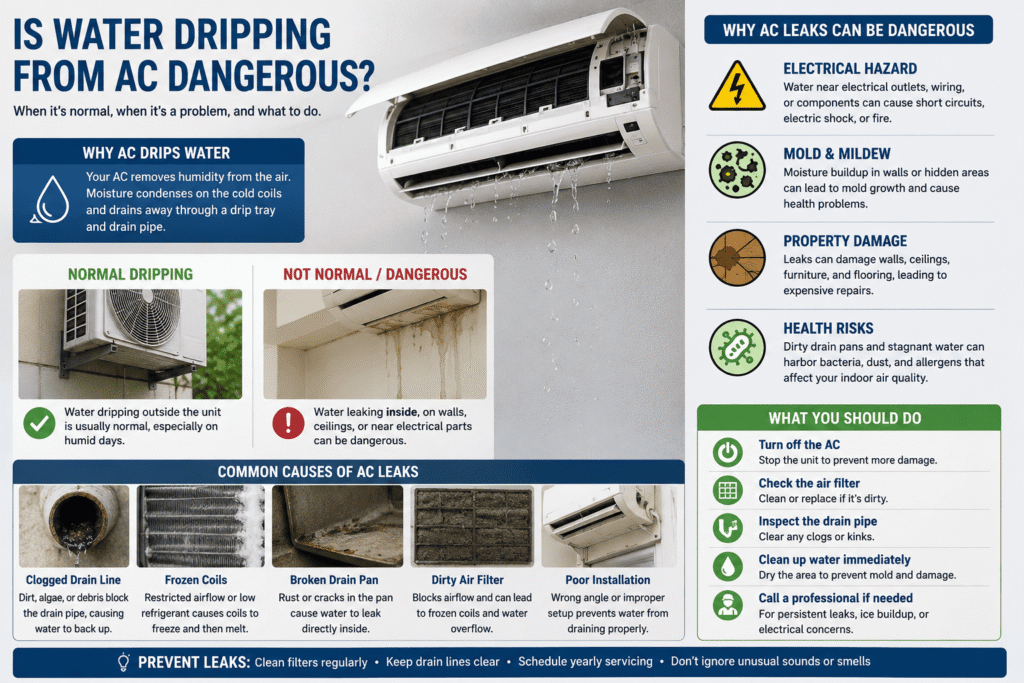
Most AC water drips are totally normal.
Your air conditioner is a dehumidifier that happens to also cool air. It pulls moisture out of the room. That water has to go somewhere. So it drips. That’s the unit working correctly.
But some drips mean trouble. Mold. Electrical hazards. Structural damage.
You notice water dripping from your air conditioner and your first thought is usually panic. Is the unit broken? Is it leaking chemicals? Can it damage the house?
A few drops outside? Usually fine.
Water pooling inside your room, soaking walls, or dripping near electrical outlets? That’s where things get serious fast.
Where the Water Actually Comes From
Inside your AC is a coil called the evaporator. It gets cold. Colder than the dew point of your room air.
Warm air hits that cold coil. Water condenses out, same way a cold beer sweats on a humid day.
That condensation drips into a drain pan. Then it flows through a drain line to the outside or into a condensate pump that pushes it to a sink or outside.
Normal operation. Every AC does this. Your car does it. You’ve seen the puddle under the car on a hot day. Same thing.
The problem isn’t the water. The problem is where the water ends up.
The Good Kind of Drip
Outside unit dripping? Fine.
Window unit dripping out the back? That’s by design. Most window units slope slightly toward the rear so water runs out the back instead of into your room.
Portable AC dripping from the drain port? That’s what it’s supposed to do. Some portable units have a self-evaporating function that sprays water on the hot coils, but in high humidity they still need to drain.
Central AC with a pipe dripping outside near the outdoor unit? That’s your condensate drain doing its job.
All of these are fine. No action needed. Maybe put a small rock or splash block under the drip so it doesn’t erode your dirt or stain your patio.
The Bad Kind of Drip
Water inside the house. That’s the one that gets your attention.
Inside the air handler closet. Water on the floor around a wall-mounted unit. A wet spot on the ceiling below your attic-mounted AC. Water running down the wall from a window unit’s front panel.
Every single one of these is a problem. Not all are emergencies. But none are normal.
Let me walk you through what’s actually happening.
The Top 5 Reasons Your AC Is Leaking Inside
1. Clogged drain line
Most common by a mile. I’d say 80% of indoor AC leaks come from this.
The drain line is a PVC pipe (or vinyl tube) that runs from your indoor unit to the outside. Algae and sludge grow inside it over time. Sludge blocks the pipe. Water backs up into the drain pan. Pan overflows. Water goes everywhere.
You can usually fix this yourself. Find the drain line outside. There’s a vertical pipe with a cap or a T-fitting. Remove the cap. Pour in a cup of white vinegar or a 50/50 bleach-water mix. Let it sit for 30 minutes. Flush with a garden hose. If the water flows freely, you’re done.
Do this every spring. You’ll never have a clogged drain.
2. Dirty air filter
People forget to change filters. Then the coil freezes.
Here’s how that works: dirty filter restricts airflow. Low airflow means the coil gets too cold. Colder than freezing. Condensation freezes on the coil instead of dripping off. Ice builds up. Eventually the ice melts all at once. That’s a flood, not a drip.
Check your filter. If it’s dirty, change it. Then turn off the AC and run just the fan for 2-3 hours to melt any ice. Then turn cooling back on. Problem solved.
3. Low refrigerant
Same symptom as a dirty filter but harder to fix.
Low refrigerant means the system pressure drops. Pressure drop means the coil gets colder than it should. Ice forms. Ice melts. Water everywhere.
You can’t fix this yourself. You need a tech with gauges. They’ll find the leak (or confirm it’s just low from a previous bad repair), fix it, and recharge the system. Cost: 200−600forasimplerecharge,500-2,000 if they need to find and fix a leak.
4. Broken condensate pump
If your AC is in a basement or a room below grade, water can’t drain by gravity. So you have a pump. Small box with a float switch and a little impeller.
When the pump fails, water fills the reservoir. Float switch triggers an overflow shutoff (if you’re lucky) or just keeps running (if you’re not). Then water spills over the top.
Test the pump by pouring water into the reservoir. The pump should kick on and push water out. If it doesn’t, replace the pump. $80-150 for a universal unit. Install takes 30 minutes if you’re handy.
5. Cracked drain pan
Plastic drain pans get brittle. They crack after 10-15 years. Metal pans rust through if the water sits for too long (which happens when the drain is clogged – see number 1).
This one requires a tech. They’ll need to lift the coil to replace the pan. Labor-heavy job. $400-800 depending on accessibility. If your unit is old, consider replacement instead.]
A Real Example
Last summer, a friend called me. Water dripping from her living room ceiling. Right below the attic AC. She was panicked. Thought the whole ceiling would collapse.
I walked her through a quick check over the phone.
Was the drip constant or intermittent? Constant.
Was the filter clean? She hadn’t changed it in 14 months.
We changed the filter. I told her to turn off cooling and run the fan for 3 hours. Drip stopped within an hour. Ceiling dried. No stain. No call to an emergency tech at 9 PM on a Saturday.
Cost: one $12 filter.
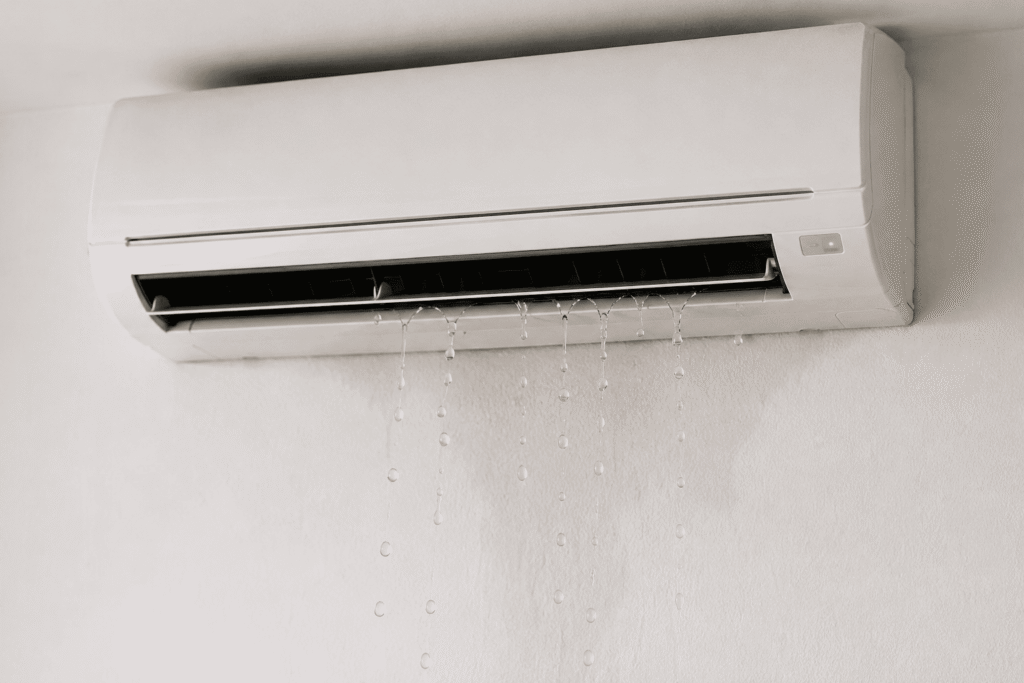
When AC dripping becomes dangerous
The danger depends on where the water is dripping and why it’s happening.
Here are the situations where you should pay attention.
Water dripping inside the house
This is the biggest red flag.
Indoor leaks can damage:
- Walls
- Ceilings
- Flooring
- Furniture
- Electrical wiring
I’ve seen ceiling paint bubble and peel after just a few days of unnoticed AC leakage. In humid places, mold can start growing surprisingly fast too.
If your indoor unit is dripping water onto the wall or floor, turn the AC off and inspect it.
Electrical risk is real
Water and electricity are terrible roommates.
If water drips near:
- Extension cords
- Power sockets
- Electrical panels
- AC wiring
You could end up with short circuits or even fire hazards.
That sharp burnt smell some people notice near leaking AC units? Sometimes it’s wet wiring heating up. Don’t ignore it.
If you see sparking, hear buzzing sounds, or notice flickering lights when the AC runs, stop using it immediately and call a technician.
Mold growth from hidden moisture
This part gets overlooked a lot.
A slow AC leak behind walls or ceilings creates the perfect damp environment for mold. And mold spreads quietly.
You might first notice:
- Musty smells
- Sneezing indoors
- Dark spots on walls
- Headaches or irritation
People with asthma or allergies usually feel it first.
The water itself usually isn’t toxic, but the environment it creates can become unhealthy.
Can AC water make you sick?
Normally, the water dripping from an AC is just condensed moisture from the air. It’s generally not poisonous.
But it’s also not clean drinking water.
The drain pan and pipes can collect:
- Dust
- Bacteria
- Mold
- Dirt buildup
So if the water accidentally splashes onto food prep areas or kids play around in pooled AC water, clean it up.
There’s also a rare issue with poorly maintained HVAC systems and bacteria like Legionella. Large commercial cooling systems are more commonly linked to that than home AC units, but dirty standing water is never a good thing.
Is water dripping from outside AC dangerous?
Usually, no.
Outdoor dripping often means the system is removing humidity correctly.
You’ll especially notice more water dripping:
- On humid days
- During rainy seasons
- When the AC runs for long hours
That’s pretty normal.
Still, check for a few things:
- Water flooding walkways
- Slippery surfaces
- Dripping near electrical equipment
- Excessive continuous leaking
A little puddle outside is fine. A mini waterfall probably needs inspection.
What about refrigerant leaks?
People often confuse water leaks with refrigerant leaks.
They’re different.
Water leaks are usually clear and odorless.
Refrigerant leaks may involve:
- Hissing sounds
- Chemical smell
- Poor cooling
- Ice buildup
Refrigerant exposure can be dangerous, especially in enclosed spaces. If you suspect a refrigerant issue, don’t try to fix it yourself.
Signs your AC leak needs immediate attention
Watch for these warning signs:
- Water dripping inside the room
- Ceiling stains
- Electrical buzzing
- Burning smell
- Ice buildup
- AC suddenly cooling poorly
- Mold smell
- Large puddles forming quickly
- Water near outlets or wiring
One small drip outside isn’t alarming.
A soaked wall with flickering lights absolutely is.
What you should do if your AC is leaking water
1. Turn the system off
Especially if water is near electrical components.
Don’t keep running it hoping the leak stops on its own.
2. Check the air filter
If it looks packed with dust, clean or replace it.
A clogged filter causes more AC problems than people realize.
3. Inspect the drain pipe
For split AC systems, check whether the drain pipe is blocked or kinked.
Sometimes insects, algae, or dirt clog the line completely.
4. Clean up standing water quickly
Dry the area before mold starts forming.
Fans and towels work fine for small leaks. Larger leaks may require professional drying if walls or ceilings got soaked.
5. Call a technician when needed
You should call for help if:
- The leak keeps returning
- Ice forms on coils
- Cooling performance drops
- Water reaches electrical areas
- The ceiling or walls are damaged
AC systems mix water, pressure, electricity, and refrigerant. Some repairs are DIY-friendly. Others really aren’t.
Can you prevent AC water leaks?
Mostly, yes.
Regular maintenance makes a huge difference.
Replace filters regularly
A clean filter keeps airflow stable and helps prevent frozen coils.
For heavy summer use, checking filters monthly is smart.
Keep drain lines clean
Many HVAC technicians flush drain lines during servicing.
That small maintenance step prevents a lot of indoor leaks.
Schedule yearly servicing
Professional cleaning helps catch:
- Drain issues
- Low refrigerant
- Rusted pans
- Weak airflow
- Dirty coils
Most serious AC leaks start as small ignored problems.
Don’t ignore strange sounds
Gurgling, bubbling, or dripping noises inside walls usually mean something’s wrong.
AC systems shouldn’t sound like an aquarium.
Is AC dripping water an emergency?
Sometimes yes, sometimes no.
Here’s the quick version:
| Situation | Dangerous? |
|---|---|
| Small outdoor dripping | Usually safe |
| Indoor wall leakage | Potentially dangerous |
| Water near electricity | Dangerous |
| Mold smell with leakage | Health concern |
| Ice buildup with leaking | Needs repair |
| Massive outdoor water flow | Should be inspected |
The location of the leak matters more than the water itself.
A Quick Decision Tree
Here’s how to decide what to do right now.
Is the drip outside?
Ignore it. Or put a rock under it to prevent erosion. Done.
Is the drip inside but very small, and the unit is currently running?
Probably a slow clog or a dirty filter. Turn off the cooling. Run the fan only. Check your filter. Pour vinegar down the drain line. Wait an hour. If the drip stops, you fixed it. If it keeps dripping with the cooling off, you have a different problem (call someone).
Is the drip inside and constant, even when the AC is off?
That’s not condensation. That’s a plumbing leak or a roof leak. Different problem. Call a plumber or roofer.
Is the drip near electrical parts?
Turn off the breaker. Call a tech. Don’t touch anything wet until the power is off.
Is there a large puddle or water pouring out?
Turn off the AC at the thermostat and at the breaker. Call someone. This is an emergency for your floors and drywall.
Insurance and prevention angle
Photograph damage and leaks. Note dates. Regular service records help claims. Some policies exclude gradual damage so act quick.
Final thoughts
Water dripping from an AC isn’t automatically dangerous. In many cases, it simply means the unit is removing humidity correctly.
But indoor leaks, electrical exposure, mold growth, or frozen components can turn a small issue into an expensive repair pretty quickly.
Pay attention to where the water appears and how much is leaking.
A few drops outside during a humid afternoon? Probably normal.
Water running down your bedroom wall at 2 AM? That AC is asking for help.
FAQs about water dripping from ac dangerous
Is it normal for an AC to drip water?
Yes. Air conditioners remove humidity from the air, and that moisture drains out as water. Small amounts of dripping, especially outside the unit, are usually normal.
Why is my AC leaking water inside the house?
Indoor leaks often happen because of:
- A clogged drain line
- Dirty air filters
- Frozen evaporator coils
- A damaged drain pan
- Poor installation
Indoor dripping should be checked quickly before it damages walls or ceilings.
Can AC leaking water cause electrical problems?
Yes. Water near outlets, wiring, or electrical panels can cause short circuits or fire risks. Turn the AC off if water reaches electrical areas.
Is AC water dirty?
Usually, yes. The water may contain dust, mold, bacteria, or debris from the drain system. Avoid drinking it or letting it sit indoors for long periods.
Can a leaking AC make you sick?
It can indirectly. Standing moisture may lead to mold growth, which can trigger allergies, coughing, headaches, or breathing issues.
Why does my AC leak more on humid days?
Higher humidity means the AC removes more moisture from the air. That creates more condensation and more water drainage.
Is water dripping from the outdoor AC unit dangerous?
Most of the time, no. Outdoor dripping is often a normal part of the cooling process. Large puddles or flooding should still be inspected.
How do I stop my AC from leaking water?
You can reduce leaks by:
- Cleaning air filters regularly
- Keeping drain lines clear
- Scheduling yearly AC maintenance
- Checking for frozen coils or blocked airflow
Should I turn off my AC if it’s leaking?
Yes, especially if:
- Water is dripping indoors
- The leak is heavy
- Water is near electricity
- The unit has ice buildup
Running the system can make the damage worse.
Can a clogged AC drain line fix itself?
Usually not. Blocked drain lines tend to get worse over time because dirt, algae, and debris keep building up inside the pipe.
How expensive is it to repair an AC water leak?
Simple fixes like drain cleaning or filter replacement are usually inexpensive. Repairs involving frozen coils, refrigerant issues, or water damage can cost much more.
Can a dirty filter really cause water leakage?
Yes. A dirty filter restricts airflow, which can freeze the evaporator coils. When the ice melts, excess water may leak from the unit.
Is it normal for an AC to drip water?
Yes. Air conditioners remove humidity from the air, and that moisture drains out as water. Small amounts of dripping, especially outside the unit, are usually normal.
Why is my AC leaking water inside the house?
Indoor leaks often happen because of:
- A clogged drain line
- Dirty air filters
- Frozen evaporator coils
- A damaged drain pan
- Poor installation
Indoor dripping should be checked quickly before it damages walls or ceilings.
Can AC leaking water cause electrical problems?
Yes. Water near outlets, wiring, or electrical panels can cause short circuits or fire risks. Turn the AC off if water reaches electrical areas.
Is AC water dirty?
Usually, yes. The water may contain dust, mold, bacteria, or debris from the drain system. Avoid drinking it or letting it sit indoors for long periods.
Can a leaking AC make you sick?
It can indirectly. Standing moisture may lead to mold growth, which can trigger allergies, coughing, headaches, or breathing issues.
Why does my AC leak more on humid days?
Higher humidity means the AC removes more moisture from the air. That creates more condensation and more water drainage.
Is water dripping from the outdoor AC unit dangerous?
Most of the time, no. Outdoor dripping is often a normal part of the cooling process. Large puddles or flooding should still be inspected.
How do I stop my AC from leaking water?
You can reduce leaks by:
- Cleaning air filters regularly
- Keeping drain lines clear
- Scheduling yearly AC maintenance
- Checking for frozen coils or blocked airflow
Should I turn off my AC if it’s leaking?
Yes, especially if:
- Water is dripping indoors
- The leak is heavy
- Water is near electricity
- The unit has ice buildup
Running the system can make the damage worse.
Can a clogged AC drain line fix itself?
Usually not. Blocked drain lines tend to get worse over time because dirt, algae, and debris keep building up inside the pipe.
How expensive is it to repair an AC water leak?
Simple fixes like drain cleaning or filter replacement are usually inexpensive. Repairs involving frozen coils, refrigerant issues, or water damage can cost much more.
Can a dirty filter really cause water leakage?
Yes. A dirty filter restricts airflow, which can freeze the evaporator coils. When the ice melts, excess water may leak from the unit.
Usefull Links
https://www.aireserv.com/about/blog/diy-tips-to-cleaning-your-ac-units-drain-tube
https://www.hometips.com/repair-fix/ac-leaking-water.html
https://www.hartell.com/en-us/news/residential-ac-unit-condensate-pump-troubleshooting
https://www.trane.com/residential/en/resources/blog/hvac-air-filter-maintenance-guide