
|
Getting your Trinity Audio player ready...
|
Concrete is often viewed as the bedrock of modern construction sturdy, permanent, and impenetrable. However, the reality is that concrete is a porous, “breathing” material. Without proper protection, it acts like a hard sponge, absorbing water, oils, and chemicals that lead to structural decay.
In the modern era of construction, water based concrete sealers have emerged as the gold standard for both DIY homeowners and professional contractors. This in-depth guide explores why these eco-friendly solutions are replacing traditional solvent-based products and how to choose the right one for your project.
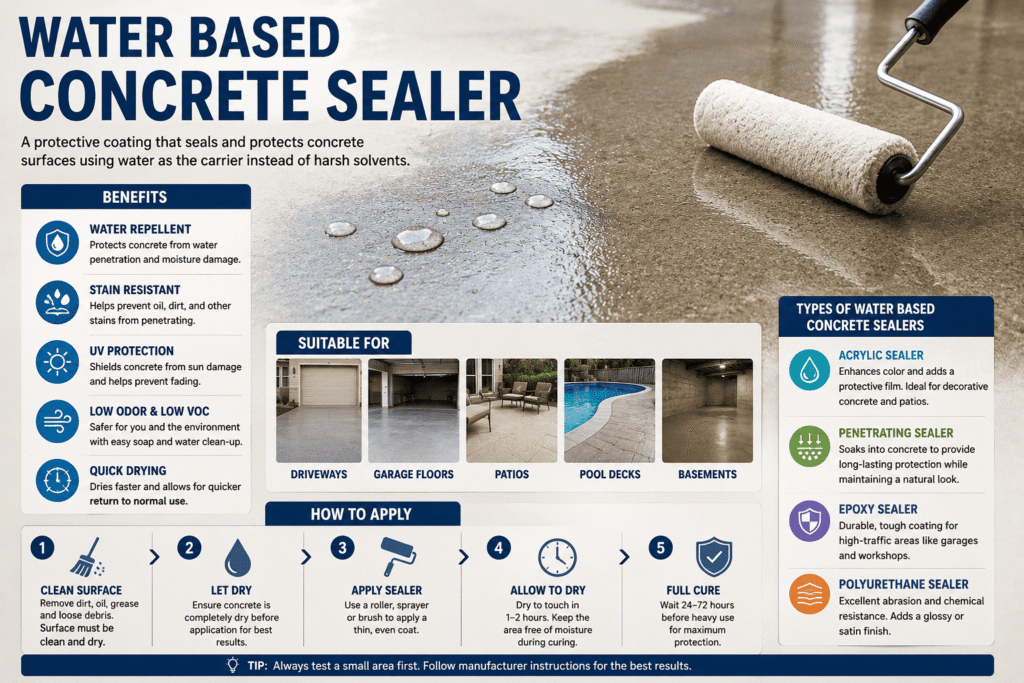
Water based concrete sealer works if:
- You can apply above 50°F
- You’ll do two thin coats
- You want low odor and soap cleanup
- Your concrete isn’t burnished smooth
- You’re okay reapplying every few years
It fails if:
- You apply one thick coat
- The concrete is below 50°
- You need it to last 10 years untouched
- You want a glossy, plasticky look (that’s epoxy territory)
I sealed my parents’ driveway with water-based acrylic. Two coats. Took four hours across two afternoons. Cost $80. It’s been through rain, snow, and my dad’s leaky truck.
Still beads water. Still looks fine.
That’s not a revolution. That’s just the right tool for the job.
What is a Water Based Concrete Sealer?
At its core, a water-based sealer uses water as the carrier for the protective resins (acrylics, silanes, or siloxanes) rather than chemical solvents. Once applied, the water evaporates, leaving the protective solids behind to bond with the concrete.
Why people choose water based sealers
The smell alone pushes a lot of people toward water based products.
Solvent sealers can smell like someone spilled industrial chemicals inside your house. Water based versions are milder and easier to work with indoors.
And cleanup is simpler too. Soap and water usually handle brushes and rollers before the sealer dries.
That matters more than people think. Dried sealer on tools turns into concrete-flavored glue.
The Science of the Bond
Unlike paints that sit on top of a surface, high-quality water based sealers work through two primary mechanisms:
- Film-Forming: These create a protective layer on the surface, blocking contaminants and adding a sheen.
- Penetrating: These dive deep into the pores, reacting chemically with the concrete to create a hydrophobic barrier from the inside out.
The real difference nobody explains
Water-based sealers breathe.
Concrete has moisture inside it. Always. Even when it looks dry. That moisture needs to escape. If you trap it with the wrong sealer, it builds pressure. Then the sealer peels. Or the concrete surface spalls—little flakes pop off like bad sunburn.
Water-based acrylics and silanes let vapor pass through. Water stays on top. Vapor moves through. That’s the magic part.
Solvent-based film formers? They trap everything. That’s why garage floors with cheap solvent-based sealers start peeling after one winter. The moisture underneath had nowhere to go.
Here’s a specific number: a good water-based silane sealer allows 90-95% vapor transmission while blocking liquid water. That’s not marketing. That’s ASTM E96 test data.
Why Choose Water Based Over Solvent Based?
The industry shift toward water-based technology isn’t just about “going green” it’s about superior performance in specific environments.
Health and Safety (VOCs)
Solvent-based sealers emit high levels of Volatile Organic Compounds (VOCs). These fumes are not only hazardous to the environment but can cause respiratory issues and dizziness for the applicator. Water-based sealers have low-to-zero VOC levels, making them safe for indoor use and compliant with strict environmental regulations.
Aesthetics: The “Blushing” Problem
One of the biggest headaches with solvent sealers is “blushing” a white, cloudy haze that appears when moisture gets trapped under the sealer. Because water-based sealers are breathable, they allow moisture vapor to escape the concrete, significantly reducing the risk of whitening or peeling.
Ease of Application
Water-based products can often be applied to “damp” concrete (though not soaking wet), whereas solvents require the surface to be bone-dry. Cleanup is also a breeze; you only need soap and water rather than harsh mineral spirits.
Best places to use water based concrete sealer
Driveways
Driveways take constant abuse:
- Rain
- Oil drips
- Tire wear
- UV exposure
A penetrating water based sealer helps reduce cracking and moisture damage.
Especially in areas with winter freezing.
Garage floors
Garage concrete absorbs stains aggressively.
Motor oil finds concrete like it has GPS tracking.
Water based epoxy or polyurethane coatings help protect against:
- Oil
- Grease
- Tire marks
- Chemical spills
Patios and pool decks
People like water based sealers here because the odor is lower and the finish looks more natural outdoors.
Some products also include slip-resistant additives.
That matters around pools. Concrete turns surprisingly dangerous when wet.
Basement floors
Basements often hold moisture already.
Breathable water based sealers help reduce dusting and surface absorption without trapping water underneath.
That balance matters.
Decorative stamped concrete
Stamped concrete fades over time if left unsealed.
Acrylic water based sealers restore color depth and help protect decorative patterns from weather exposure.
Freshly sealed stamped concrete usually looks dramatically better. Like someone adjusted the saturation settings in real life.
Types of Water Based Sealers
Choosing the right “flavor” of sealer depends on what you want your concrete to look like and how much traffic it will endure.
| Sealer Type | Best For… | Finish/Appearance |
| Acrylic | Decorative patios, stamped concrete | Matte to High Gloss |
| Silane/Siloxane | Driveways, sidewalks, pool decks | Natural / No Change |
| Epoxy (Water-Based) | Garage floors, basements | High Gloss / Thick |
| Polyurethane | High-traffic commercial floors | Satin to Gloss |
Water Based Acrylics
The most popular choice for residential projects. They provide excellent UV resistance, preventing your colored or stamped concrete from fading in the sun.
Penetrating Sealers (Silane/Siloxane)
If you love the look of your concrete and don’t want a “shiny” finish, these are for you. They penetrate up to 1/4 inch into the surface, creating a “beading” effect where water sits on top of the concrete like rain on a waxed car.
Top Benefits of Sealing Your Concrete
If you’re on the fence about sealing, consider these long-term benefits:
- Freeze-Thaw Protection: In colder climates, water enters concrete pores, freezes, expands, and causes “spalling” (surface flaking). A sealer prevents that water entry.
- Stain Resistance: From oil leaks in the driveway to wine spills on a kitchen countertop, sealers provide a window of time to clean up messes before they become permanent.
- Mold and Mildew Prevention: By keeping moisture out of the pores, you starve the environment that mold needs to grow.
- Color Enhancement: Many water based acrylics can “pop” the colors in decorative concrete, making a dull gray patio look vibrant and rich.
The application trick that changes everything
Most people mess up one thing: they apply it too thick.
Water based sealers look watery. So people think they need more. They lay down a heavy coat. It puddles. Dries uneven. Turns white in the low spots.
Two thin coats. That’s the move.
First coat: light. Almost like you’re wasting your time. Let it dry. Usually 1-2 hours. Touch it. Should feel dry but still slightly soft if you scratch with a fingernail.
Second coat: same thing. Light. Crosswise direction from the first coat so you fill the missed spots.
That’s it. Don’t get clever.
I’ve seen guys use a heavy nap roller and lay down half a gallon per 100 square feet. Disaster. Should be about 200-300 square feet per gallon per coat, depending on porosity.
Numbers that matter
Price: water-based runs 30−80pergallon.Solvent−based50-150. You’ll need about 1 gallon per 200-300 square feet for two coats.
Lifespan: water-based acrylic on a driveway? 1-3 years. Water-based silane on a vertical wall? 5-8 years. Solvent-based epoxy? 5-10 years indoors. But you’ll hate the installation.
Dry time: water-based recoat in 1-2 hours. Light foot traffic in 4-6. Vehicles in 24-48. Solvent-based dries faster—30 minutes to recoat but the smell hangs around for days.
VOCs: water-based has 50-150 grams per liter. Solvent-based hits 400-600. In California, you can’t even buy high-VOC solvent-based sealers anymore. That matters if you care about air quality or don’t want to evacuate your house for a weekend.
5. Step-by-Step Application Guide
A sealer is only as good as the preparation that precedes it. Follow these steps for a professional finish.
Step 1: Surface Preparation
The concrete must be clean. Use a pressure washer to remove dirt, and a degreaser for oil spots. If the concrete is very smooth (like a garage floor), you may need to acid etch or mechanically grind the surface to open the pores so the sealer can “bite.”
Step 2: The “Water Test”
Before applying, splash some water on the dry concrete.
- If it beads up, there is an old sealer present that must be removed.
- If it soaks in and turns the concrete dark, you are ready to seal.
Step 3: Application Tools
For water-based sealers, a high-quality pump sprayer with a fine mist tip is usually best. You can also use a 3/8-inch nap roller for smaller areas, but be careful not to “over-work” the product, which can cause bubbles.
Step 4: Two Thin Coats
Always apply two thin coats rather than one thick one. This ensures even coverage and prevents “puddling.” Wait about 2–4 hours between coats (refer to the manufacturer’s label for specific dry times).
Maintenance and Longevity
Water based sealers are durable, but they aren’t permanent.
- Acrylics: Usually need a “refresh” coat every 2–3 years in high-traffic or high-sun areas.
- Penetrating Sealers: Can last anywhere from 5 to 10 years because they are protected within the concrete matrix.
To extend the life of your sealer, simply sweep regularly and wash with a pH-neutral cleaner. Avoid using harsh de-icing salts in the winter, as these can chemically attack even the best sealers.
Common mistakes people make
Applying sealer in bad weather
Hot concrete dries sealer too fast.
Rain ruins uncured coatings.
Cold temperatures slow curing dramatically.
Mild dry weather gives the best results.
Using too much product
More sealer doesn’t mean more protection.
Thick coats often create:
- Bubbling
- Peeling
- Sticky spots
- Cloudy finish
Concrete sealers work better in controlled layers.
Ignoring surface prep
This causes half the complaints people have about concrete coatings.
Sealer sticks poorly to:
- Dust
- Oil
- Existing failing coatings
Good prep feels boring while you’re doing it. Then you realize later it prevented a complete mess.
Choosing the wrong finish
Glossy finishes look great on some surfaces.
But high-gloss around pools or sloped walkways can become slippery fast.
Always think about traction first.
Does water based concrete sealer darken concrete?
Sometimes slightly.
Penetrating sealers usually keep a natural look.
Acrylic sealers often deepen the color mildly and create a soft sheen.
Gloss products produce the strongest wet-look effect.
Always test a small section first. Concrete color changes more than product labels suggest.
Is water based concrete sealer waterproof?
Mostly water resistant, yes.
Fully waterproof? Usually no.
Concrete still expands, contracts, and breathes. Sealers reduce water penetration significantly, but standing water over long periods can still cause wear.
That’s why drainage matters too.
A perfectly sealed driveway with terrible drainage still suffers damage eventually.
Can you apply water based sealer over old sealer?
Sometimes.
Compatibility matters.
Water based products may struggle bonding over existing solvent coatings unless the surface gets properly stripped or etched first.
Mixing incompatible products creates ugly failures fast.
Peeling sealer has a very specific look. Kind of like flaky sunscreen on concrete.
How much does water based concrete sealer cost?
Prices vary by quality and type.
Rough estimates:
- Acrylic sealers: lower cost
- Penetrating sealers: moderate cost
- Epoxy/polyurethane systems: higher cost
And labor changes everything.
DIY sealing saves money if you prep correctly. Professional applications cost more but usually last longer because the prep work is better.
Good contractors spend a surprising amount of time cleaning concrete before opening the sealer bucket.
The test you should do first
Buy a quart. Not a gallon.
Pick a 2×2 foot spot in the corner. Clean it. Apply two coats exactly like you would the whole surface. Wait a week. Spray water on it.
If it beads up and runs off? Good.
If it soaks in within 30 seconds? Wrong sealer for that concrete.
If it turns white or cloudy? Too thick. Or concrete was too wet when you applied.
If it peels? Concrete was too smooth. Or you needed an etch first.
That quart costs 12.Itsavesyoufromruining120 worth of sealer and a weekend of work.
What the contractors won’t tell you
They push solvent-based because it’s faster.
One coat. Dries in 30 minutes. They’re gone by lunch. Water-based means two coats. Come back the next day. That’s two trips. That’s less money per hour.
Also: solvent-based hides bad prep. If the concrete is dirty or uneven, solvent-based still sticks. For a while. Water-based is less forgiving. It demands a clean surface. That’s more work for the contractor.
So when they say “solvent-based is better,” ask better. Better for who? For you, the person who has to live with it? Or for them, the person who wants to get paid and leave?
I’m not saying solvent-based never makes sense. On a commercial loading dock that needs chemical resistance? Yeah. In below-freezing temps? Sure. But for your patio? Your basement floor? Your driveway?
Water-based is probably fine.
Common Myths About Water-Based Sealers
Myth: “Water based sealers aren’t as strong as solvent-based.”
Fact: While this was true 20 years ago, modern polymer chemistry has advanced to the point where water based resins offer equal, and sometimes superior, chemical resistance and durability.
Myth: “I can seal my new concrete the day after it’s poured.”
Fact: Most concrete needs a 28-day cure period before a sealer can be applied. Sealing too early traps moisture, which can weaken the concrete or cause the sealer to fail.
Picking a specific product
Foundation Armor WB15 or WB25 pop up often for acrylic film-forming. Low odor, good clarity options.
Ghostshield and Rain Guard penetrating types handle water and salt repulsion well for driveways.
RadonSeal or similar subsurface options target basements and negative-side water pressure.
Read recent reviews. Formulas improve. Check coverage rates porous concrete drinks more gallons than you expect. Buy extra.
For stamped or colored concrete, test color shift first. Some water based keep the vibrancy better than others.
Long term care and expectations
Sealer isn’t armor. It slows damage. Heavy traffic, harsh winters, or poor drainage still win eventually. But sealed concrete resists cracking, spalling, and staining way better than bare.
Reapply before it fails completely. Faded beading after rain or dull spots signal time. Stripping old failed layers beats layering over problems.
Indoors, water-based shines for garage floors and basements. Dust control improves. Sweeping and mopping get easier. No constant tracking dirt.
Outdoors, it fights efflorescence and mold on patios. Pool decks stay cleaner. Sidewalks handle winter salt with less pitting.
Final Thoughts
Investing in a high-quality water based concrete sealer is the most cost-effective way to preserve your property. Whether you are protecting a brand-new driveway or reviving a tired-looking patio, these products offer a safe, easy-to-use, and environmentally conscious solution.
By choosing the right type of sealer and putting in the work on preparation, you ensure that your concrete remains beautiful and structurally sound for decades to come.
What type of concrete surface are you looking to protect is it a high-traffic driveway or an indoor decorative floor?
FAQs
What is a water based concrete sealer?
A water based concrete sealer is a protective coating that uses water as the main carrier instead of strong chemical solvents. It helps protect concrete from moisture, stains, UV damage, and surface wear.
Is water based concrete sealer good for driveways?
Yes. Many people use penetrating water based sealers on driveways because they help reduce water absorption, cracking, and salt damage.
How long does water based concrete sealer last?
It depends on the type of sealer and traffic level.
Typical lifespan:
- Acrylic sealers: 1 to 3 years
- Penetrating sealers: 5 to 10 years
- Epoxy or polyurethane coatings: 5 to 10 years indoors
Does water based concrete sealer darken concrete?
Some products slightly deepen the color or create a mild wet-look finish. Penetrating sealers usually keep a more natural appearance.
Can you apply water based sealer over old concrete?
Yes, as long as the surface is cleaned properly and any failing old coating is removed first.
Is water based concrete sealer waterproof?
It is highly water resistant but not completely waterproof. It helps reduce moisture penetration and surface damage.
What is the difference between water based and solvent based concrete sealer?
Water based sealers usually:
- Have lower odor
- Dry faster
- Clean up with soap and water
- Produce fewer fumes
Solvent based sealers often create a darker glossy finish and stronger smell.
Can I apply water based concrete sealer myself?
Yes. Many homeowners apply it using a roller or sprayer. Proper surface cleaning and thin even coats are important for good results.
How long does water based concrete sealer take to dry?
Most products dry to the touch within a few hours. Full curing may take 24 to 72 hours depending on humidity and temperature.
Does concrete need to be completely dry before sealing?
Yes. Moisture trapped under the sealer can cause peeling, whitening, or cloudy patches later.
Is water based concrete sealer safe for indoor use?
Generally yes. Water based products usually contain lower VOC levels, making them better suited for garages, basements, and enclosed areas.
Can water based concrete sealer prevent stains?
Yes. Sealers help reduce stains from:
- Oil
- Grease
- Dirt
- Water
- Chemicals
Protection level depends on the specific product used.
What happens if concrete is not sealed?
Unsealed concrete absorbs water, stains, salt, and dirt more easily. Over time, that can lead to cracking, fading, surface wear, and moisture damage.
How many coats of concrete sealer are needed?
Most surfaces need 1 to 2 thin coats. Heavy applications can create bubbling or uneven drying.
When should concrete be resealed?
You may need resealing when:
- Water stops beading on the surface
- The finish looks faded
- Stains absorb quickly
- The surface appears dry or worn out