
|
Getting your Trinity Audio player ready...
|
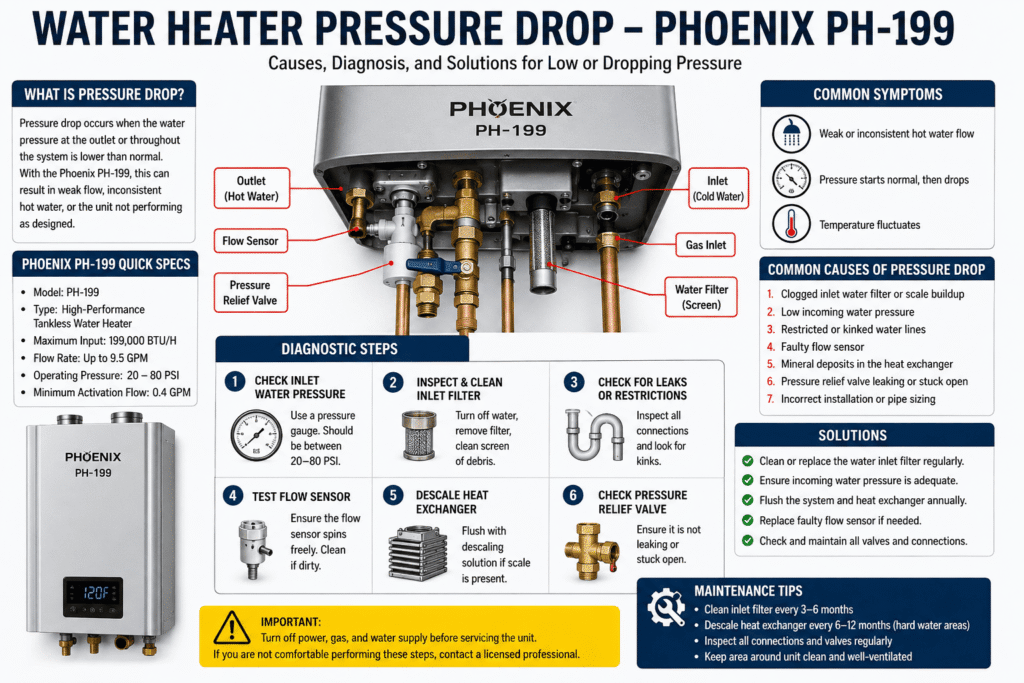
Water heater pressure drop Phoenix PH-199 gets annoying fast.
You turn on the shower.
Water starts strong.
Then 20 seconds later it feels like somebody upstairs flushed every toilet in the neighborhood.
Weak hot water pressure drives people crazy because the problem hides in different places.
Sometimes the heater causes it.
Sometimes the plumbing causes it.
Sometimes the issue sits inside a tiny clogged screen nobody checks for years.
The Phoenix PH-199 is a powerful unit when it’s working properly.
When pressure starts dropping, the symptoms usually tell a story.
You just have to know where to look.
What is the Phoenix PH-199?
The Phoenix PH-199 is a high-efficiency water heater made for heavy residential or light commercial hot water demand.
A lot of people install these units in:
- Large homes
- Multi-bathroom houses
- Rental properties
- Hydronic heating systems
- Radiant floor setups
The “199” comes from the BTU rating.
This thing pushes serious heating power.
And honestly, that’s why people panic when pressure suddenly drops.
A heater built for strong performance suddenly starts acting like an exhausted garden hose.
What pressure drop actually feels like
Pressure drop symptoms vary depending on the cause.
Some homeowners notice:
- Weak hot water only
- Strong cold water but weak hot water
- Pressure loss during multiple fixtures
- Pulsing water flow
- Hot water fading mid-shower
- Slow sink flow on hot side only
That last detail matters a lot.
If cold water pressure stays normal while hot pressure drops, the water heater system becomes the main suspect.
The inlet filter clogs constantly
This is probably the biggest issue with tankless-style systems like the Phoenix PH-199.
Tiny debris enters the water line.
Then the inlet filter catches it.
That filter slowly clogs with:
- Sediment
- Rust flakes
- Sand
- Mineral deposits
- Pipe debris
Eventually flow slows down.
And the weird part?
A partially clogged filter can still allow enough water through to confuse people.
The heater kinda works.
Pressure kinda drops.
Then everybody wastes 3 hours blaming the showerhead.
Hard water destroys flow rates over time
Hard water is brutal in Arizona.
Phoenix water especially has heavy mineral content.
That matters because the PH-199 uses internal heat exchangers with narrow water passages.
Mineral scale builds up slowly inside those passages.
Then water flow shrinks.
Then pressure drops.
Then heating efficiency drops too.
A neglected heat exchanger eventually acts like clogged arteries.
Water physically struggles to move through the unit.
Scale buildup gets expensive
People ignore descaling maintenance because the heater still “mostly works.”
That phrase destroys expensive appliances.
Scale buildup creates:
- Reduced pressure
- Temperature instability
- Higher gas usage
- Strange noises
- Overheating issues
- Shorter equipment lifespan
Tankless systems hate mineral buildup.
Especially high-output units.
A Phoenix PH-199 running on hard water without maintenance eventually starts acting exhausted.
Why hot water pressure drops but cold pressure stays fine
This detail narrows the diagnosis fast.
If only hot water pressure drops, the restriction usually exists somewhere after water enters the heater.
That points toward:
- Heat exchanger scale
- Clogged inlet screen
- Dirty fixtures
- Partially closed valves
- Failing recirculation parts
If both hot and cold pressure drop equally, the problem probably sits elsewhere in the plumbing system.
That distinction matters.
Recirculation systems sometimes create pressure problems
Some Phoenix PH-199 setups include hot water recirculation systems.
Those systems keep hot water moving through pipes so taps heat faster.
Sounds great.
Until a valve sticks.
Or a pump weakens.
Or sediment blocks flow.
Recirculation issues sometimes create:
- Inconsistent pressure
- Delayed hot water
- Temperature swings
- Pump noise
- Reduced fixture flow
A failing recirculation check valve can create weird plumbing behavior that feels almost random.
Check the isolation valves first
This sounds simple because it is.
Half-open service valves reduce pressure constantly.
People bump valves accidentally during maintenance.
Contractors sometimes forget to reopen them fully.
Then the homeowner spends weeks blaming the heater.
Check:
- Cold inlet valve
- Hot outlet valve
- Recirculation valves
- Service isolation ports
A partially closed valve throttles flow immediately.
Showerheads lie to people
I’ve seen homeowners replace expensive water heaters when the actual problem was a clogged showerhead.
Mineral deposits collect inside showerhead screens slowly.
You stop noticing the pressure decline because it happens gradually.
Then one day the flow feels terrible.
Before blaming the heater:
- Test multiple fixtures
- Compare hot and cold flow
- Remove faucet aerators
- Inspect showerhead screens
Start simple.
Plumbing diagnostics gets expensive when people skip basic checks.
Sediment inside old pipes restricts hot water
Older homes sometimes develop internal pipe buildup.
Galvanized steel pipes are especially bad for this.
Years of mineral accumulation narrow the pipe diameter.
Hot water lines often show the problem first because heat accelerates mineral buildup.
Then pressure weakens gradually.
Sometimes badly.
A pipe that originally carried strong flow starts behaving like a straw packed with chalk.
The heat exchanger is usually the real problem
If the Phoenix PH-199 hasn’t been descaled regularly, the heat exchanger becomes the prime suspect.
Tankless heat exchangers contain narrow channels designed for heat transfer.
Mineral deposits coat those channels over time.
Flow shrinks.
Pressure drops.
And heating performance gets inconsistent.
This happens constantly in hard-water areas.
Especially when owners skip yearly flushing.
Descaling the Phoenix PH-199
Descaling removes mineral buildup using a circulating cleaning solution.
Most technicians use:
- White vinegar
- Commercial descaling solution
- Small circulation pump
- Service hoses
The cleaning solution cycles through the heater for around 45 minutes to 90 minutes depending on buildup.
The amount of debris that comes out can look horrifying.
Cloudy chunks.
White flakes.
Brown sludge.
That junk restricts water flow inside the system.
Water softeners help a lot in Phoenix
Phoenix water is hard enough to destroy plumbing equipment faster than many homeowners expect.
A water softener helps reduce:
- Scale buildup
- Heater maintenance frequency
- Pressure loss issues
- Fixture mineral deposits
- Heat exchanger damage
Tankless heaters last longer with softened water.
That’s just reality.
Why pressure fluctuates during showers
Pressure fluctuations often point toward flow restrictions combined with heating demand.
The heater tries adjusting output while water struggles through scaled passages.
Then flow changes mid-shower.
You feel:
- Pressure dips
- Temperature swings
- Hot-cold bursts
- Weak flow after several minutes
That’s frustrating at 6 a.m.
Especially during winter.
Error codes matter more than people think
The Phoenix PH-199 displays diagnostic codes when problems occur.
A lot of homeowners ignore them.
Big mistake.
Those codes help narrow issues quickly.
Pressure-related problems sometimes connect to:
- Flow sensor faults
- Overheating conditions
- Restricted circulation
- Ignition problems
- Sensor failures
Always write the code down before resetting the unit.
People forget codes immediately after panic-resetting the heater.
Then technicians arrive with zero information.
Low incoming water pressure affects performance too
Sometimes the heater itself is innocent.
Municipal supply pressure can fluctuate.
Pressure regulators fail.
Whole-home filters clog.
Water softeners malfunction.
All of those issues affect heater flow.
Tankless systems especially depend on consistent incoming pressure.
Weak supply pressure creates weak output pressure.
Simple math.
Why tankless systems feel different than tank heaters
Traditional tank heaters store heated water.
Tankless systems heat water instantly as it moves through the unit.
That design creates different pressure behavior.
A tankless heater depends heavily on unrestricted flow.
Even moderate scale buildup changes performance faster than many tank systems.
That surprises people switching from older tank heaters.
Dirty flow sensors create weird symptoms
The Phoenix PH-199 uses flow sensors to monitor water movement.
When sensors collect debris or mineral deposits, the heater can misread water demand.
That creates strange issues like:
- Delayed ignition
- Pressure fluctuations
- Short cycling
- Hot water interruptions
Electronic water heaters rely on accurate sensor readings constantly.
A dirty sensor confuses the whole system.
Gas supply problems can affect hot water performance
The PH-199 uses high BTU gas input.
If gas supply becomes restricted, heating performance suffers.
Weak heating sometimes gets mistaken for pressure problems because the shower suddenly feels weak and cold together.
Possible gas-related issues include:
- Undersized gas lines
- Regulator problems
- Dirty burners
- Low gas pressure
Heating performance and flow performance often overlap.
That confuses diagnosis.
Annual maintenance matters more with tankless systems
Tankless heaters reward maintenance.
Ignore maintenance and they become temperamental.
A yearly service usually includes:
- Descaling
- Filter cleaning
- Burner inspection
- Vent inspection
- Sensor checks
- Pressure testing
People skip yearly maintenance because the heater still works.
Then pressure suddenly collapses during a family gathering.
That timing feels universal somehow.
Air trapped in plumbing lines
Air pockets sometimes reduce flow temporarily.
Recent plumbing work often introduces trapped air into hot water lines.
Symptoms include:
- Sputtering faucets
- Spitting water
- Inconsistent pressure
- Strange pipe noises
Usually the issue clears after running fixtures for several minutes.
Persistent air problems deserve inspection.
Expansion tanks sometimes contribute to pressure issues
Some systems include thermal expansion tanks.
If the internal bladder fails, water pressure behavior gets weird.
You may notice:
- Pressure surges
- Weak flow
- Temperature inconsistency
- Relief valve dripping
Expansion tank problems don’t always appear obvious immediately.
Pressure regulators wear out too
Homes with pressure reducing valves eventually see failures.
A failing regulator can choke household pressure unpredictably.
Sometimes pressure starts strong then drops rapidly.
That symptom tricks homeowners into blaming the heater.
Checking incoming house pressure with a gauge saves time.
Why plumbers ask about maintenance history immediately
Because maintenance history usually tells the whole story.
If a Phoenix PH-199 ran 5 years in hard water without descaling, scale buildup becomes highly likely.
Tankless systems demand attention.
Especially in mineral-heavy regions.
Skipping maintenance eventually shows up in pressure performance.
DIY mistakes people make constantly
People try fixing pressure issues with random internet advice.
That creates chaos.
Common mistakes include:
- Turning random valves
- Using harsh chemical cleaners
- Ignoring gas safety
- Over-tightening fittings
- Resetting error codes repeatedly
- Running the heater with clogged filters
Tankless systems contain electronics, sensors, burners, and water flow components working together.
Guesswork gets expensive.
When to call a professional
Call a technician if:
- Pressure keeps dropping
- Error codes appear repeatedly
- Water temperature fluctuates badly
- The heater shuts down often
- Descaling doesn’t fix flow
- Gas smells appear
- Water leaks develop
A professional can measure:
- Flow rates
- Gas pressure
- Heat exchanger restriction
- System pressure
- Sensor operation
That diagnosis matters.
Replacing random parts blindly burns money fast.
Signs the heat exchanger may already be damaged
Severe scale buildup eventually damages internal components.
Warning signs include:
- Constant overheating errors
- Persistent low pressure
- Loud internal noises
- Reduced hot water output
- Frequent shutdowns
At that point, repair costs rise quickly.
Heat exchangers aren’t cheap.
Final thoughts on water heater pressure drop Phoenix PH-199
Most Phoenix PH-199 pressure drop problems come down to restriction somewhere in the system.
Usually scale.
Sometimes clogged filters.
Sometimes valve issues.
Sometimes old plumbing.
The unit itself is powerful when maintained properly.
But hard water punishes neglected tankless heaters fast.
Especially in Phoenix.
If hot water pressure keeps fading while cold water stays strong, start investigating the heater system early.
Small restrictions grow into expensive repairs over time.
And honestly, descaling maintenance costs a lot less than replacing a damaged heat exchanger.
FAQ
Why does my Phoenix PH-199 lose hot water pressure?
The most common causes are scale buildup, clogged inlet filters, partially closed valves, or restricted heat exchanger flow.
Can hard water reduce tankless water heater pressure?
Yes. Hard water creates mineral buildup inside the heat exchanger, which restricts water movement over time.
How often should a Phoenix PH-199 be descaled?
Most systems need descaling once a year. Homes with very hard water may need more frequent maintenance.
Why is my cold water pressure normal but hot water weak?
That usually points toward a restriction somewhere inside the water heater system or hot water plumbing lines.
Can clogged showerheads cause pressure problems?
Yes. Mineral buildup inside showerheads and faucet aerators often reduces hot water flow dramatically.
Does Phoenix water damage tankless heaters faster?
Phoenix water has high mineral content, which increases scale buildup inside tankless systems if maintenance is skipped.
Usefull links
https://www.manualslib.com/manual/3836405/Htp-Ph199.html
https://www.manualslib.com/products/Htp-Phoenix-Ph199-119-3547396.html