
|
Getting your Trinity Audio player ready...
|
Boat owners get weirdly anxious about cooling water.
You start the engine, see water coming out, and immediately wonder:
“Is that enough?”
“Is it supposed to pulse like that?”
“Why does it look weaker at idle?”
“Did I just cook a $12,000 motor?”
Fair concerns honestly.
Marine engines survive by moving water constantly through the cooling system. When flow changes, your brain notices fast. Especially if you’ve ever smelled an overheated engine before. Burnt rubber and hot metal on a boat hits a very specific level of stress.
So let’s talk about what Inboard outboard motor water flow normal actually looks like on an inboard outboard motor, what changes are harmless, and what signs mean you should shut things down immediately.
What is an inboard outboard motor?
An inboard outboard motor (often called an I/O or sterndrive) combines parts of both systems:
- The engine sits inside the boat
- The drive unit hangs off the back outside
Think of it as a car engine connected to an external lower unit and propeller assembly.
Brands like:
- MerCruiser
- Volvo Penta
- OMC
all use this general setup.
And because much of the cooling system pulls water directly from the lake, river, or ocean, water flow becomes critical very quickly.
Why water flow matters so much
Marine engines generate a ton of heat.
Without cooling water circulating properly:
- Exhaust components overheat
- Rubber impellers melt
- Hoses warp
- Head gaskets fail
- Engines seize
And marine repairs get expensive fast.
Boat ownership has a special talent for turning small ignored problems into “well, there goes the vacation budget” situations.
How the cooling system works
Most I/O systems use raw water cooling or a heat exchanger setup.
Raw water systems pull outside water directly through:
- Intake ports
- Water pump
- Engine passages
- Exhaust system
Then the water exits through the exhaust.
Heat exchanger systems add coolant into the mix, similar to a car radiator setup, but raw water still cools the exchanger itself.
Either way, visible water discharge matters because it shows the system is moving water.
What normal water flow looks like
This depends heavily on:
- Engine type
- RPM
- Temperature
- Exhaust design
- Whether the boat is in water or on muffs
That last one confuses people constantly.
An engine running on a hose attachment in the driveway behaves differently than an engine floating in the lake under load.
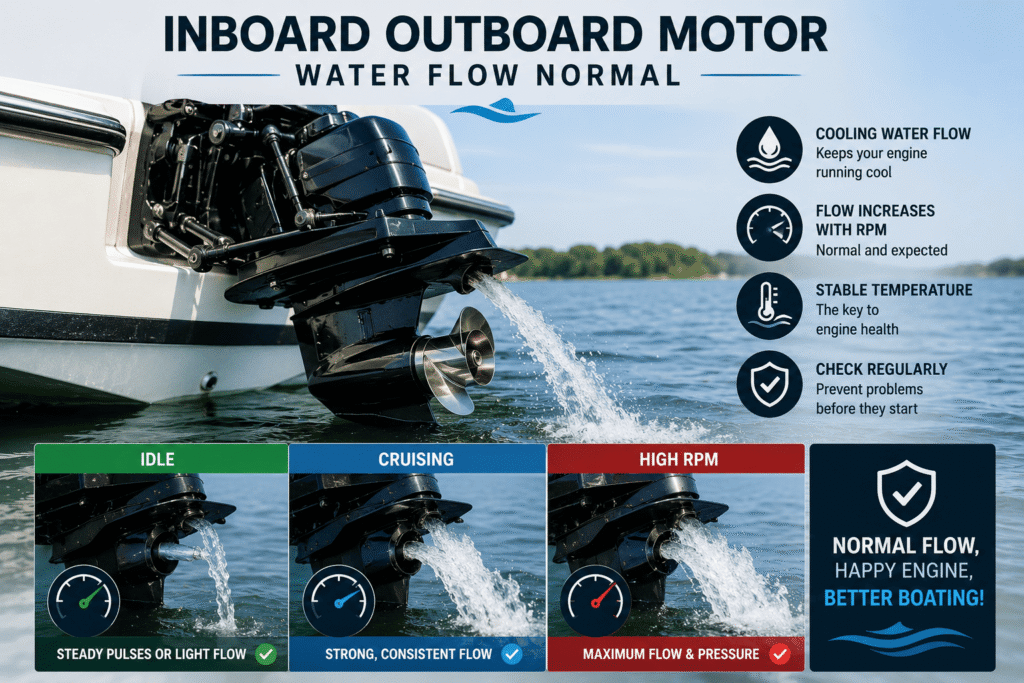
Water flow at idle
At idle, many I/O motors produce:
- Steady water pulses
- Light exhaust spray
- Intermittent splashing
- Warm water discharge
Some systems flow harder than others.
And some exhaust designs mix water and exhaust gases in uneven bursts, especially at low RPM.
A slightly inconsistent pulse at idle often falls completely within normal behavior.
Water flow while accelerating
As RPM increases:
- Water volume increases
- Exhaust pressure rises
- Discharge becomes stronger
You’ll usually notice more visible water exiting through the exhaust ports while cruising.
That’s normal.
The water pump spins faster, pushing greater flow through the cooling passages.
Why water flow changes on muffs
Running an I/O engine on flushing muffs changes water behavior.
Garden hoses provide:
- Lower pressure
- Lower flow volume
- Artificial supply conditions
So sometimes discharge looks weaker than it does in open water.
I’ve seen owners panic over weak driveway water flow only to launch the boat and discover everything worked perfectly under actual operating conditions.
The impeller controls everything
The raw water impeller is basically the heart of the cooling system.
It’s a small rubber component inside the water pump housing that spins continuously to move cooling water.
And these things wear out constantly.
Especially if:
- The boat sits unused
- Sand enters the system
- The engine runs dry briefly
- The impeller ages
A damaged impeller reduces water flow fast.
Sometimes pieces of broken impeller blades travel through the system and clog passages later too. That creates frustrating secondary problems weeks afterward.
Signs your water flow is normal
Here’s what usually indicates healthy operation:
- Steady discharge at idle
- Stronger flow with RPM increase
- Stable engine temperature
- No overheating alarms
- Warm, not scalding, exhaust water
- No steam clouds
Minor pulsing alone rarely signals disaster.
Marine exhaust systems naturally pulse because exhaust pressure fluctuates with engine cycles.
What overheating looks like
This part matters more than the actual water stream appearance.
Signs of overheating include:
- Temperature gauge climbing abnormally
- Alarm buzzer activating
- Steam instead of water mist
- Burning rubber smell
- Reduced engine performance
- Hot engine compartment
Steam especially matters.
People sometimes mistake steam for normal exhaust vapor. Real overheating steam usually looks thicker, hotter, and more aggressive.
And it often smells bad.
Weak water flow causes
Worn impeller
This is the classic problem.
Impellers are maintenance items, not lifetime parts.
Many mechanics recommend replacement every 1 to 3 seasons depending on usage.
Cheap part. Expensive consequences if ignored.
Clogged intake
Plastic bags, weeds, sand, zebra mussels, fishing line, lake debris, all of it can clog intake areas.
Especially in shallow water.
Boat ramps full of weeds create cooling system nightmares every summer.
Blocked cooling passages
Mineral buildup, corrosion, or broken impeller fragments can partially block internal passages.
Saltwater systems deal with this more aggressively than freshwater setups.
Corrosion inside marine engines gets ugly fast.
Bad thermostat
A stuck thermostat disrupts cooling circulation.
Sometimes engines overheat slowly. Other times temperatures spike quickly.
Thermostats fail more often than people expect because marine environments are brutal on metal components.
Hose collapse or leaks
Old cooling hoses soften over time.
High RPM suction occasionally collapses weakened hoses internally, reducing water flow under load.
This one frustrates mechanics because the hose may look perfectly fine sitting still.
Why some water pulses look uneven
Marine exhaust systems don’t always produce smooth streams.
Depending on:
- Exhaust routing
- Engine firing pulses
- Idle speed
- Water mixing design
you may see:
- Bursts
- Rhythmic surges
- Uneven splashing
That can still be normal.
People accustomed to outboard “tell-tale” streams expect I/O systems to behave identically. They don’t.
An inboard outboard motor often dumps water through the exhaust system itself rather than a tiny visible pee stream.
Saltwater vs freshwater cooling behavior
Saltwater boats experience more cooling system stress.
Salt buildup creates:
- Corrosion
- Mineral deposits
- Restricted passages
Saltwater owners who skip flushing routines eventually pay for it.
Usually painfully.
Freshwater systems generally stay cleaner internally, though sand and debris still create problems.
Why temperature gauges matter more than visuals
Water flow appearance alone can mislead you.
Some perfectly healthy engines discharge modest-looking water streams.
Others spray aggressively while still running hot internally because circulation inside the block is restricted.
The temperature gauge tells the real story.
Stable operating temps matter more than dramatic exhaust spray.
Typical operating temperatures
Most I/O engines operate roughly around:
- 140°F to 175°F
depending on:
- Thermostat setup
- Engine model
- Cooling system design
Consistent readings matter more than exact numbers.
Rapid fluctuations usually signal trouble.
Why steam at startup can be normal
Cold mornings create temporary condensation vapor.
Especially if:
- Air temperature is cool
- Water temperature is cold
- Humidity is high
Light vapor disappearing quickly often falls within normal operation.
Persistent heavy steam after warm-up deserves attention.
How often impellers should be replaced
A lot of experienced boat owners replace impellers proactively every 2 seasons.
Even if they still technically work.
Because marine impellers age silently.
Rubber hardens. Blades crack. Flexibility drops.
And when they fail completely, overheating happens fast enough to ruin an entire boating weekend in about 4 minutes.
Winterization matters for cooling systems
Improper winter storage destroys marine cooling systems constantly.
Frozen water expands inside:
- Manifolds
- Blocks
- Hoses
- Coolers
Spring startup after bad winterization sometimes reveals cracked components immediately.
Other times the damage waits until the engine heats up under load.
Flushing after use helps a lot
Especially in saltwater.
Flushing removes:
- Salt deposits
- Sand
- Debris
- Organic buildup
Even freshwater boats benefit occasionally.
Lake weeds have an incredible ability to jam themselves into water intakes like they’re personally offended by your weekend plans.
Common owner mistakes
Running dry
Even 30 to 60 seconds without cooling water can damage an impeller.
People start engines on trailers “just for a second” constantly.
Then wonder why temperatures spike later.
Ignoring temperature alarms
Some owners keep running after the alarm sounds because “the boat still feels fine.”
Terrible idea.
Marine engines can overheat faster than many car engines because cooling depends directly on water flow.
Assuming stronger flow always means healthier flow
High visible discharge doesn’t guarantee proper internal cooling.
Partial restrictions sometimes redirect water strangely while hotspots develop elsewhere inside the engine.
When to shut the engine down immediately
Stop running the engine if you notice:
- Overheat alarm
- No visible discharge at all
- Heavy steam
- Burning smell
- Rapid temp increase
- Sudden power loss
Continuing operation risks catastrophic damage quickly.
Marine repair invoices have a special ability to ruin moods instantly.
Preventive maintenance helps more than anything
Regular maintenance prevents most cooling failures:
- Replace impellers routinely
- Inspect hoses
- Flush saltwater systems
- Watch temperature gauges
- Clear intake debris
- Winterize properly
Cooling systems usually give warning signs before catastrophic failure.
The trick is paying attention early enough.
Final thoughts
Normal water flow on an inboard outboard motor varies more than many boat owners expect.
Some systems pulse gently at idle. Others spray harder under acceleration. Water discharge patterns change depending on RPM, temperature, exhaust setup, and whether the boat is running on muffs or in open water.
Stable operating temperature matters more than chasing the “perfect-looking” water stream.
If the engine stays cool, the discharge remains consistent, and alarms stay silent, the system is probably functioning normally.
But if water flow suddenly weakens, steam appears, or temperatures climb fast, shut the engine down before a small cooling issue turns into major engine damage.
FAQs about Inboard outboard motor water flow normal
What is normal water flow on an inboard outboard motor?
Normal water flow usually means:
- Steady or pulsing discharge at idle
- Stronger flow as RPM increases
- Stable engine temperature
- No overheating alarms or steam
The exact flow pattern varies by engine and exhaust design.
Should water come out constantly at idle?
Sometimes yes, sometimes no. Many I/O motors produce pulsing or uneven flow at idle because the exhaust and cooling water mix together naturally.
Why does water flow increase with RPM?
As engine RPM rises, the water pump spins faster and pushes more cooling water through the engine and exhaust system.
Is weak water flow always a problem?
Not always. Water flow can look lighter:
- At idle
- On flushing muffs
- In cooler temperatures
Engine temperature matters more than appearance alone.
What causes low water flow in an I/O motor?
Common causes include:
- Worn impeller
- Clogged intake
- Blocked cooling passages
- Damaged hoses
- Bad thermostat
- Debris in the system
How do I know if my boat motor is overheating?
Signs of overheating include:
- Rising temperature gauge
- Alarm buzzer
- Steam from exhaust
- Burning smell
- Loss of power
- Extremely hot engine parts
How often should the impeller be replaced?
Many boat owners replace the impeller every 1 to 3 seasons depending on usage and water conditions.
Can I run my inboard outboard motor out of water?
No. Running without cooling water can damage the impeller very quickly, even within seconds.
Why does the engine behave differently on muffs?
Garden hose flushing muffs usually provide lower water pressure and volume than actual lake or ocean conditions, so water flow may appear weaker.
Is steam from the exhaust normal?
Light vapor during cold startup can be normal. Thick continuous steam after warm-up may indicate overheating.
Why is my boat overheating even with water coming out?
Visible discharge does not always mean proper internal cooling. Blocked passages, thermostat problems, or circulation issues can still cause overheating.
Does saltwater affect cooling systems more?
Yes. Saltwater increases:
- Corrosion
- Mineral buildup
- Internal blockage
- Hose wear
Regular flushing is important for saltwater boats.
What temperature should an inboard outboard engine run at?
Most engines normally operate around 140°F to 175°F depending on the thermostat and cooling system design.
What should I do if the overheat alarm sounds?
Shut the engine down as soon as safely possible and inspect the cooling system before running it again.
Why does my water flow pulse instead of stream smoothly?
Marine exhaust systems naturally pulse because engine firing cycles and exhaust pressure fluctuate constantly. Mild pulsing is often completely normal.
Usefull links
https://www.discoverboating.com/resources/engine-cooling-systems
https://themarineexchange.com/blogs/resources/marine-cooling-system-overview
https://themarineexchange.com/blogs/resources/marine-cooling-system-overview
https://www.scottmarinepower.com/techtips/2018/2/5/cooling-system-maintenance